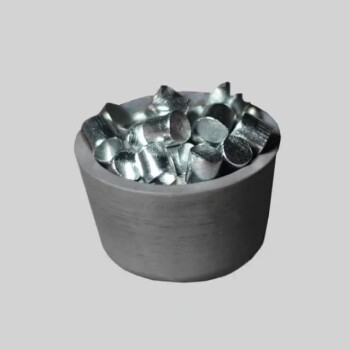
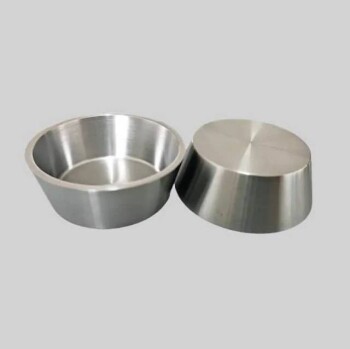
The glassy carbon crucible functions as both a robust containment vessel and an active electrode in the preparation of LiF–NaF–KF fluoride salt melts. It serves a dual purpose: first as a corrosion-resistant container capable of withstanding hydrogen fluoride (HF) during the initial melting of raw materials, and subsequently as the anode during the electrolytic purification process to actively remove oxygen impurities.
By acting as a container during the melting phase and an electrical conductor during the purification phase, the glassy carbon crucible streamlines the workflow, eliminating the need to transfer the melt between different vessels for chemical treatment and electrolysis.
The Dual Role in Salt Preparation
Phase 1: Passive Containment
During the initial stage of the process, the crucible functions strictly as a vessel. Its primary requirement here is chemical inertness.
The raw materials used to create LiF–NaF–KF melts often release corrosive gases when heated. The glassy carbon material is specifically selected for its ability to withstand hydrogen fluoride (HF) vapor, ensuring the structural integrity of the container is not compromised during the breakdown of raw salts.
Phase 2: Active Purification
Once the salts are molten, the crucible transitions from a passive container to an active component of the purification system. It is utilized directly as the anode in the electrolytic circuit.
Because glassy carbon possesses high electrical conductivity, it effectively closes the circuit required for electrolysis. This allows the system to drive chemical reactions necessary to purify the melt without introducing foreign electrode materials that could contaminate the salt.
The Mechanism of Oxygen Removal
The central goal of this phase is lowering oxygen impurity levels. The glassy carbon crucible facilitates this through anodic oxidation.
As current flows, oxygen ions present in the melt are drawn to the crucible walls (the anode). There, they react with the carbon surface to form carbon dioxide (CO2) or carbon monoxide (CO) gas. These gases bubble out of the melt, effectively stripping the oxygen from the salt mixture.
Operational Dynamics and System Integration
Interaction with the Cathode System
The crucible does not operate in isolation. While the glassy carbon serves as the anode, the system relies on a complementary liquid cathode setup.
Typically, a graphite crucible containing molten bismuth is used as the cathode. This liquid cathode captures potassium metal precipitated during electrolysis, forming an alloy. This prevents side reactions and allows the glassy carbon anode to focus exclusively on the efficient removal of oxygen ions.
Material Stability vs. Reactivity
A critical aspect of using glassy carbon is balancing stability with reactivity. The material must be chemically stable enough to hold the melt for extended periods without dissolving.
However, during purification, the surface is intentionally reactive to oxygen. The process relies on the conversion of solid carbon into gas (CO/CO2) to physically remove impurities. This sacrificial nature of the surface reaction is the defining mechanism of the purification success.
Making the Right Choice for Your Goal
When designing or evaluating a molten salt purification setup, consider how the crucible's functions align with your specific requirements.
- If your primary focus is Process Efficiency: Utilize glassy carbon to combine melting and purification in a single step, reducing handling time and contamination risks associated with material transfer.
- If your primary focus is High Purity: Rely on the glassy carbon crucible's anodic properties to actively convert dissolved oxygen into gas, ensuring deep purification of the fluoride melt.
The glassy carbon crucible is not merely a holder for hot liquid; it is an active chemical participant that drives the purification of the final salt product.
Summary Table:
| Feature | Function in Salt Preparation | Key Benefit |
|---|---|---|
| Material Properties | High electrical conductivity and chemical inertness | Enables electrolysis while resisting HF corrosion |
| Phase 1: Containment | Robust vessel for raw material melting | Prevents leakage and handles corrosive gases safely |
| Phase 2: Purification | Acts as the anode in the electrolytic circuit | Facilitates the removal of dissolved oxygen ions |
| Reaction Mechanism | Anodic oxidation (Carbon + Oxygen → CO/CO2) | Strips oxygen from the melt as gas for high purity |
Maximize Your Material Purity with KINTEK Solutions
Elevate your laboratory's efficiency with premium glassy carbon crucibles and advanced thermal processing equipment from KINTEK. Whether you are working on fluoride salt purification or complex battery research, our comprehensive range of high-temperature crucibles, muffle furnaces, and vacuum systems ensures unmatched performance.
Why choose KINTEK?
- Expertly Engineered Consumables: High-quality PTFE, ceramics, and crucibles tailored for extreme chemical resistance.
- Comprehensive Lab Solutions: From induction melting and CVD systems to precision hydraulic presses and cooling solutions.
- Precision and Reliability: Our tools are designed to meet the rigorous demands of high-temperature, high-pressure research.
Ready to optimize your salt preparation workflow? Contact us today to speak with a specialist about our laboratory equipment and consumables!
References
- Anna A. Maslennikova, Wei‐Qun Shi. Determination of the Oxygen Content in the LiF–NaF–KF Melt. DOI: 10.3390/ma16114197
This article is also based on technical information from Kintek Solution Knowledge Base .
Related Products
- Glassy Carbon Sheet RVC for Electrochemical Experiments
- High Purity Pure Graphite Crucible for Electron Beam Evaporation
- Glassy Carbon Electrochemical Electrode
- Carbon Graphite Boat -Laboratory Tube Furnace with Cover
- Electron Beam Evaporation Coating Oxygen-Free Copper Crucible and Evaporation Boat
People Also Ask
- What is an RVC glassy carbon sheet? A High-Performance Material for Demanding Applications
- What is the applicable potential range for an RVC glassy carbon sheet? Master Your Electrochemical Analysis
- What is the porosity of an RVC glassy carbon sheet? Understanding the Critical Difference Between PPI and Porosity
- What are the key characteristics of RVC glassy carbon sheets? Unlock Superior Electrochemical Performance
- What consideration should be given to ancillary equipment used with RVC glassy carbon sheets? Ensure Reliable Performance and Protect Your Investment