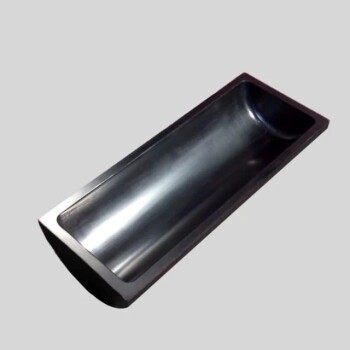
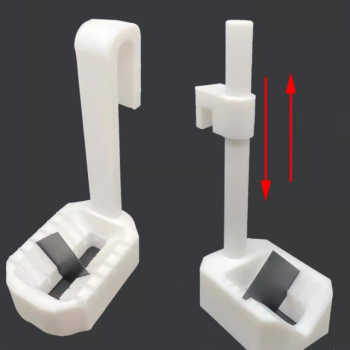
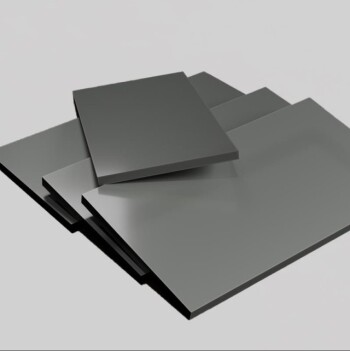
High-purity graphite sample holders are the superior choice for high-temperature brazing of carbon-carbon composites because they eliminate the two most common failure modes: structural deformation and chemical contamination. By utilizing these holders, you ensure the assembly remains stable at temperatures exceeding 1000°C and that the composite substrate remains free from unwanted bonding or impurities.
High-purity graphite acts as a strictly neutral foundation, ensuring the brazing process is driven solely by the alloy and substrate interaction, preserving both geometric precision and chemical integrity.
Achieving Structural Integrity
Withstanding Extreme Temperatures
The primary physical challenge in brazing carbon-carbon composites is the extreme heat required for the process. High-purity graphite offers exceptional structural stability.
Unlike many metallic fixtures, these holders can withstand temperatures exceeding 1000°C without softening. This prevents the holder from warping or collapsing during the heating cycle.
Ensuring Geometric Precision
Because the holder resists deformation under heat, it maintains the exact alignment of the components being brazed. This ensures the final brazed components retain high geometric precision.
If the holder were to warp, it would transfer stress to the composite, potentially causing misalignment or structural defects in the final part.
Chemical Compatibility and Purity
Preventing Unwanted Adhesion
In high-temperature environments, materials often become reactive and sticky. A critical advantage of high-purity graphite is its chemical inertness.
It does not bond with carbon-carbon composite substrates. This allows for the easy removal of the finished part without damaging the surface or requiring force that could compromise the joint.
Eliminating Contamination Risks
The purity of the graphite is as important as its stability. These holders are manufactured to prevent the introduction of impurities into the brazing environment.
Standard materials might outgas or diffuse contaminants into the carbon-carbon composite. High-purity graphite ensures the chemical purity of the brazed components is maintained throughout the experiment.
Operational Considerations
While high-purity graphite is the optimal solution, it is important to recognize that its effectiveness relies entirely on the material specification. The "high-purity" designation is not a marketing term; it is a functional requirement.
Using lower-grade graphite to save costs introduces the risk of unknown fillers or binders leaching into your composite at high temperatures. To achieve the results described above, the material must be certified high-purity to ensure it remains inert and stable.
Making the Right Choice for Your Goal
When designing your experimental setup, select your fixtures based on your specific verification needs:
- If your primary focus is Dimensional Tolerance: Use high-purity graphite to prevent fixture warping at >1000°C, ensuring the final assembly matches your exact design specifications.
- If your primary focus is Material Analysis: Rely on high-purity graphite to eliminate background contamination, ensuring that any chemical changes observed are strictly from the brazing reaction.
High-purity graphite is the only fixture material that guarantees the holder itself does not become a variable in your experiment.
Summary Table:
| Feature | High-Purity Graphite Holder | Impact on Brazing Experiment |
|---|---|---|
| Thermal Stability | Resists warping at >1000°C | Maintains geometric precision and alignment |
| Chemical Inertness | Non-reactive with C-C substrates | Prevents unwanted adhesion and bonding |
| High Material Purity | Low outgassing/No binders | Eliminates chemical contamination risks |
| Durability | High structural integrity | Ensures repeatable, stable experimental results |
Elevate Your Advanced Material Research with KINTEK
Precision in high-temperature brazing requires fixtures that won't compromise your results. KINTEK specializes in high-performance laboratory equipment and consumables, providing the high-purity graphite solutions and thermal processing tools necessary for carbon-carbon composite research.
From high-temperature muffle and vacuum furnaces to specialized ceramics and graphite crucibles, our portfolio is designed to meet the rigorous demands of material science. Don't let fixture deformation or contamination jeopardize your data. Partner with KINTEK for reliable, high-purity consumables and cutting-edge laboratory systems.
Ready to optimize your experimental setup? Contact our technical experts today to find the perfect solution for your lab.
References
- Chenyu Wang, Shanglei Feng. Carbon–Carbon Composite Metallic Alloy Joints and Corresponding Nanoscale Interfaces, a Short Review: Challenges, Strategies, and Prospects. DOI: 10.3390/cryst13101444
This article is also based on technical information from Kintek Solution Knowledge Base .
Related Products
- High Purity Pure Graphite Crucible for Evaporation
- High Purity Pure Graphite Crucible for Electron Beam Evaporation
- Carbon Graphite Boat -Laboratory Tube Furnace with Cover
- Customizable XRD Sample Holders for Diverse Research Applications
- XRD Sample Holder X-ray Diffractometer Powder Slide
People Also Ask
- Why are high-purity graphite crucibles preferred for sulfide solid electrolytes? Achieve Superior Material Purity
- Why is a high-purity graphite crucible required for Chromel-TaC composites? Ensure Peak Purity at 1400°C
- What role do high-purity graphite crucibles play in molten salt corrosion research? Ensure Reactor-Grade Precision
- Why are high-purity graphite crucibles used for magnesium distillation? Ensure 3N8 Purity & Thermal Stability
- Why is a high-purity graphite crucible ideal for nitrogen-doped graphene at 1500 °C? Maximize Purity and Stability