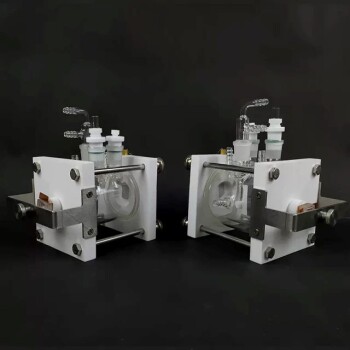
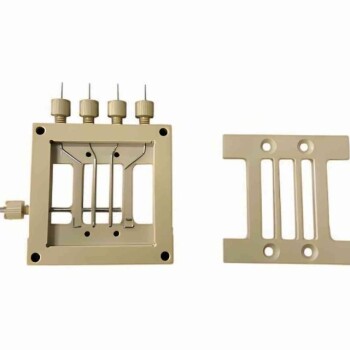
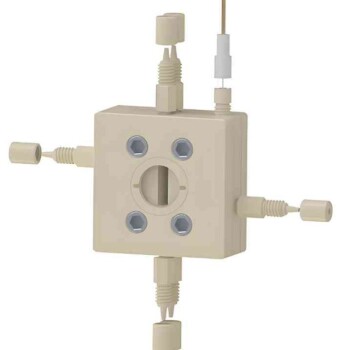
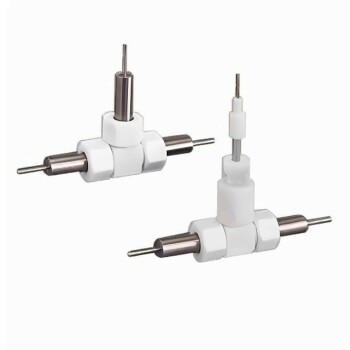
The design of an electrolytic cell simulates industrial environments by creating a strictly controlled electrochemical vessel where the material sample acts as the cathode. By positioning anodes symmetrically and regulating current density, the cell creates a stable reaction that forcibly injects hydrogen into the metal, mimicking the high hydrogen fugacity found in acidic oil pipelines and high-pressure gas systems.
Core Takeaway While replicating high-pressure environments physically is dangerous and costly, electrolytic cells achieve similar results chemically. By leveraging electrochemical potential to drive hydrogen into the metal lattice, these systems provide an accelerated, controllable method for predicting Hydrogen-Induced Cracking (HIC) without the need for high-pressure gaseous infrastructure.
Engineering the Electrochemical Environment
To accurately study material failure, the testing environment must be as rigorous as the operational environment. The electrolytic cell achieves this through specific design choices.
The Cathodic Configuration
In this setup, the steel sample is not a passive observer; it serves as the cathode in the electrical circuit.
By applying a negative charge to the material, the system utilizes electrochemical potential to drive hydrogen atoms onto the surface and into the bulk of the metal.
This technique, known as cathodic charging, forcibly injects hydrogen into the material structure, simulating the internal hydrogen loading that occurs over time in industrial settings.
Symmetrical Current Distribution
A major challenge in simulation is ensuring the entire sample is tested evenly.
To solve this, industrial-grade cells position anodes symmetrically around the steel sample.
This geometry ensures a stable and uniform current distribution, preventing "hot spots" of hydrogen concentration that could skew data and lead to inaccurate failure predictions.
Controlling the Simulation Variables
The value of an electrolytic cell lies in its adjustability. Researchers can fine-tune parameters to replicate specific industrial scenarios.
Regulating Current Density
The intensity of the hydrogen attack is directly controlled by the current density.
By manipulating the electrical current, researchers can control the rate of hydrogen evolution on the sample surface.
This allows for the simulation of various severity levels, from mild exposure to the extreme conditions found in aggressive chemical processing environments.
Managing Electrolyte Composition
The liquid medium, or electrolyte, is the chemical proxy for the industrial environment.
Precise control over the electrolyte's composition allows the cell to mimic specific corrosive fluids, such as those found in acidic oil and gas pipelines.
This chemical control is essential for creating the high hydrogen fugacity—effectively the "chemical pressure"—required to test resistance to cracking.
Understanding the Trade-offs
While electrolytic cells are powerful tools, they operate differently than the natural environments they simulate. Understanding these distinctions is vital for accurate data interpretation.
Acceleration vs. Real-Time
The primary advantage of this method is acceleration.
Electrolytic charging manifests hydrogen embrittlement effects much faster than natural exposure.
However, researchers must account for this accelerated timeline when attempting to predict the service life of a component in the real world.
Electrochemical vs. Gaseous Mechanics
These cells are often used when high-pressure gaseous environments are unavailable or too dangerous to replicate.
While they successfully simulate internal hydrogen loading mechanisms, the surface interactions in an aqueous electrolyte differ from those in a dry gas environment.
It is crucial to acknowledge that this is a simulation of internal embrittlement mechanisms, driven by electrochemical force rather than physical gas pressure.
Making the Right Choice for Your Goal
Whether you are designing pipelines or pressure vessels, the electrolytic cell offers a robust platform for material validation.
- If your primary focus is rapid material screening: Utilize the cell's ability to accelerate hydrogen loading to quickly identify materials prone to Hydrogen-Induced Cracking (HIC).
- If your primary focus is mechanism study: Leverage the precise control of current density to study how gradual changes in hydrogen uptake affect the internal structure of the metal.
By strictly controlling the chemical and electrical inputs, electrolytic cells transform unpredictable industrial variables into precise, quantifiable data points.
Summary Table:
| Design Feature | Functional Mechanism | Industrial Simulation Equivalent |
|---|---|---|
| Cathodic Configuration | Sample acts as cathode to drive H+ into lattice | Internal hydrogen loading in pipelines/vessels |
| Symmetrical Anodes | Ensures uniform current & hydrogen distribution | Homogeneous environmental exposure across materials |
| Adjustable Current Density | Controls the rate of hydrogen evolution | Varying severity levels of chemical/process environments |
| Electrolyte Management | Mimics corrosive chemical compositions | High hydrogen fugacity in acidic oil and gas systems |
| Accelerated Charging | Rapidly manifests embrittlement effects | Long-term service life prediction in reduced timeframes |
Elevate Your Hydrogen Research with KINTEK Precision
Don't compromise on the accuracy of your material studies. KINTEK specializes in advanced laboratory solutions designed for the most demanding research environments. From our precision-engineered electrolytic cells and high-performance electrodes to our industry-leading high-temperature high-pressure reactors and autoclaves, we provide the tools necessary to simulate even the most aggressive industrial conditions.
Whether you are analyzing Hydrogen-Induced Cracking (HIC) or developing next-generation alloys, KINTEK's comprehensive portfolio—including PTFE products, ceramics, and vacuum furnaces—is built to ensure reliability and repeatability in your data.
Ready to optimize your lab's simulation capabilities? Contact our technical experts today to find the perfect solution for your application!
References
- Aurélie Laureys, Kim Verbeken. Initiation of hydrogen induced cracks at secondary phase particles. DOI: 10.3221/igf-esis.52.10
This article is also based on technical information from Kintek Solution Knowledge Base .
Related Products
- PTFE Electrolytic Cell Electrochemical Cell Corrosion-Resistant Sealed and Non-Sealed
- Super Sealed Electrolytic Electrochemical Cell
- Electrolytic Electrochemical Cell with Five-Port
- H Type Electrolytic Cell Triple Electrochemical Cell
- Electrolytic Electrochemical Cell Gas Diffusion Liquid Flow Reaction Cell
People Also Ask
- What is the necessity of selecting a PTFE electrolytic cell? Ensure Precise Graphene Corrosion Testing Accuracy
- What is the proper method for cleaning the surface of an all-PTFE electrolytic cell? Ensure Accurate Results with a Pristine Surface
- How should an all-PTFE electrolytic cell be stored after use? Expert Maintenance Tips for Long-Lasting Performance
- What is the proper cleaning method for an all-PTFE electrolytic cell? Essential Tips for Surface Integrity
- What are the standard opening specifications for all-PTFE electrolytic cells? A Guide to Sealed vs. Non-Sealed Ports