The integration of a water bath circulation system revolutionizes photochemical processing by providing a superior constant-temperature medium compared to standard air cooling. By leveraging the high thermal conductivity of water, these systems rapidly absorb and remove the intense heat generated by LED irradiation, effectively neutralizing the temperature fluctuations that often compromise reaction stability.
The core value of this system lies in its ability to enforce precise thermal control. By maintaining a stable environment, the water bath ensures that the intended photocatalytic pathway remains dominant, preventing thermal degradation and unlocking significantly higher yields for heat-sensitive reactions.
The Mechanics of Thermal Regulation
Leveraging Superior Conductivity
Water possesses a significantly higher thermal conductivity than air. This physical property allows the circulation system to act as a highly efficient medium for heat transfer.
Unlike air-cooled setups, which may struggle with rapid heat dissipation, a water bath creates a consistent thermal envelope around the reactor.
Managing LED Heat Generation
Photochemical reactors rely on high-intensity LEDs, which generate substantial amounts of waste heat during irradiation. Without intervention, this heat accumulation can lead to erratic temperature spikes within the reaction vessel.
The integrated water circulation system acts as an active heat sink. It rapidly absorbs excess thermal energy produced by the light source, preventing it from accumulating and destabilizing the chemical environment.
Impact on Chemical Outcomes
Safeguarding Sensitive Reactions
Precise temperature control is critical for heat-sensitive chemical processes. The primary reference highlights furan C-H arylation as a prime example of a reaction that benefits from this stability.
When temperature fluctuations are eliminated, the reaction conditions remain optimal. This prevents the activation of unwanted thermal side reactions that often occur when the system overheats.
Ensuring Pathway Dominance
In photochemistry, maintaining the correct reaction pathway is essential for purity. Uncontrolled heat can cause a system to deviate from the desired photocatalytic mechanism.
The water bath ensures the photocatalytic pathway remains dominant. By suppressing thermal interference, the reactor pushes the chemical equilibrium toward the desired result rather than degradation products.
Maximizing Product Yield
The ultimate metric of this system's success is the yield of the target product. Because the environment is strictly controlled, reactants are converted more efficiently.
For the specific arylation reactions cited, this configuration leads to target product yields exceeding 90%. This is a direct result of the enhanced stability provided by the water circulation.
Understanding the Trade-offs
Design Complexity vs. Control
While the benefits are clear, integrating a water bath adds a layer of complexity to the reactor design. It requires a circulation mechanism and fluid handling capabilities that are not needed in passive air-cooled systems.
However, for reactions requiring high precision, this added complexity is a necessary investment to achieve high yields.
Making the Right Choice for Your Goal
To determine if an integrated water bath system is necessary for your specific application, consider the sensitivity of your target reaction.
- If your primary focus is performing heat-sensitive reactions: Prioritize the water bath integration to prevent thermal side-reactions and ensure the photocatalytic pathway dominates.
- If your primary focus is maximizing yield: Use this system to stabilize conditions and achieve product returns exceeding 90%, particularly in complex transformations like C-H arylation.
Precise thermal management is not just a safety feature; it is a critical process variable that dictates the efficiency and success of modern photochemical synthesis.
Summary Table:
| Feature | Water Bath Circulation | Standard Air Cooling |
|---|---|---|
| Thermal Conductivity | High (Efficient Heat Transfer) | Low (Insulating) |
| Temperature Stability | Constant & Precise Control | Prone to Spikes/Fluctuations |
| Heat Dissipation | Rapid Absorption of LED Heat | Slow/Limited Heat Removal |
| Chemical Yield | High (Often >90%) | Variable/Lower |
| Reaction Pathway | Purely Photocatalytic | Risk of Thermal Side-Reactions |
| Best Use Case | Heat-sensitive C-H Arylation | General Room-Temp Reactions |
Elevate Your Photochemical Precision with KINTEK
Don't let thermal fluctuations compromise your research yields. KINTEK specializes in advanced laboratory solutions, offering a comprehensive range of equipment including 3D-printed photochemical reactor components, high-temperature high-pressure reactors, and cooling solutions like chillers and freeze dryers to support your most sensitive chemical processes.
Whether you are performing complex C-H arylations or optimizing battery research, our expert-grade tools ensure your photocatalytic pathways remain stable and your results remain superior. Achieve yields exceeding 90% and safeguard your heat-sensitive reactions today.
Contact KINTEK for a Professional Consultation
References
- Evgeniy G. Gordeev, Valentine P. Ananikov. Exploring metallic and plastic 3D printed photochemical reactors for customizing chemical synthesis. DOI: 10.1038/s41598-022-07583-9
This article is also based on technical information from Kintek Solution Knowledge Base .
Related Products
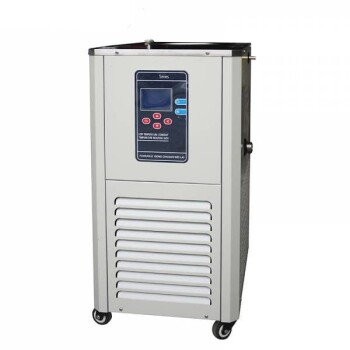
- High Temperature Constant Temperature Heating Circulator Water Bath Chiller Circulator for Reaction Bath
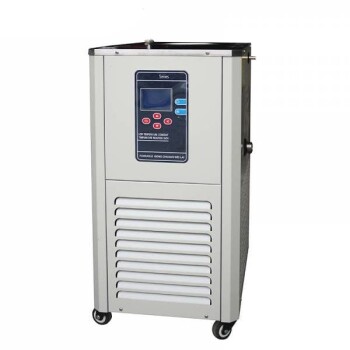
- 5L Chilling Circulator Cooling Water Bath Circulator for Low Temperature Constant Temperature Reaction Bath
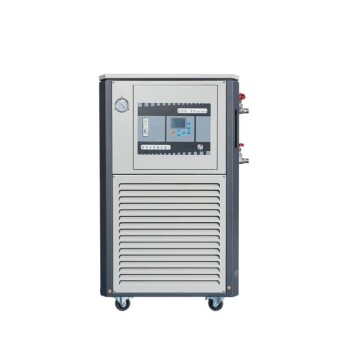
- 40L Chiller Water Bath Cooling Circulator Low Temperature Constant Temperature Reaction Bath
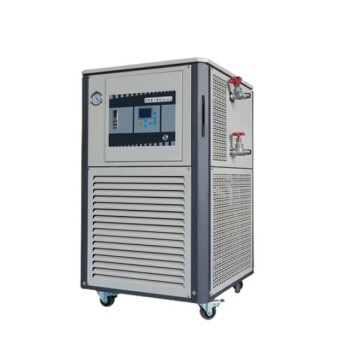
- 30L Chiller Water Bath Cooling Circulator Low Temperature Constant Temperature Reaction Bath
- 50L Chiller Water Bath Cooling Circulator Low Temperature Constant Temperature Reaction Bath
People Also Ask
- What is the necessity of a circulating water bath in chlorate production? Optimize Yield & Purity with Precision
- How do constant temperature circulators impact weight-loss immersion tests? Ensure Precision in Corrosion Analysis
- How does a constant temperature circulator support the leaching reaction of gold scrap? Optimize Gold Recovery Results
- Why is a constant temperature water bath used for precursor storage in CVD? Achieve Stable Nanocrystalline SiC Deposition
- Why is a high-precision constant temperature water bath necessary for anaerobic digestion? Ensure Success at 37±0.02°C