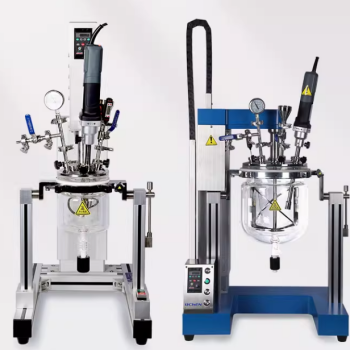
The fundamental difference lies in the nature of the mechanical forces applied. A tubular mixing machine relies on gravity and shear forces generated by rotating and swinging the container in multi-dimensional space to blend materials gently. In contrast, high-energy ball milling utilizes aggressive impact forces that are significantly more intense.
Tubular mixing serves as a low-damage alternative to ball milling, prioritizing the preservation of the carbon nanotubes' structural integrity over the aggressive breakup of tight agglomerates.
The Mechanics of Motion
Multi-Dimensional Rotation vs. Impact
The tubular mixing machine operates by moving the powder container through multi-dimensional space.
This complex motion creates a continuous turnover of material. The mixing occurs primarily through the natural cascade of powder (gravity) and the friction between particles (shear).
Gentle Energy Transfer
Because the process relies on motion rather than impact, the energy transfer to the particles is relatively low.
This creates a "gentle" mixing environment. It avoids the high-velocity collisions typical of ball milling, where grinding media crushes the powder against the container walls.
Impact on Carbon Nanotube (CNT) Structure
Preserving Aspect Ratio
The most significant advantage of tubular mixing is its ability to maintain the length of the carbon nanotubes.
High-energy ball milling often fractures CNTs, shortening them and reducing their aspect ratio. Tubular mixing leaves these lengths largely intact, which is critical for their effectiveness as a reinforcement phase.
Protecting Wall Structures
Beyond length, the integrity of the nanotube walls is vital for mechanical performance.
The gentle shear forces of a tubular mixer generally do not damage these wall structures. This ensures the intrinsic strength of the CNTs remains uncompromised during the blending process.
Understanding the Trade-offs
Dispersion Efficiency
While gentle mixing protects the material, it comes with a distinct disadvantage regarding agglomerates.
Carbon nanotubes have a strong tendency to clump together. The gravity and shear forces in tubular mixing are often weaker than the impact forces in ball milling.
The Agglomeration Challenge
Consequently, a tubular mixer may struggle to disperse "tight" agglomerates effectively.
If the CNTs are heavily entangled prior to mixing, a tubular machine may not generate enough force to untangle them completely, unlike the aggressive action of high-energy milling.
Making the Right Choice for Your Goal
To select the correct mixing method, you must weigh the need for structural integrity against the need for aggressive dispersion.
- If your primary focus is Reinforcement Efficiency: Choose tubular mixing to preserve the high aspect ratio and wall structure of the CNTs for maximum strength.
- If your primary focus is De-agglomeration: Recognize that tubular mixing may require pre-processed or less entangled CNTs, as it lacks the power to break up tight clusters found in high-energy milling.
Select the method that protects your most critical material property—integrity or dispersion.
Summary Table:
| Feature | Tubular Mixing Machine | High-Energy Ball Milling |
|---|---|---|
| Primary Forces | Gravity & Gentle Shear | High-Intensity Impact |
| Motion Type | Multi-dimensional Rotation | Grinding Media Collision |
| CNT Length | Preserved (High Aspect Ratio) | Frequently Fractured/Shortened |
| Structural Damage | Minimal to None | High Potential for Wall Damage |
| Dispersion Power | Low (Struggles with tight clumps) | High (Breaks up dense agglomerates) |
| Best For | Maximum reinforcement efficiency | De-agglomeration & Particle Reduction |
Optimize Your Material Synthesis with KINTEK Precision
Choosing the right mixing technology is critical for the performance of your advanced composites. At KINTEK, we specialize in high-performance laboratory equipment designed to protect the integrity of your most sensitive materials. Whether you require the gentle, multi-dimensional blending of a tubular mixing machine to preserve CNT aspect ratios or the powerful dispersion of our crushing and milling systems, we have the expertise to support your research.
Our Comprehensive Portfolio Includes:
- Milling & Crushing: High-energy ball mills, planetary mills, and sieving equipment.
- Advanced Furnaces: Muffle, tube, vacuum, and CVD systems for post-mix thermal treatment.
- Sample Preparation: Hydraulic pellet presses, isostatic presses, and high-quality ceramic crucibles.
- Reaction Systems: High-pressure reactors, autoclaves, and specialized electrolytic cells.
Don't compromise on material quality. Contact KINTEK today to consult with our technical team and find the perfect mixing or thermal processing solution for your laboratory's unique requirements.
References
- Chika Oliver Ujah, Victor Sunday Aigbodion. Tribological Properties of CNTs-Reinforced Nano Composite Materials. DOI: 10.3390/lubricants11030095
This article is also based on technical information from Kintek Solution Knowledge Base .
Related Products
- Laboratory Vortex Mixer Orbital Shaker Multifunctional Rotation Oscillation Mixer
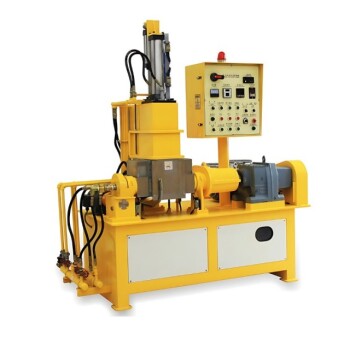
- Lab Internal Rubber Mixer Rubber Kneader Machine for Mixing and Kneading
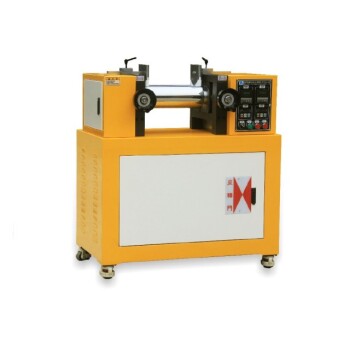
- Open Type Two Roll Mixing Mill Machine for Rubber Crusher
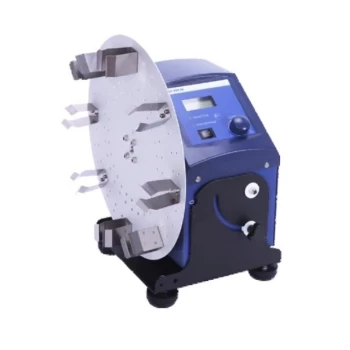
- Laboratory Disc Rotary Mixer for Efficient Sample Mixing and Homogenization
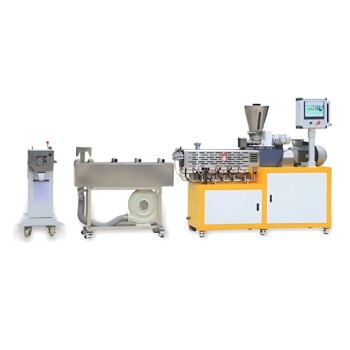
- Twin Screw Extruder Plastic Granulation Machine
People Also Ask
- What is the role of a laboratory orbital shaker in copper recovery? Optimize Industrial Waste Liquid Processing
- What is the role of a laboratory orbital shaker in activated carbon synthesis? Maximize Pore Depth & Surface Area
- What is a laboratory mixer used for? Choose the Right Tool for Liquids or Solids
- What is a laboratory mixer? A Guide to Achieving Perfect Sample Homogeneity
- What are laboratory mixers used for? Achieve Perfect Sample Homogeneity and Reliable Results