The primary difference in performance between single-stage and two-stage rotary vane pumps is dictated by the vacuum level (pressure) required for your application.
In the rough vacuum range (down to approximately 1 Torr), the pumping speed and overall performance of both pump types are nearly identical. However, once the absolute pressure drops below 1 Torr, the single-stage pump's speed begins to decline significantly, whereas the two-stage pump maintains its pumping speed and efficiency to achieve a much lower ultimate vacuum.
Core Insight: The decision implies a trade-off between cost and vacuum depth. If your application operates above 1 Torr, a single-stage pump offers identical performance for significantly less money. If you require deep vacuum below 1 Torr, a two-stage pump is a technical necessity.
Performance Across Pressure Ranges
Operating in Rough Vacuum (> 1 Torr)
For applications that do not require deep vacuum levels—specifically those remaining above 1 Torr—there is effectively no performance penalty for choosing a single-stage pump.
In this pressure range, the volumetric flow rate and pumping speed of a single-stage unit match that of a two-stage unit.
Operating in Deep Vacuum (< 1 Torr)
The performance divergence occurs as the pressure drops below the 1 Torr threshold.
At this stage, a single-stage pump loses efficiency, and its pumping speed begins to fall off. Conversely, a two-stage pump continues to operate effectively, maintaining a higher volumetric flow rate at these lower pressures.
The Mechanics of Two-Stage Efficiency
Series Connection Design
The superior performance of the two-stage pump at low pressures is due to its internal construction.
The intake of a second rotor is connected directly to the exhaust of the first rotor. This series configuration allows the pump to scavenge gas more effectively as pressure drops.
Lower Ultimate Vacuum
Because of this dual-rotor design, two-stage pumps can achieve a significantly lower ultimate vacuum than their single-stage counterparts.
They are engineered specifically to maintain high pumping speeds even as they approach their ultimate pressure limits.
Understanding the Trade-offs
The Cost Factor
The primary advantage of the single-stage pump is economic.
Because they require fewer components, single-stage pumps are typically 30% to 50% less expensive than two-stage models.
Efficiency vs. Necessity
The "trade-off" is only real if your application sits on the borderline of the 1 Torr range.
If you strictly need rough vacuum, paying for a two-stage pump is an unnecessary expense with no performance gain. If you need deep vacuum, the cost savings of a single-stage pump are irrelevant because the pump physically cannot perform the required task efficiently.
Making the Right Choice for Your Goal
Select your pump based on the specific vacuum depth required by your process.
- If your primary focus is Rough Vacuum (above 1 Torr): Choose the single-stage pump to achieve maximum cost-efficiency without sacrificing pumping speed.
- If your primary focus is Deep Vacuum (below 1 Torr): Choose the two-stage pump, as it is strictly necessary to maintain flow rates and achieve low ultimate pressure.
Match the tool to the pressure requirement to ensure you are paying only for the performance you actually need.
Summary Table:
| Feature | Single-Stage Pump | Two-Stage Pump |
|---|---|---|
| Optimal Vacuum Range | Rough Vacuum (> 1 Torr) | Deep Vacuum (< 1 Torr) |
| Performance < 1 Torr | Significantly Declines | Maintains High Efficiency |
| Design Configuration | Single Rotor | Dual Rotors in Series |
| Ultimate Vacuum | Limited | Significantly Deeper |
| Cost Comparison | 30% - 50% Lower | Premium Investment |
Maximize Your Lab’s Vacuum Performance with KINTEK
Choosing the right vacuum technology is critical to the success of your research and industrial processes. At KINTEK, we specialize in providing high-performance laboratory equipment, including precision-engineered rotary vane pumps and advanced vacuum systems tailored to your specific pressure requirements.
Whether you are performing complex chemical synthesis in our high-temperature high-pressure reactors, managing delicate evaporation in vacuum furnaces, or preparing samples with our pellet presses, KINTEK ensures you have the right vacuum depth and pumping speed for every application. Our comprehensive portfolio also features centrifugal homogenizers, PTFE consumables, and ultra-low temperature freezers to support your entire workflow.
Don't let inefficient vacuum levels stall your progress. Contact KINTEK today to consult with our experts and find the perfect pump for your laboratory—balancing cost-efficiency with technical excellence.
Related Products
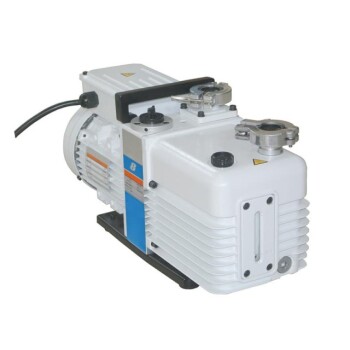
- Laboratory Rotary Vane Vacuum Pump for Lab Use
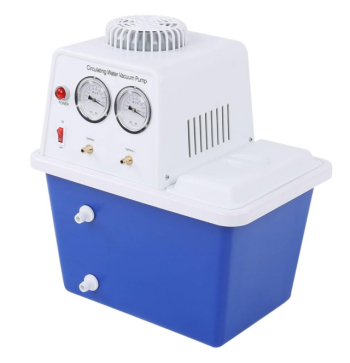
- Circulating Water Vacuum Pump for Laboratory and Industrial Use
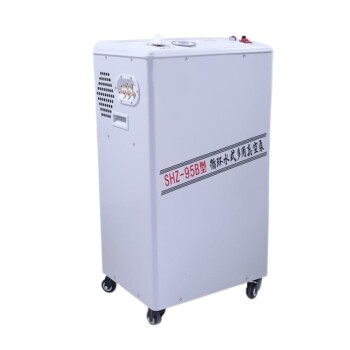
- Laboratory Vertical Water Circulating Vacuum Pump for Lab Use
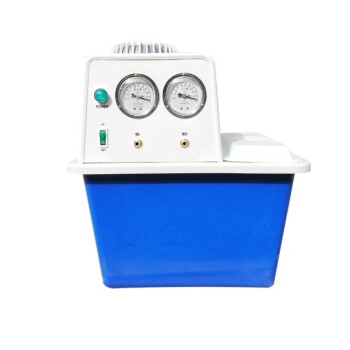
- Laboratory Benchtop Water Circulating Vacuum Pump for Lab Use
- Rotary Tube Furnace Split Multi Heating Zone Rotating Tube Furnace
People Also Ask
- What is the use of rotary vacuum pump? A Guide to Reliable Rough Vacuum for Labs & Industry
- What is the vacuum level of a rotary vacuum pump? Achieve Medium Vacuum for Your Lab or Industry
- What is the difference between a single-stage and a two-stage rotary vane pump? Choosing the Right Vacuum Depth
- How does a Rotary Vane Pump operate? Discover Efficient Vacuum Technology for Your Lab
- What are the main disadvantages associated with Rotary Vane Pumps? Avoid Contamination & High Maintenance Costs