The vacuum pump system functions as the critical baseline control for siloxane thin film fabrication. Its primary influence on quality is two-fold: it establishes a high-purity environment by evacuating the chamber to millitorr levels, and it regulates the physical dynamics of the plasma. By removing residual air and controlling the mean free path of the discharge, the system ensures the film is chemically pure, physically dense, and stoichiometrically stable.
The vacuum system does more than just lower pressure; it actively dictates the chemical purity and structural density of the film. By controlling the mean free path of particles, it enables the stable reaction between HMDSO and oxygen required for high-quality protective coatings.
The Role of Background Pressure in Chemical Purity
Eliminating Environmental Contaminants
The pump must evacuate the reaction chamber to a millitorr-level background pressure.
This deep evacuation is necessary to physically remove residual air components that are naturally present in the chamber.
Preventing Impurity Interference
By clearing the environment, the system prevents unwanted atmospheric gases from interacting with the deposition process.
This isolation ensures that the reaction between HMDSO vapor and oxygen occurs without interference, preserving the chemical integrity of the final film.
Regulating Film Structure via Plasma Physics
Controlling the Mean Free Path
The vacuum level directly dictates the mean free path of the plasma discharge.
This metric defines the average distance a particle travels before colliding with another particle, which is a fundamental variable in plasma processing.
Ensuring Film Density
Proper control of the mean free path is vital for creating a physical environment that fosters dense protective layers.
Without the correct vacuum pressure, the kinetic energy of the depositing species may change, potentially leading to porous or mechanically weak films.
Stabilizing Stoichiometry
The vacuum system helps maintain a consistent ratio of elements within the film, known as stable stoichiometry.
Consistency in the vacuum environment ensures that the chemical structure of the siloxane remains uniform throughout the deposition process.
Understanding the Trade-offs
The Risk of Insufficient Evacuation
If the vacuum system fails to reach the required millitorr range, residual air will remain in the chamber.
This leads to immediate chemical contamination, as oxygen and nitrogen from the atmosphere interfere with the HMDSO reaction.
The Impact of Unstable Pressure
If the pump cannot maintain a steady pressure, the mean free path will fluctuate unpredictably.
This results in variations in film density and stoichiometry, producing a coating with inconsistent protective properties across its surface.
Optimizing Your Fabrication Strategy
To ensure high-quality siloxane films, align your vacuum strategy with your specific quality metrics:
- If your primary focus is Chemical Purity: Ensure your pump system is capable of consistently reaching and holding a deep millitorr-level base pressure to fully eliminate residual air.
- If your primary focus is Structural Density: Prioritize the stability of the vacuum control to maintain a precise mean free path for the plasma discharge.
precise vacuum management is the non-negotiable prerequisite for transforming raw HMDSO vapor into a high-performance, industrial-grade thin film.
Summary Table:
| Parameter | Influence on Quality | Critical Outcome |
|---|---|---|
| Background Pressure | Removes residual air/contaminants | Chemical purity and integrity |
| Mean Free Path | Regulates plasma discharge dynamics | Structural density and durability |
| Pressure Stability | Maintains consistent reaction environment | Stoichiometric stability |
| Evacuation Level | Eliminates atmospheric interference | Prevention of porous/weak films |
Elevate Your Thin Film Precision with KINTEK
Achieving the perfect millitorr environment is non-negotiable for high-performance siloxane coatings. KINTEK specializes in advanced laboratory solutions, offering the precision vacuum pump systems and high-temperature vacuum furnaces required to master plasma dynamics and chemical purity.
Whether you are focusing on battery research, CVD processes, or protective coatings, our comprehensive range of high-performance equipment—including vacuum and atmosphere furnaces, hydraulic presses, and specialized consumables—is designed to meet the rigorous demands of your laboratory.
Ready to optimize your fabrication workflow? Contact our experts today to discover how KINTEK can enhance your research outcomes and industrial-grade production.
References
- Y. Abd EL-Moaz, Nabil A. Abdel Ghany. Fabrication, Characterization, and Corrosion Protection of Siloxane Coating on an Oxygen Plasma Pre-treated Silver-Copper Alloy. DOI: 10.1007/s11665-023-07990-7
This article is also based on technical information from Kintek Solution Knowledge Base .
Related Products
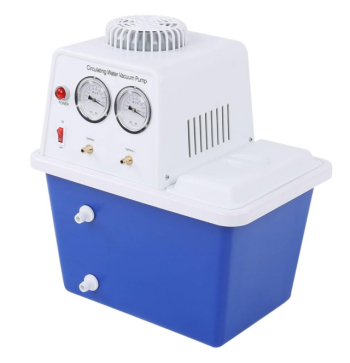
- Circulating Water Vacuum Pump for Laboratory and Industrial Use
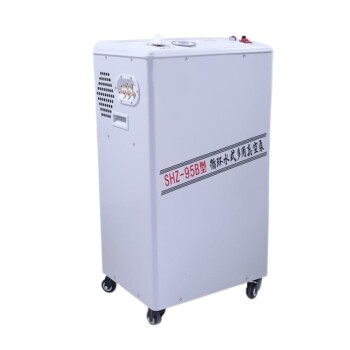
- Laboratory Vertical Water Circulating Vacuum Pump for Lab Use
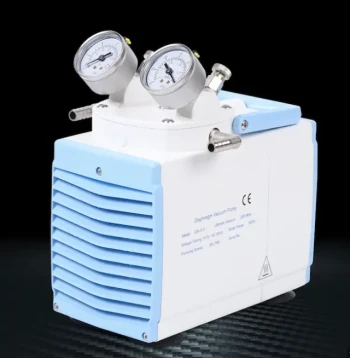
- Oil Free Diaphragm Vacuum Pump for Laboratory and Industrial Use
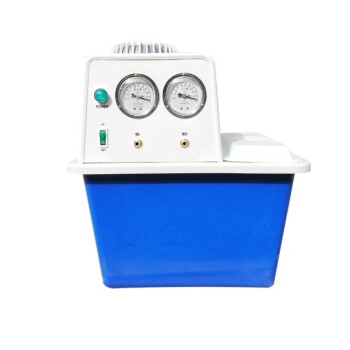
- Laboratory Benchtop Water Circulating Vacuum Pump for Lab Use
- Laboratory Rotary Vane Vacuum Pump for Lab Use
People Also Ask
- How is a circulating water vacuum pump utilized for hydrogen production residues? Optimize Your Solid-Liquid Separation
- How does the impeller rotation affect the gas flow in a water circulating vacuum pump? A Guide to the Liquid Ring Principle
- What determines the vacuum degree achievable by a water circulating vacuum pump? Unlock the Physics of Its Limits
- What are the advantages of a water circulating vacuum pump? Superior Durability for Demanding Lab Environments
- How does a water circulating vacuum pump operate? Discover the Efficient Liquid Piston Principle