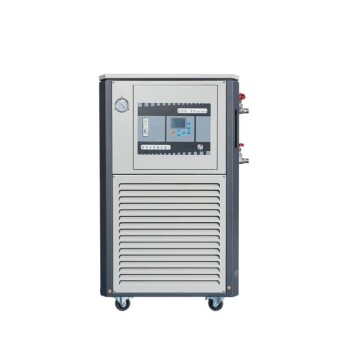
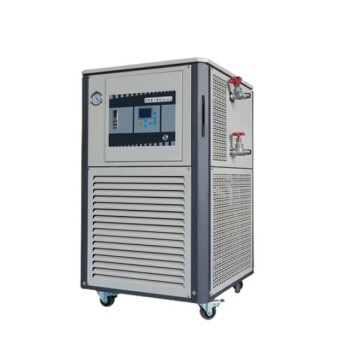
In biomass proximate analysis, a laboratory constant-temperature drying oven serves as the fundamental instrument for isolating moisture content through precise thermal control. Specifically, the oven is maintained at a strict 105°C, and the biomass sample is heated until it achieves a state of constant weight, ensuring that all free water is evaporated. This process allows analysts to calculate the exact moisture percentage based on the mass lost during drying, providing the baseline data necessary for characterizing the material.
Moisture content serves as a critical variable that directly lowers the net heating value of biomass. Consequently, the drying oven is not merely a heating tool, but the prerequisite for obtaining accurate dry-basis indicators and conducting valid thermochemical energy balance analyses.
The Mechanics of Moisture Determination
Precise Temperature Regulation
The oven is utilized to create a stable thermal environment set specifically to 105°C. This temperature is the industry standard because it is sufficient to vaporize free water without triggering the decomposition of the biomass itself.
The Principle of Constant Weight
The process is not defined by a fixed duration of time, but by a specific state of the material. The sample is heated until it reaches constant weight, meaning further heating results in no additional mass loss.
Calculating Mass Difference
The utility of the oven lies in the comparison of data points. By weighing the sample before insertion and after achieving constant weight, the total mass lost is attributed to water evaporation.
Why Accurate Moisture Data Matters
Impact on Energy Value
Moisture is a non-combustible component that absorbs energy during combustion to vaporize. Therefore, the data derived from the drying oven is essential for calculating the net heating value, a key metric for fuel efficiency.
Influence on Processing
In applications like pyrolysis, moisture content affects the phase separation of the resulting oil. Accurate oven drying ensures that downstream processing parameters can be set correctly based on the material's actual water content.
Foundation for Comparison
Biomass samples vary widely in their raw state. The drying oven allows analysts to convert all subsequent measurements (such as volatile matter or ash) to a dry basis, enabling objective comparison between different materials.
Understanding the Trade-offs
Time vs. Accuracy
Achieving a true "constant weight" can be time-consuming, as it requires repeated weighing and reheating. Rushing this process by using a fixed time interval instead of verification by weight will lead to inaccurate moisture readings.
Equipment Stability
The reliability of the results depends entirely on the oven's ability to maintain 105°C without fluctuation. Deviations in temperature can either fail to remove all water (if too low) or begin to scorch the biomass (if too high), compromising the sample's integrity.
Making the Right Choice for Your Goal
Whether you are evaluating fuel for power generation or researching chemical conversion, the drying process establishes the validity of your entire analysis.
- If your primary focus is combustion efficiency: Rigorously adhere to the 105°C standard to accurately predict the net heating value and evaluate storage stability.
- If your primary focus is thermochemical research: Prioritize the "constant weight" verification to ensure you have a flawless dry-basis foundation for complex energy balance analyses.
Precise moisture determination is the invisible foundation upon which all accurate biomass characterization is built.
Summary Table:
| Feature | Specification/Requirement | Impact on Analysis |
|---|---|---|
| Standard Temperature | 105°C (Stable) | Evaporates free water without sample decomposition |
| Success Criterion | Constant Weight | Ensures complete moisture removal for accuracy |
| Key Metric | Mass Loss | Direct calculation of moisture percentage |
| Downstream Value | Dry-Basis Baseline | Foundation for net heating value & energy balance |
Elevate Your Biomass Research with KINTEK Precision
Accurate proximate analysis begins with thermal stability. KINTEK specializes in high-performance laboratory equipment, providing the precision drying ovens and constant-temperature solutions essential for rigorous biomass characterization. Whether you are calculating net heating values or conducting complex thermochemical research, our equipment ensures your data is built on a flawless dry-basis foundation.
Our laboratory portfolio includes:
- High-Temperature Ovens & Furnaces: Muffle, tube, and vacuum systems for precise thermal control.
- Processing Excellence: Crushing and milling systems, sieving equipment, and hydraulic presses for sample preparation.
- Advanced Research Tools: High-pressure reactors, autoclaves, and battery research consumables.
Contact KINTEK Today to optimize your laboratory's efficiency and achieve superior analytical accuracy with our comprehensive range of equipment and consumables.
References
- Samomssa Inna, Kamga Richard. Assessment of Efficient Thermal Conversion Technologies and HHV from Compositional Characteristics of Cassava Peelings, Plantain Peelings and Corn Cobs. DOI: 10.3844/erjsp.2022.30.41
This article is also based on technical information from Kintek Solution Knowledge Base .
Related Products
- 23L Laboratory Vacuum Drying Oven
- Laboratory Scientific Electric Heating Blast Drying Oven
- 56L Vertical Laboratory Vacuum Drying Oven
- High Temperature Muffle Oven Furnace for Laboratory Debinding and Pre Sintering
- 10L Heating Chilling Circulator Cooling Water Bath Circulator for High and Low Temperature Constant Temperature Reaction
People Also Ask
- Why is a laboratory vacuum drying oven recommended for rice straw residues? Protect Your Biomass Integrity
- What role does a laboratory vacuum drying oven play in the preparation of modified multi-walled carbon nanotubes?
- What is the importance of using a laboratory vacuum drying oven? Preserving Slow-Release Microcapsule Integrity
- Why is a Laboratory Vacuum Drying Oven recommended for PBAT microspheres? Protect Sensitive Polymer Integrity
- What role does a laboratory vacuum drying oven play in processing nanoparticle powder samples? Protect Sample Integrity