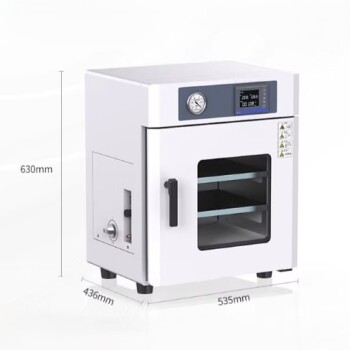
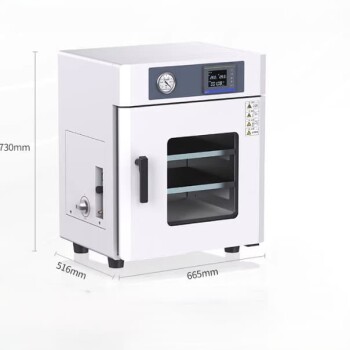
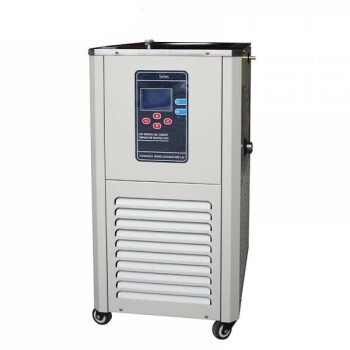
In the fabrication of Palladium/Graphene-modified stainless steel (Pd/G-SS) electrodes, the electric constant temperature drying oven acts as the critical environment for curing and solidification. It is utilized to bake the coated electrodes at a precisely controlled temperature, typically 80 °C, to drive the evaporation of the organic solvent N-Methyl-2-pyrrolidone (NMP) and activate the binding agents.
The primary function of the oven is not merely drying, but ensuring the physical cross-linking of the binder to create a mechanically stable and electrochemically efficient active layer.
The Mechanism of Thermal Curing
To understand the oven's utility, one must look beyond simple moisture removal. The process drives specific chemical and physical changes essential for electrode integrity.
Solvent Evaporation
The coating slurry contains N-Methyl-2-pyrrolidone (NMP), an organic solvent used to disperse the active materials.
The oven maintains a stable thermal environment that accelerates the evaporation of NMP. This must be done at a controlled rate to ensure the coating dries uniformly without trapping solvent pockets.
Binder Solidification
The process relies on a Polyvinylidene Fluoride (PVDF) binder to hold the Palladium and Graphene materials together.
Heat facilitates the physical cross-linking and solidification of this PVDF binder. This step effectively "glues" the active materials to the stainless steel substrate, creating a cohesive composite.
The Importance of Thermal Precision
The quality of the final electrode is directly tied to the accuracy of the temperature control within the oven.
Formation of a Dense Active Layer
Accurate temperature regulation ensures the formation of a dense, stable active material layer.
Inconsistent heating can lead to structural defects. Just as controlled drying prevents pore collapse in other porous materials (such as carbon adsorbents), steady heat in this application prevents the active layer from becoming brittle or uneven.
Enabling Electrochemical Efficiency
The physical structure formed during this drying phase dictates the electrode's performance.
By creating a uniform and solid foundation, the oven ensures efficient electron transfer within electrochemical cells. A poorly cured electrode would likely suffer from high resistance or delamination during use.
Understanding the Trade-offs
While the electric constant temperature drying oven is the standard tool for this process, operators must be aware of potential pitfalls regarding temperature settings.
The Risk of Thermal Fluctuation
If the temperature drops significantly below 80 °C, the NMP solvent may not evaporate completely. Residual solvent acts as an impurity, interfering with the electrochemical reaction and weakening the mechanical bond of the binder.
The Danger of Excessive Heat
Conversely, excessively high temperatures can degrade the PVDF binder or cause rapid solvent boiling. This leads to surface cracks or "pinholes" in the electrode layer, which destroys the uniformity required for consistent data and long-term durability.
Making the Right Choice for Your Goal
When configuring your drying process for Pd/G-SS electrodes, prioritize your parameters based on the specific outcome you need to optimize.
- If your primary focus is Mechanical Stability: Ensure the oven is calibrated to exactly 80 °C to maximize the cross-linking efficiency of the PVDF binder, preventing the coating from flaking off the stainless steel.
- If your primary focus is Electrochemical Sensitivity: Prioritize a stable, non-fluctuating thermal profile to form the densest possible active layer, which facilitates superior electron transfer kinetics.
Mastering the curing phase transforms a simple mixture of chemicals into a robust, high-performance sensing tool.
Summary Table:
| Parameter | Role in Pd/G-SS Curing | Impact on Electrode Performance |
|---|---|---|
| Target Temp | 80 °C (Optimized for PVDF/NMP) | Ensures complete solvent removal without layer cracking. |
| Mechanism | Solvent Evaporation & Cross-linking | Creates a mechanically stable and cohesive active composite. |
| Uniformity | Constant Thermal Profile | Prevents structural defects, pinholes, and delamination. |
| Outcome | Dense Active Layer Formation | Maximizes electron transfer kinetics and electrochemical sensitivity. |
Elevate Your Electrode Research with KINTEK Precision
Achieving the perfect active layer for Palladium/Graphene-modified stainless steel (Pd/G-SS) electrodes requires more than just heat—it requires absolute thermal stability. KINTEK specializes in high-precision laboratory equipment designed for the rigorous demands of battery research and electrochemical engineering.
From our advanced electric constant temperature drying ovens and high-temperature furnaces to our specialized electrolytic cells, electrodes, and hydraulic pellet presses, we provide the tools necessary to ensure your materials achieve maximum density and mechanical integrity.
Ready to optimize your curing process? Contact KINTEK Today to Find Your Lab Solution
References
- Wenqing Ma, Shaohui Zhang. Electrochemical reduction of Cr (VI) using a palladium/graphene modified stainless steel electrode. DOI: 10.2166/wst.2022.348
This article is also based on technical information from Kintek Solution Knowledge Base .
Related Products
- Laboratory Scientific Electric Heating Blast Drying Oven
- 23L Laboratory Vacuum Drying Oven
- 56L Vertical Laboratory Vacuum Drying Oven
- High Temperature Muffle Oven Furnace for Laboratory Debinding and Pre Sintering
- 10L Heating Chilling Circulator Cooling Water Bath Circulator for High and Low Temperature Constant Temperature Reaction
People Also Ask
- How does a laboratory electric drying oven contribute to the formation of the initial coating? Expert Insights
- What role does a precision laboratory drying oven play in the synthesis of GO-PANI nanocomposites? Protect Material Integrity
- What role does a laboratory drying oven play in the preparation of zinc oxide nanoparticle precursors?
- What is the necessity of using a laboratory drying oven when processing MoO3/GO composite nanopowders? Find out here.
- What is the role of a laboratory drying oven in cellulose citrate production? Ensure Material Stability & Purity