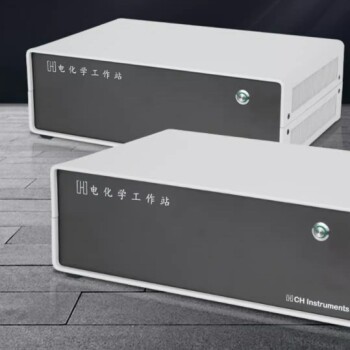
Analyzing the impedance characteristics of Nano-LiFePO4/C involves using an electrochemical workstation to perform Electrochemical Impedance Spectroscopy (EIS). By applying a small AC perturbation signal across a frequency range—typically from 0.1 Hz to 100 kHz—the workstation measures the system's resistance to current flow. This process allows researchers to isolate and quantify the ohmic resistance, charge transfer resistance, and lithium-ion diffusion rates within the electrode material.
Core Takeaway: The electrochemical workstation acts as a diagnostic tool that decomposes the complex internal resistance of a battery into individual physical processes. This enables a quantitative evaluation of how carbon coating and nanostructuring specifically improve the electrochemical kinetics of $LiFePO_4$.
The Mechanics of EIS Measurement
Applying the AC Perturbation
The workstation functions by injecting a small alternating current (AC) voltage signal into the electrochemical cell. Because the signal is minimal (usually 5-10 mV), it avoids disturbing the chemical equilibrium of the $LiFePO_4/C$ electrode while capturing its response.
Defining the Frequency Spectrum
Measurements are swept across a broad spectrum, generally from 100 kHz down to 0.1 Hz. High-frequency responses reveal the properties of the electrolyte and bulk materials, while lower frequencies expose the slower processes of chemical reactions and ion movement.
Deciphering the Impedance Components
Ohmic Resistance ($R_s$) at High Frequency
The workstation identifies the ohmic resistance ($R_s$) at the high-frequency intercept of the impedance plot. This value represents the combined resistance of the electrolyte, current collectors, and the physical contact between the $LiFePO_4$ particles.
Charge Transfer Resistance ($R_{ct}$)
In the mid-frequency range, the workstation captures the charge transfer resistance ($R_{ct}$), often visualized as a semicircle on a Nyquist plot. This measurement is critical for Nano-$LiFePO_4/C$ as it quantifies how effectively the carbon coating facilitates electron transfer at the particle surface.
Warburg Impedance and Ion Diffusion
At the lowest frequencies, the workstation measures the Warburg impedance, represented by a diagonal line. This slope allows researchers to calculate the diffusion coefficient of lithium ions as they move through the nano-sized $LiFePO_4$ crystal lattice.
Evaluating the Nano-LiFePO4/C Synergy
The Impact of Nano-Sizing
The workstation provides the data needed to prove that nano-sized particles reduce the path length for ion diffusion. By comparing different particle sizes, researchers use EIS to visualize the resulting decrease in overall impedance and the increase in rate capability.
Quantifying Carbon Coating Effectiveness
Carbon coating layers are designed to bridge the insulating nature of $LiFePO_4$. The workstation evaluates this by monitoring the reduction in interfacial resistance, ensuring the coating is uniform and conductive enough to support high-power applications.
Understanding the Trade-offs and Pitfalls
The Complexity of Equivalent Circuit Fitting
To interpret the data, researchers must fit the results to an equivalent electrical circuit. A common pitfall is over-complicating this model, which can lead to mathematically accurate but physically meaningless results that do not truly represent the battery's state.
Sensitivity to Environmental Conditions
Impedance measurements are highly sensitive to temperature and assembly pressure. Without strict climate control during the workstation's operation, the $R_s$ and $R_{ct}$ values may fluctuate significantly, leading to incorrect conclusions about the material's inherent performance.
Applying Impedance Analysis to Your Project
Making the Right Choice for Your Goal
- If your primary focus is improving fast-charge capability: Use the workstation to minimize $R_{ct}$ by iterating on the thickness and conductivity of the carbon coating.
- If your primary focus is long-term cycling stability: Monitor the evolution of the impedance spectrum over hundreds of cycles to detect electrode delamination or electrolyte degradation.
- If your primary focus is electrolyte optimization: Focus on the high-frequency intercept to calculate ionic conductivity and assess the humidification state of the system.
By leveraging the precise frequency control of an electrochemical workstation, you can transform abstract resistance values into a clear roadmap for material optimization.
Summary Table:
| Impedance Component | Frequency Range | Physical Process Represented |
|---|---|---|
| Ohmic Resistance ($R_s$) | High Frequency | Electrolyte, current collectors, and particle contact |
| Charge Transfer ($R_{ct}$) | Mid-Frequency | Electron transfer efficiency and carbon coating impact |
| Warburg Impedance | Low Frequency | Lithium-ion diffusion through the crystal lattice |
Elevate Your Battery Research with KINTEK
Precise electrochemical analysis requires more than just a workstation—it demands a high-performance environment. KINTEK specializes in providing the specialized laboratory equipment and consumables essential for advanced battery material characterization.
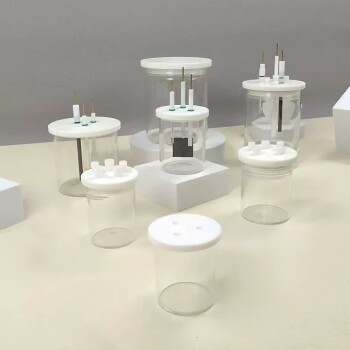
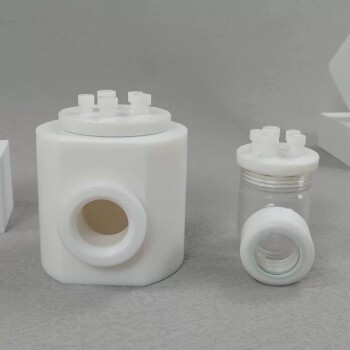
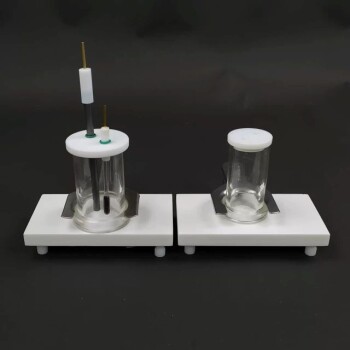
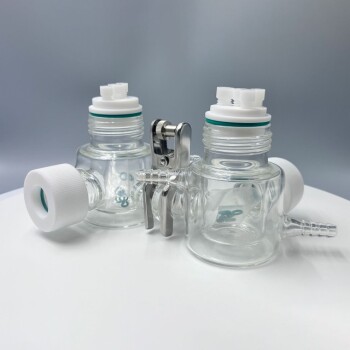
From high-precision electrolytic cells and electrodes specifically designed for battery research to high-temperature furnaces and hydraulic pellet presses for material synthesis, we offer a comprehensive ecosystem for your lab. Ensure the accuracy of your EIS measurements with our cooling solutions and high-purity ceramic consumables that maintain strict environmental control.
Ready to optimize your Nano-LiFePO4/C performance? Contact KINTEK today to find the perfect equipment tailored to your research goals!
References
- Haozhi Duan, Shuxia Yuan. Solution Combustion Synthesis of High-Performance Nano-LiFePO4/C Cathode Material from Cost-Effective Mixed Fuels. DOI: 10.3390/ma16227155
This article is also based on technical information from Kintek Solution Knowledge Base .
Related Products
- Lab Electrochemical Workstation Potentiostat for Laboratory Use
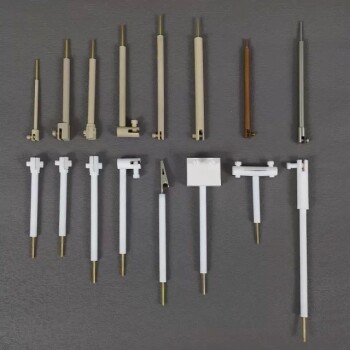
- Electrode Fixture for Electrochemical Experiments
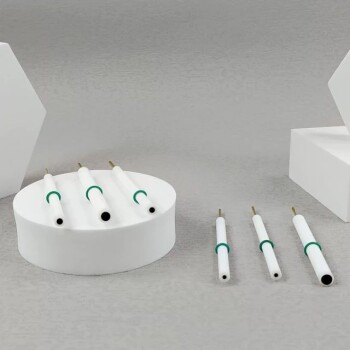
- Glassy Carbon Electrochemical Electrode
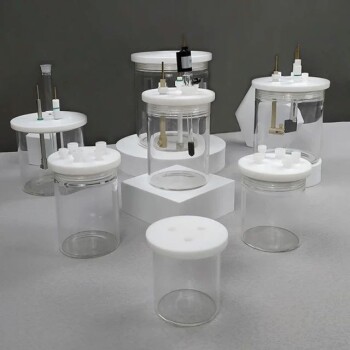
- Electrolytic Electrochemical Cell with Five-Port
- Sample Support Body for Electrochemical Tests
People Also Ask
- How does an electrochemical workstation assist in assessing corrosion resistance? Quantify Laser-Remelted Steel Performance
- How does an electrochemical testing system evaluate mesoporous oxide electrodes? Precision Analysis for Battery Research
- What are the primary functions of an electrochemical workstation (Potentiostat)? Expert Titanium Alloy Corrosion Analysis
- What is the primary function of a high-precision electrochemical workstation? Optimize Your Reactor Performance
- What role do electrochemical workstations play in researching the corrosion resistance of carbon coatings? Expert Guide