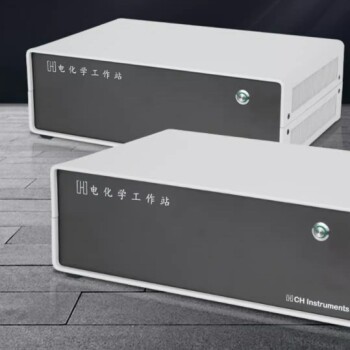
The primary function of a high-precision electrochemical workstation (potentiostat) is to apply a precise bias voltage to your reactor while simultaneously monitoring the resulting current density in real-time. This dual capability allows for the quantitative analysis of electrode kinetics, charge transfer resistance, and the system's overall photo-response capabilities.
At its core, the potentiostat acts as the analytical "heart" of your experimental setup. It translates complex electrochemical behaviors into quantifiable data, enabling you to optimize process parameters by characterizing exactly how efficient your charge transfer and photo-response mechanisms are under varying conditions.
The Mechanics of Evaluation
Precise Voltage Control
The workstation allows you to apply a specific bias voltage or overpotential to the photoelectrochemical cell.
This control is critical for establishing the thermodynamic conditions necessary to drive specific reactions.
By maintaining exact voltage levels, you can isolate the electrochemical behaviors of interest without the noise of fluctuating potentials.
Real-Time Current Monitoring
As the voltage is applied, the workstation measures the response current generated by the system.
This data is converted into current density, providing a direct metric of reaction rate and efficiency.
Monitoring this in real-time allows you to immediately detect changes in performance due to light exposure or electrolyte variations.
Critical Analytical Techniques
Linear Sweep and Cyclic Voltammetry (LSV & CV)
The workstation performs these tests to map the kinetic characteristics of your electrodes.
By continuously polarizing the electrode—sweeping the voltage and recording the current—you can identify the starting potential of the reaction.
These tests also reveal the limiting current density, which helps define the maximum theoretical efficiency of your reactor under current conditions.
Electrochemical Impedance Spectroscopy (EIS)
To understand what is slowing your reaction down, the workstation utilizes EIS.
This technique quantifies charge transfer resistance at the electrode-electrolyte interface.
It provides a detailed breakdown of internal resistance, helping you distinguish between surface kinetic limitations and bulk transport issues.
Understanding the Trade-offs
Sensitivity vs. Noise
High-precision workstations are designed to detect minute changes in current, which is essential for characterizing subtle photo-responses.
However, this high sensitivity can make the system susceptible to interference.
Factors such as side reactions (e.g., hydrogen evolution mentioned in comparative studies) or electromagnetic noise can distort the data if the experimental environment is not strictly controlled.
Data Complexity
While the workstation provides comprehensive data, the output requires sophisticated interpretation.
Techniques like EIS generate complex impedance spectra that must be modeled correctly to extract meaningful physical parameters.
Misinterpretation of these models can lead to incorrect conclusions regarding the limiting factors of your reactor.
Making the Right Choice for Your Goal
To get the most out of your electrochemical workstation, align your testing strategy with your specific optimization targets:
- If your primary focus is improving reaction rates: Prioritize Linear Sweep Voltammetry (LSV) to identify the onset potential and determine the limiting current density of your photo-active material.
- If your primary focus is reducing energy losses: Utilize Electrochemical Impedance Spectroscopy (EIS) to isolate and quantify charge transfer resistance, allowing you to target the specific interfaces causing efficiency drops.
By systematically applying these controls, you transform raw electrical signals into a roadmap for reactor optimization.
Summary Table:
| Feature | Function | Key Benefit |
|---|---|---|
| Voltage Control | Applies precise bias/overpotential | Isolates specific electrochemical behaviors |
| Current Monitoring | Real-time current density measurement | Direct metric of reaction rate and efficiency |
| LSV & CV | Sweeps voltage to map kinetics | Identifies onset potential and limiting current |
| EIS | Quantifies charge transfer resistance | Pinpoints surface and bulk transport limitations |
Elevate Your Electrochemical Research with KINTEK
Precise data is the foundation of breakthrough discoveries. KINTEK specializes in high-performance laboratory equipment designed for the most demanding research environments. Whether you are optimizing photoelectrochemical reactors or developing next-generation energy storage, our comprehensive range of electrolytic cells, electrodes, and high-precision analytical tools ensures you achieve repeatable, quantifiable results.
From high-temperature furnaces and vacuum systems to battery research consumables and advanced cooling solutions, KINTEK provides the integrated tools necessary to minimize noise and maximize efficiency in your lab.
Ready to refine your electrode kinetics and charge transfer analysis? Contact KINTEK today to discover how our expert-grade equipment can empower your scientific innovation.
References
- Ghassan Chehade, İbrahim Dinçer. A photoelectrochemical system for hydrogen and chlorine production from industrial waste acids. DOI: 10.1016/j.scitotenv.2019.136358
This article is also based on technical information from Kintek Solution Knowledge Base .
Related Products
- Lab Electrochemical Workstation Potentiostat for Laboratory Use
- Electrode Fixture for Electrochemical Experiments
- Electrolytic Electrochemical Cell with Five-Port
- Side Window Optical Electrolytic Electrochemical Cell
People Also Ask
- How does an electrochemical workstation assist in assessing corrosion resistance? Quantify Laser-Remelted Steel Performance
- How does an electrochemical testing system evaluate mesoporous oxide electrodes? Precision Analysis for Battery Research
- What are the primary functions of an electrochemical workstation (Potentiostat)? Expert Titanium Alloy Corrosion Analysis
- What role do electrochemical workstations play in researching the corrosion resistance of carbon coatings? Expert Guide
- What characteristics are analyzed using an electrochemical workstation during EIS testing of solid-state batteries?