An industrial electric furnace acts as a precision stress-testing chamber for High-Velocity Oxygen Fuel (HVOF) coatings. To evaluate thermal fatigue, the furnace heats coating samples to a specific target temperature, such as 600°C, holds them for a defined period, and then allows them to cool in air. This cyclical process of heating and cooling simulates the actual temperature fluctuations the material will endure during its operational life.
By replicating the thermal expansion and contraction of real-world environments, the electric furnace exposes critical vulnerabilities in the coating’s microstructure and verifies its long-term stability before deployment.
The Mechanics of Thermal Fatigue Testing
To understand the durability of an HVOF coating, you must look beyond its initial application state. You must understand how it behaves under stress.
Controlled Thermal Cycles
The furnace is used to perform controlled thermal cycle loading experiments. Rather than exposing the material to random heat, the furnace applies a consistent, repeatable thermal load.
Simulating Real-World Fluctuations
Materials in industrial settings rarely stay at a constant temperature. They heat up and cool down repeatedly.
By strictly managing the heating phase and the subsequent cooling in air, the furnace mimics these environmental shifts. This places the coating under thermal stress, forcing it to expand and contract just as it would in the field.
What the Furnace Reveals
The value of this testing method lies in the specific data points it generates regarding the coating's physical degradation.
Impact on Microstructure
Thermal cycling can fundamentally alter the arrangement of the material's internal structure. The furnace test reveals how the microstructure evolves or deteriorates after repeated exposure to high heat.
Changes in Microhardness
Heat treatment often affects how hard a material remains over time. This process allows engineers to measure the impact of thermal stress on the coating's microhardness, ensuring it does not become too soft or brittle.
Crack Propagation Resistance
Perhaps the most critical insight is structural failure. The expansion and contraction cycles reveal the coating's crack propagation resistance. This indicates how likely the coating is to fracture or delaminate under sustained thermal fatigue.
Understanding the Scope of the Test
While the industrial electric furnace is essential for verification, it is important to understand the specific parameters of the test.
The Role of Air Cooling
The primary reference highlights that samples are cooled in air. This suggests a specific rate of cooling (convection) rather than a rapid quench (liquid cooling).
This is critical because the speed of cooling defines the intensity of the thermal shock. Air cooling simulates a gradual return to ambient temperature, which is common in many industrial shutdown cycles.
Focus on Long-Term Stability
This method is not designed for instantaneous results. It is specifically utilized to verify long-term stability.
The "defined period" of heating is required to ensure the material is thoroughly saturated with heat, providing a realistic assessment of endurance rather than a snapshot of momentary resistance.
Making the Right Choice for Your Goal
When reviewing thermal fatigue data generated by an electric furnace, align the results with your specific engineering requirements.
- If your primary focus is mechanical longevity: Prioritize the data on crack propagation resistance to ensure the coating will not fracture under cyclic stress.
- If your primary focus is wear resistance: Examine the microhardness results to verify that the coating maintains its surface strength after thermal exposure.
An industrial electric furnace provides the definitive environment for validating that an HVOF coating can survive the thermal realities of its intended application.
Summary Table:
| Evaluation Metric | Testing Role of Electric Furnace | Impact on HVOF Coating |
|---|---|---|
| Thermal Cycling | Repeats heating (e.g., 600°C) and air cooling | Simulates real-world operational stress |
| Microstructure | Saturates material with consistent heat | Reveals internal structural evolution/deterioration |
| Microhardness | Maintains target temperatures for defined periods | Verifies surface strength after thermal exposure |
| Crack Resistance | Induces expansion and contraction cycles | Identifies risks of fracturing or delamination |
Maximize Material Longevity with KINTEK Precision Solutions
Ensure your coatings and materials can withstand the most rigorous thermal environments. KINTEK specializes in providing high-performance laboratory equipment designed for precision and durability. Whether you are conducting thermal fatigue testing or complex material synthesis, our comprehensive range of industrial high-temperature furnaces (muffle, vacuum, and atmosphere), crushing systems, and hydraulic presses ensures repeatable, high-accuracy results.
From high-pressure reactors to specialized ceramics and crucibles, we empower research labs and industrial manufacturers to achieve long-term stability in their most demanding applications.
Ready to elevate your testing standards? Contact our technical experts today to find the perfect equipment solution for your laboratory.
References
- Mariana Landová, Janette Brezinová. Determination of selected properties and fracture toughness of HVOF coatings. DOI: 10.1515/kom-2016-0024
This article is also based on technical information from Kintek Solution Knowledge Base .
Related Products
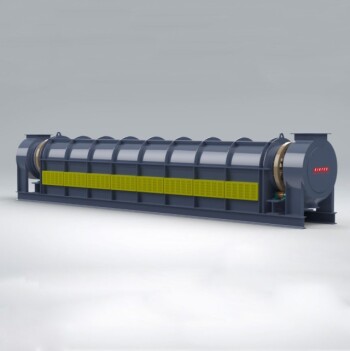
- Electric Rotary Kiln Pyrolysis Furnace Plant Machine Calciner Small Rotary Kiln Rotating Furnace
- Electric Rotary Kiln Small Rotary Furnace for Activated Carbon Regeneration
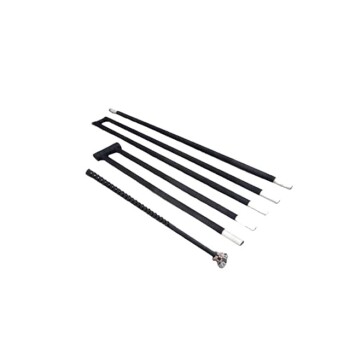
- Silicon Carbide SiC Thermal Heating Elements for Electric Furnace
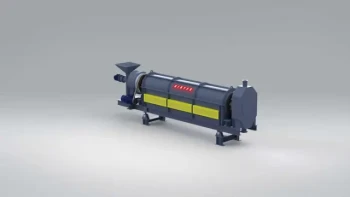
- Electric Rotary Kiln Continuous Working Small Rotary Furnace Heating Pyrolysis Plant
- Graphite Vacuum Furnace High Thermal Conductivity Film Graphitization Furnace
People Also Ask
- What is a rotary kiln electric furnace? Achieve Superior Uniform Heating for Your Materials
- What are the characteristics of the slipping, slumping, and rolling modes of bed motion? Optimize Your Rotary Process
- What are the advantages of rotary kiln furnace? Achieve Superior Uniformity & Efficiency
- What is the temperature of a rotating kiln? It Depends on Your Material and Process Goal
- What are the principles of a rotary kiln? Master the Mechanics of High-Temperature Processing