Synthetic diamond serves as the critical functional element in high-pressure scientific experimentation. Specifically, it is manufactured to create diamond anvils, which are the core components of the Diamond Anvil Cell (DAC)—a device essential for studying materials under conditions that mimic the deep earth or planetary cores.
Core Insight Synthetic diamonds, produced via Chemical Vapor Deposition (CVD) or High Pressure High Temperature (HPHT) methods, provide the specific optical transparency and superior hardness required to compress matter up to 2.5 million atmospheres while allowing researchers to measure electric and magnetic properties in real-time.
The Mechanism: The Diamond Anvil Cell
The Role of the Anvil
In high-pressure research, the primary tool is the Diamond Anvil Cell (DAC).
This device functions by placing a minute sample of material between the flat faces of two opposing gem-quality diamonds.
Because diamond is the hardest known material, it can withstand the force required to generate immense pressure on the sample without deforming or shattering.
Achieving Extreme Pressures
Synthetic diamond anvils facilitate the study of substances under pressures reaching up to 2.5 million atmospheres.
At these extremes, researchers can observe phenomena that do not exist at ambient pressure, such as changes in material density, phase transitions, and metallization.
Why Synthetic Diamond is Preferred
Optically Transparent Windows
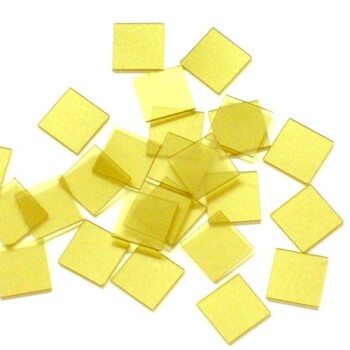
One of the most valuable properties of synthetic diamond in this context is optical transparency.
High-pressure research is not just about crushing a sample; it is about measuring it.
Because synthetic diamonds can be engineered to be optically clear, they act as "windows" into the high-pressure chamber.
This allows lasers, X-rays, and visible light to pass through the anvil, enabling the measurement of electric and magnetic properties while the sample is under pressure.
Engineered Hardness and Consistency
The properties of diamonds vary depending on how they are made.
Synthetic diamonds often possess superior hardness compared to most natural diamonds.
This structural integrity is vital for preventing anvil failure during the intense stress of compression experiments.
Broader Research Utility
Stability in Harsh Environments
High-pressure research often involves volatile chemical conditions or extreme heat.
Synthetic diamond offers exceptional chemical and thermal stability.
This allows it to function as an electrode or container in conditions that would destroy traditional materials, such as studying difficult redox reactions or degrading organic contaminants.
Sensor Integration
Beyond acting as a vice, synthetic diamond is used to manufacture high-sensitivity sensors.
These sensors can detect temperature changes, ultraviolet rays, and radiation, providing critical data streams alongside pressure measurements.
Understanding the Trade-offs
Process-Dependent Properties
It is critical to note that not all synthetic diamonds perform equally.
The specific properties—such as hardness, electron mobility, and thermal conductivity—vary significantly with the manufacturing process (CVD vs. HPHT).
Selection Criticality
Choosing the wrong type of synthetic diamond for a specific experiment can lead to premature failure or poor optical transmission.
Researchers must select the synthesis method that prioritizes the specific attribute (e.g., optical clarity vs. maximum mechanical hardness) required for their specific high-pressure application.
Making the Right Choice for Your Research
To effectively utilize synthetic diamond in your high-pressure projects, align the material properties with your observational goals:
- If your primary focus is optical or magnetic measurement: Prioritize CVD or HPHT diamonds specifically engineered for high optical transparency to ensure clear data transmission through the anvil.
- If your primary focus is maximum pressure generation: Select synthetic diamonds noted for superior hardness to withstand pressures approaching 2.5 million atmospheres without structural failure.
- If your primary focus is chemical reactivity under pressure: Leverage the material's chemical stability to use the diamond as a robust electrode or reaction vessel.
By leveraging the engineered consistency of synthetic diamonds, you transform a gemstone into a precision optical and mechanical instrument.
Summary Table:
| Feature | Synthetic Diamond Advantage | Research Benefit |
|---|---|---|
| Hardness | Superior to natural diamonds | Withstands pressures up to 2.5 million atmospheres |
| Transparency | High optical clarity | Allows real-time measurement of electric & magnetic properties |
| Stability | High thermal & chemical resistance | Functions as a robust electrode in harsh environments |
| Customization | Engineered via CVD or HPHT | Tailored properties (hardness vs. clarity) for specific needs |
Elevate Your High-Pressure Research with KINTEK
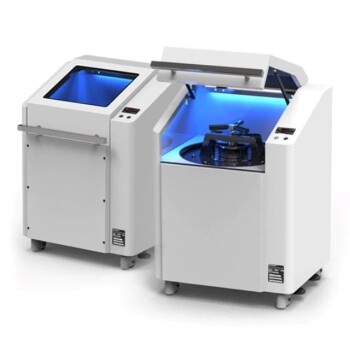
Precision matters when pushing materials to their limits. At KINTEK, we specialize in providing high-performance laboratory equipment designed for extreme environments. Whether you are conducting deep-earth simulations or advanced material synthesis, our portfolio includes cutting-edge high-temperature high-pressure reactors and autoclaves, crushing systems, and specialized consumables like ceramics and crucibles.
Why choose KINTEK?
- Engineered Consistency: High-quality tools for reliable data in high-pressure experiments.
- Comprehensive Solutions: From hydraulic presses to thermal cooling, we support every stage of your research.
- Expert Support: Our team understands the nuances of CVD and HPHT applications.
Ready to transform your laboratory's capabilities? Contact KINTEK today to discuss your specific research requirements!
Related Products
- Laboratory CVD Boron Doped Diamond Materials
- Multifunctional Electrolytic Electrochemical Cell Water Bath Single Layer Double Layer
- Reference Electrode Calomel Silver Chloride Mercury Sulfate for Laboratory Use
- Vibrating Disc Mill Small Laboratory Grinding Machine
- Ring Press Mold for Lab Applications
People Also Ask
- What is the purpose of adding a boron source in CVD diamond growth? Master P-Type Semiconductor Conductivity
- What materials are CVD deposition? From Semiconductors to Super-Hard Coatings
- What are the advantages of BDD electrodes? Maximize Wastewater Treatment Efficiency and Durability
- What are the applications of CVD diamonds? From Jewelry to High-Tech Tools
- Are CVD diamonds good? Real Diamonds with Ethical Origins & Better Value