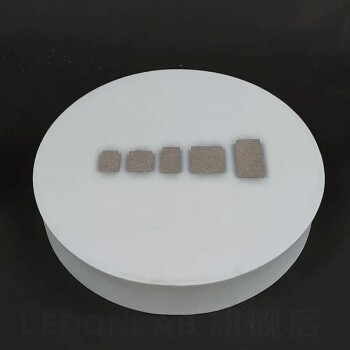
The primary advantage of selecting platinum foil for Ni-Cr alloy experiments is its ability to facilitate current flow without chemically altering the test environment. By utilizing platinum, you ensure that the electrochemical data collected is a result of the Ni-Cr alloy's behavior, rather than an artifact of the counter electrode reacting with the solution.
Core Takeaway Platinum foil provides a critical combination of exceptional electrical conductivity and chemical inertness across a wide pH range. It completes the electrical circuit without dissolving or releasing impurity ions, thereby guaranteeing that the dissolution data collected is strictly attributable to the Ni-Cr alloy and not caused by external contamination.
Ensuring Chemical Integrity
Chemical Stability Across pH Levels
The fundamental requirement for a counter electrode is inertness. Platinum foil remains chemically stable in various pH environments, from acidic to basic.
This stability prevents the electrode from participating in the redox reactions intended for the working electrode. It ensures the environment remains constant throughout the experiment.
Prevention of Impurity Introduction
In dissolution experiments, the purity of the electrolyte is paramount. Platinum does not undergo anodic dissolution when current flows through the cell.
Because it does not dissolve, it does not release impurity ions into the solution. This eliminates the risk of cross-contamination that could skew the dissolution profile of the Ni-Cr alloy.
Electrical Performance and Data Reliability
Superior Electrical Conductivity
Platinum is a highly conductive material, which is essential for minimizing resistance within the electrochemical cell.
High conductivity ensures that the counter electrode does not act as a bottleneck for the current. It acts as an efficient carrier for charge exchange, facilitating the polarization of the Ni-Cr sample.
Isolating the Working Electrode Response
The role of the counter electrode is to complete the current loop in a three-electrode system. It must do this without generating its own significant electrochemical signals.
By remaining inert, platinum foil ensures that the measured current and potential characteristics originate solely from the interface of the Ni-Cr alloy. It prevents the counter electrode's own polarization from interfering with the data.
Operational Considerations and Trade-offs
Surface Area Management
While platinum foil is excellent, the geometry matters. The counter electrode must have a sufficient surface area to prevent it from limiting the current flow.
If the foil is too small compared to the working electrode, the reaction at the counter electrode may become the rate-limiting step. Supplementary data suggests using high-surface-area formats (like mesh) can be beneficial for uniform current distribution, so the foil must be sized appropriately large.
Cost vs. Performance
Platinum is a precious metal and represents a significant material cost.
This cost is the primary trade-off for its high performance. However, for precise analytical work like Ni-Cr dissolution where data purity is non-negotiable, the cost is usually justified by the reliability of the results.
Making the Right Choice for Your Experiment
To ensure your experimental setup yields valid dissolution data, evaluate your specific requirements:
- If your primary focus is Data Accuracy and Purity: Select platinum foil to ensure zero contamination from the counter electrode, preserving the integrity of the Ni-Cr reaction data.
- If your primary focus is High Current Handling: Ensure the platinum foil has a significantly larger surface area than your Ni-Cr sample to prevent current bottlenecks and ensure uniform distribution.
Ultimately, the use of platinum foil transforms the counter electrode from a variable into a constant, allowing you to focus entirely on the material science of your alloy.
Summary Table:
| Feature | Benefit for Ni-Cr Dissolution Experiments |
|---|---|
| Chemical Inertness | Prevents electrode dissolution and electrolyte contamination across all pH levels. |
| High Conductivity | Minimizes electrical resistance, ensuring efficient charge exchange and polarization. |
| Data Isolation | Guarantees that measured electrochemical signals originate solely from the Ni-Cr alloy. |
| Reliability | Eliminates artifacts and cross-contamination, providing high-purity analytical data. |
Elevate Your Electrochemical Research with KINTEK
Precision in material science starts with high-purity components. KINTEK specializes in providing premium laboratory equipment and consumables designed for the most demanding research environments.
Whether you are conducting Ni-Cr alloy dissolution studies or advancing battery research, our comprehensive portfolio—including high-purity electrolytic cells, platinum electrodes, high-temperature furnaces, and specialized consumables—ensures your data remains untainted and reproducible.
Don't let inferior electrodes compromise your experimental integrity. Partner with KINTEK for reliable solutions tailored to your lab's specific needs.
Ready to optimize your experimental setup? Contact our technical experts today to find the perfect tools for your research!
References
- Penghao Xiao, Brandon C. Wood. Atomic-scale understanding of oxide growth and dissolution kinetics of Ni-Cr alloys. DOI: 10.1038/s41467-024-54627-x
This article is also based on technical information from Kintek Solution Knowledge Base .
Related Products
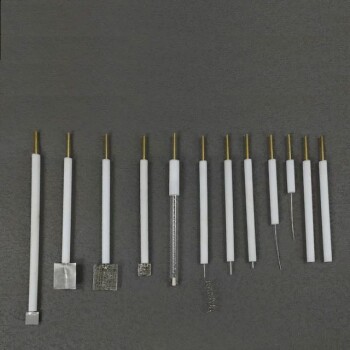
- Platinum Auxiliary Electrode for Laboratory Use
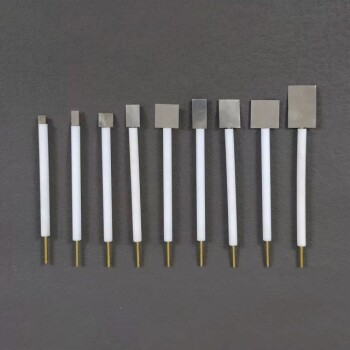
- Platinum Sheet Electrode for Laboratory and Industrial Applications
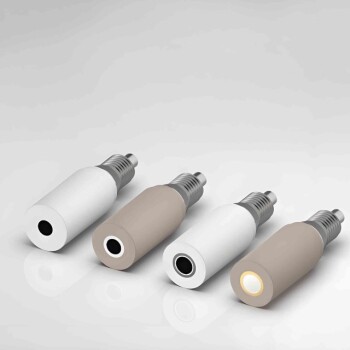
- Rotating Platinum Disk Electrode for Electrochemical Applications
- Platinum Sheet Electrode for Battery Lab Applications
- RRDE rotating disk (ring disk) electrode / compatible with PINE, Japanese ALS, Swiss Metrohm glassy carbon platinum
People Also Ask
- What is the function of a platinum electrode as an auxiliary electrode? Ensure Precise Nickel Coating Corrosion Testing
- Why is platinum typically selected as the auxiliary electrode for electrochemical testing of oxazoline inhibitors?
- What does the auxiliary electrode do? Ensuring Accurate Electrochemical Measurements
- What are the roles of Pt counter and reference electrodes in nitrided steel testing? Optimize Your Electrochemical Data
- What are the advantages of using a platinum counter electrode? Ensure Purity in Photocatalytic Coating Deposition