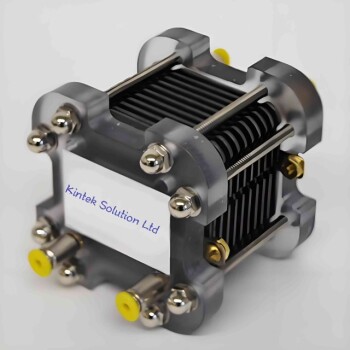
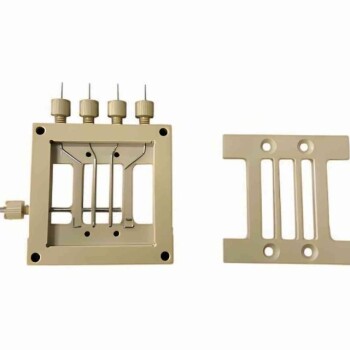
The integration of a micro-electrolytic cell system (MCS) with an electrochemical workstation fundamentally transforms alloy characterization by enabling high-precision testing on minimal surface areas. This setup allows for the accurate capture of polarization curves within specific environments, such as cell culture media, facilitating the rapid screening of Magnesium-Silver (Mg-Ag) alloy compositions. By isolating small areas, researchers can efficiently identify optimal heat treatment states and degradation rates without the resource burden of large-scale material consumption.
Traditional bulk testing often consumes excessive material and time when refining alloy compositions. The MCS resolves this by enabling rapid, high-throughput screening of Mg-Ag alloys on a microscopic scale, ensuring precise control over degradation parameters while significantly reducing raw material costs.
Precision in Simulated Environments
Targeted Surface Analysis
The MCS restricts electrochemical testing to a very small, defined surface area. This allows researchers to isolate specific microstructural features and eliminates the variability often caused by large-scale surface irregularities.
Biological Relevance
The system is specifically capable of capturing polarization curves in cell culture media. This ensures that the degradation data collected reflects how the Mg-Ag alloy will behave in physiological conditions, rather than in simplified saline solutions.
Accelerating the R&D Cycle
Rapid Composition Screening
Using an MCS allows for the quick evaluation of multiple alloy variations. Researchers can screen various silver concentrations rapidly to determine which compositions offer the best corrosion resistance or degradation speed.
Optimizing Heat Treatments
Thermal processing significantly alters the microstructure and degradation profile of Mg-Ag alloys. This system enables the fast iteration of different heat treatment states to pinpoint the exact protocol that yields the ideal degradation rate.
Understanding the Trade-offs
Representativeness of Micro-Data
While testing small areas saves material, it may not fully capture macro-scale heterogeneity. Results obtained from a micro-site must be carefully analyzed to ensure they are representative of the bulk material's overall behavior.
Sensitivity to Surface Preparation
Because the test area is microscopic, the quality of surface finishing is critical. Minor scratches or inconsistencies that might be negligible in bulk testing can significantly skew results in a micro-electrolytic cell.
Optimizing Your Alloy Characterization Strategy
To maximize the value of an MCS in your research, align your usage with your specific development phase:
- If your primary focus is rapid prototyping: Use the MCS to screen a wide range of compositions and heat treatments to quickly filter down to the most promising candidates.
- If your primary focus is resource efficiency: Leverage the system's low material requirement to conduct extensive testing on expensive or scarce experimental alloy batches.
By shifting analysis from the macro to the micro scale, you gain the agility to refine Mg-Ag degradation profiles with unprecedented speed and precision.
Summary Table:
| Feature | Advantage in Mg-Ag Research | Impact on Study |
|---|---|---|
| Micro-Scale Testing | Minimal material consumption | Reduced R&D costs and waste |
| Targeted Analysis | Isolates specific microstructural features | High precision and reduced variability |
| In-Situ Media | Captures data in cell culture media | Improved biological and physiological relevance |
| Rapid Screening | Fast iteration of heat treatments/compositions | Accelerated alloy development cycle |
Revolutionize Your Alloy Research with KINTEK
Unlock the full potential of your material characterization with KINTEK’s high-precision laboratory solutions. Whether you are refining Magnesium-Silver alloys or developing next-generation biomaterials, our specialized electrolytic cells and electrodes provide the accuracy required for micro-scale degradation studies.
Beyond electrochemical testing, KINTEK offers a comprehensive range of high-temperature furnaces, crushing systems, and hydraulic presses to support every stage of your R&D—from alloy synthesis to final analysis.
Ready to accelerate your research? Contact us today to find the perfect equipment for your lab!
References
- Di Tie, Regine Willumeit‐Römer. Antibacterial biodegradable Mg-Ag alloys. DOI: 10.22203/ecm.v025a20
This article is also based on technical information from Kintek Solution Knowledge Base .
Related Products
- Customizable PEM Electrolysis Cells for Diverse Research Applications
- PTFE Electrolytic Cell Electrochemical Cell Corrosion-Resistant Sealed and Non-Sealed
- Electrolytic Electrochemical Cell with Five-Port
- Electrolytic Electrochemical Cell for Coating Evaluation
- Thin-Layer Spectral Electrolysis Electrochemical Cell
People Also Ask
- What are the risks of improper voltage control in an electrolysis cell? Avoid Costly Damage and Inefficiency
- What are the opening configurations for the non-sealed and sealed versions of the electrolysis cell? Optimize Your Electrochemical Setup
- What is an electrolysis cell? A Guide to Driving Chemical Reactions with Electricity
- What parameters must be strictly controlled during the electrolysis process? Ensure Precision and Efficiency
- What are the precautions for heating or sterilizing an electrolysis cell? Avoid Damaging Sensitive Components