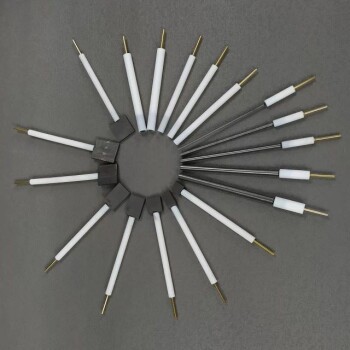
Platinum mesh offers a superior combination of chemical inertness and geometric efficiency for cathodic hydrogen charging. It serves two primary functions: the platinum material prevents electrolyte contamination through its high resistance to anodic dissolution, while the mesh structure maximizes surface area to ensure a uniform current distribution across your specimen.
Core Insight: The value of platinum mesh lies in its ability to isolate variables. By eliminating electrode corrosion and inconsistent current fields, it ensures that observed changes are due solely to hydrogen interaction with your material, not experimental artifacts.
Chemical Stability and Contamination Control
Unwavering Inertness
Platinum possesses exceptional electrochemical inertness. It acts as a highly stable counter electrode that resists anodic dissolution, even when subjected to aggressive acidic (e.g., dilute sulfuric acid) or saline electrolytes.
Maintaining Electrolyte Purity
Preventing contamination is critical for accurate results. Because the platinum does not degrade, it introduces no metal ion impurities into the solution. This ensures the charging environment remains pure and prevents foreign elements from depositing onto the stainless steel specimen.
Geometric Advantages of the Mesh Structure
Maximized Effective Surface Area
Mesh outperforms solid plates in surface area efficiency. The open, woven structure significantly increases the effective surface area available for the electrochemical reaction without increasing the overall footprint of the electrode.
Uniform Current Distribution
Consistency is key for reproducible hydrogen charging. The mesh geometry creates a more dispersed and even electrical field compared to a simple wire or rod. This facilitates a uniform hydrogen reduction reaction across the entire surface of the specimen, preventing localized "hot spots" of high current density.
Optimizing the Electrochemical Reaction
Stable Oxygen Evolution
The auxiliary electrode must support a stable counter-reaction. Platinum serves as a reliable site for the oxygen evolution reaction (OER). Its high electrical conductivity ensures that the reaction kinetics at the counter electrode do not limit the process.
Isolating the Hydrogen Reaction
Control the variable that matters. By stabilizing the counter-reaction, the platinum mesh ensures that the voltage and current applied are primarily controlling the hydrogen evolution reaction (HER) on your sample surface, rather than overcoming resistance at the auxiliary electrode.
Understanding the Trade-offs
High Material Cost
Platinum is a significant investment. The primary downside to using platinum mesh is the cost relative to graphite or stainless steel counter electrodes. However, for high-precision hydrogen embrittlement studies, this cost is often justified by the data reliability.
Mechanical Handling
Mesh structures can be physically delicate. While chemically robust, fine platinum mesh can be deformed if handled roughly. Deformation can alter the geometry and, consequently, the uniformity of the current distribution you are trying to achieve.
Making the Right Choice for Your Goal
To determine if platinum mesh is required for your specific setup, consider your experimental priorities:
- If your primary focus is high-precision research: Use platinum mesh to guarantee that no foreign ions alter the surface chemistry of your specimen during long charging cycles.
- If your primary focus is uniform hydrogen absorption: Use platinum mesh to ensure the hydrogen distribution is homogeneous across the sample, which is critical for subsequent mechanical testing.
Ultimately, platinum mesh transforms the auxiliary electrode from a potential variable into a constant, allowing you to focus entirely on your material's performance.
Summary Table:
| Feature | Advantage | Benefit to Experiment |
|---|---|---|
| Material Inertness | High resistance to anodic dissolution | Prevents electrolyte contamination and metal ion deposition |
| Mesh Geometry | Maximized surface area-to-volume ratio | Ensures uniform current distribution across the specimen |
| Electrode Stability | Reliable oxygen evolution reaction (OER) | Maintains stable voltage and reaction kinetics for HER |
| High Conductivity | Low electrical resistance | Eliminates electrode-based limitations on charging current |
Elevate Your Electrochemical Research with KINTEK
Precision in hydrogen charging starts with high-quality components. KINTEK specializes in providing advanced laboratory solutions, including high-performance electrolytic cells and electrodes specifically designed for demanding research environments.
Whether you are conducting hydrogen embrittlement studies or battery research, our platinum mesh electrodes ensure that your data is free from experimental artifacts. Beyond electrochemical tools, KINTEK offers a comprehensive range of high-temperature furnaces, crushing systems, and hydraulic presses to support your entire material processing workflow.
Ready to isolate your variables and achieve reproducible results? Contact KINTEK experts today to find the perfect electrode solutions and laboratory equipment for your next project.
References
- Mathias Truschner, Andreas Keplinger. Cathodic and Anodic Stress Corrosion Cracking of a New High-Strength CrNiMnMoN Austenitic Stainless Steel. DOI: 10.3390/met10111541
This article is also based on technical information from Kintek Solution Knowledge Base .
Related Products
- Platinum Auxiliary Electrode for Laboratory Use
- Platinum Sheet Electrode for Laboratory and Industrial Applications
- Rotating Platinum Disk Electrode for Electrochemical Applications
- Platinum Sheet Electrode for Battery Lab Applications
- RRDE rotating disk (ring disk) electrode / compatible with PINE, Japanese ALS, Swiss Metrohm glassy carbon platinum
People Also Ask
- What is the function of a platinum electrode as an auxiliary electrode? Ensure Precise Nickel Coating Corrosion Testing
- Why is platinum typically selected as the auxiliary electrode for electrochemical testing of oxazoline inhibitors?
- What does the auxiliary electrode do? Ensuring Accurate Electrochemical Measurements
- What are the roles of Pt counter and reference electrodes in nitrided steel testing? Optimize Your Electrochemical Data
- What are the advantages of using a platinum counter electrode? Ensure Purity in Photocatalytic Coating Deposition