Platinum is typically selected as the auxiliary (counter) electrode because of its exceptional chemical inertness and high electrical conductivity. It serves as a stable current sink or source that completes the electrochemical circuit without dissolving, oxidizing, or introducing contaminants that would distort the analysis of the working electrode.
The counter electrode must support current flow without becoming part of the experiment itself. Platinum is the ideal choice because it balances charge transfer effectively while maintaining a chemically passive state, ensuring that your data represents the working electrode's behavior rather than artifacts from the auxiliary component.
The Critical Role of the Auxiliary Electrode
Completing the Circuit
In any electrochemical experiment with non-zero current, such as cyclic voltammetry, a complete electrical loop is required.
The auxiliary electrode acts as the essential partner to the working electrode. It provides a path for current to flow through the electrolyte, allowing you to control or measure the potential at the working electrode against a stable reference.
Balancing Charge Transfer
For every electron transferred at the working electrode, a balancing reaction must occur at the auxiliary electrode.
This charge balance maintains the neutrality of the solution and ensures continuous current flow. The auxiliary electrode must be capable of sustaining these reaction rates without limiting the system's overall performance.
Why Platinum is the Superior Choice
Exceptional Chemical Inertness
The primary requirement for a counter electrode is that it must not react unpredictably with the electrolyte.
Platinum is highly resistant to dissolution and oxidation, even in aggressive environments like strongly alkaline electrolytes. This stability ensures the electrode physically survives the experiment without degrading.
Preventing Metal Ion Contamination
If a counter electrode dissolves during an experiment, it releases metal ions into the solution.
These ions can migrate to the working electrode and plate onto it or alter the solution chemistry, ruining the experiment. Platinum's resistance to dissolution ensures the purity of the electrochemical testing system, which is critical for accurate impedance measurements of passivation films.
Facilitating Clean Surface Reactions
While Platinum does not dissolve, it is highly active for supporting reactions like hydrogen and oxygen evolution.
This allows the electrode to facilitate the necessary electron transfer (current flow) through solvent breakdown. It does this without the material of the electrode itself participating in an irreversible oxidation reaction.
Understanding the Risks of Improper Selection
The Cost of Contamination
Using a less inert material can introduce significant noise into your data.
In techniques like cyclic voltammetry, dissolved impurities from a corroding counter electrode can create phantom peaks. This leads to misinterpretation of the reaction mechanisms occurring at the working electrode.
Surface Area Considerations
While Platinum is chemically ideal, the geometry matters.
If the platinum wire or disk is too small relative to the working electrode, it may become the "bottleneck" of the system. This limits the current and prevents the working electrode from reaching the desired potentials.
Making the Right Choice for Your Goal
To ensure the validity of your electrochemical data, assess your experimental needs against the capabilities of the electrode material.
- If your primary focus is high-precision voltammetry: Select platinum to eliminate the risk of phantom peaks caused by metal ion contamination from the counter electrode.
- If your primary focus is stability in alkaline solutions: Choose platinum to ensure the electrode does not oxidize or dissolve during extended testing periods.
The ultimate goal is to make the counter electrode "invisible" to your data, and platinum provides the stability and conductivity required to achieve that transparency.
Summary Table:
| Feature | Platinum (Pt) Counter Electrode Benefit |
|---|---|
| Chemical Stability | Exceptional inertness; resists oxidation and dissolution in aggressive electrolytes. |
| Conductivity | High electrical conductivity ensures efficient charge transfer without resistance. |
| Purity Control | Prevents metal ion contamination, eliminating phantom peaks in cyclic voltammetry. |
| Surface Activity | Effectively supports solvent breakdown (H2/O2 evolution) to complete the circuit. |
| Data Reliability | Ensures the measured behavior represents only the working electrode, not artifacts. |
Elevate Your Electrochemical Research with KINTEK
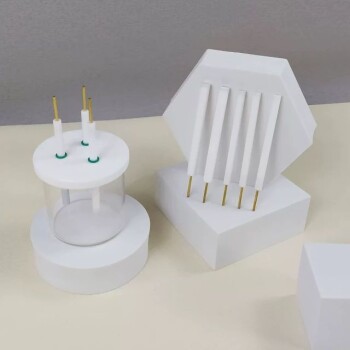
Precision starts with the right components. KINTEK specializes in high-quality laboratory equipment, providing researchers with the electrolytic cells and electrodes needed to ensure reliable, artifact-free data. Whether you are conducting cyclic voltammetry, impedance measurements, or battery research, our premium platinum electrodes offer the stability and purity your work demands.
From high-temperature furnaces and vacuum systems to specialized PTFE products and ceramic crucibles, KINTEK is your partner in advanced material science. Ensure the integrity of your next experiment—contact our experts today to find the perfect electrochemical solutions!
References
- Noureddine Benaioun, Jean‐Luc Bubendorff. Passive Films Formed on Fe- and Ni-Based Alloys in an Alkaline Medium: An Insight into Complementarities between Electrochemical Techniques and Near-Field Microscopies (AFM/SKPFM). DOI: 10.3390/app132111659
This article is also based on technical information from Kintek Solution Knowledge Base .
Related Products
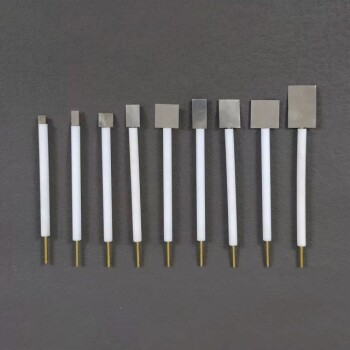
- Platinum Sheet Electrode for Laboratory and Industrial Applications
- Rotating Platinum Disk Electrode for Electrochemical Applications
- Platinum Sheet Electrode for Battery Lab Applications
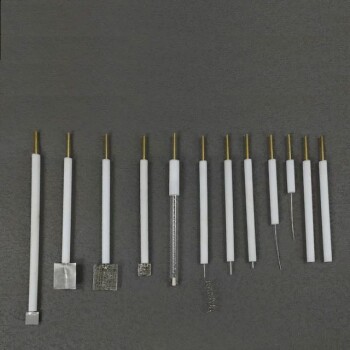
- Platinum Auxiliary Electrode for Laboratory Use
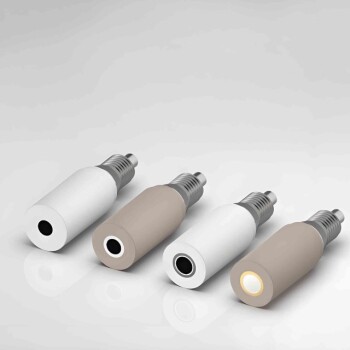
- RRDE rotating disk (ring disk) electrode / compatible with PINE, Japanese ALS, Swiss Metrohm glassy carbon platinum
People Also Ask
- What is a common use for a platinum sheet electrode? As a Reliable Counter Electrode in Electrochemical Cells
- What is the most critical guideline for immersing a platinum sheet electrode in an electrolyte? Ensure Accurate Electrochemical Measurements
- What is the purity of the platinum sheet in a platinum sheet electrode? The Key to Reliable Electrochemical Data
- What is the expected lifespan of a platinum sheet electrode? Maximize Your Electrode's Service Life
- What are the available specifications for platinum sheet electrodes? Find the Perfect Fit for Your Electrochemical Needs