The technical advantages of using a spiral platinum wire as an auxiliary electrode stem from the combination of its superior material properties and its specific geometric configuration. Platinum provides the necessary chemical inertness and high conductivity to ensure pure electron transfer, while the spiral design maximizes the effective surface area to accommodate high current densities without hindering the reaction.
Core Takeaway The spiral platinum wire is the standard for precision electrochemistry because it prevents the auxiliary electrode from becoming a rate-limiting step. Its spiral geometry ensures the surface area is large enough to sustain high currents, while the platinum material guarantees that the measured current reflects only the working electrode's behavior, not artifacts from electrode corrosion or impurities.
The Material Advantage: Why Platinum?
Exceptional Chemical Inertness
The primary requirement for an auxiliary electrode is that it must not participate in the chemical reaction itself. Platinum is chemically stable, meaning it does not undergo redox reactions or self-dissolution, even in harsh environments like 1.0 M HCl or corrosive wastewater.
Prevention of Contamination
Because platinum resists oxidation and corrosion, it prevents the release of impurity ions into the electrolyte. This ensures the solution remains pure and that the experimental results are not skewed by foreign contaminants or degradation products from the electrode itself.
Superior Electrical Conductivity
Platinum offers high electrical conductivity, which is essential for establishing an efficient current loop in a three-electrode system. This ensures that the electrode facilitates electron transfer seamlessly without introducing significant resistance into the circuit.
The Geometric Advantage: Why Spiral?
Maximizing Effective Surface Area
The spiral shape allows a long length of wire to be compacted into a small volume. This geometry significantly increases the effective surface area of the electrode compared to a straight wire.
Handling High Current Densities
In electrochemical experiments, particularly those involving transpassive dissolution or other high-current processes, the auxiliary electrode must handle the same amount of current as the working electrode. If the auxiliary electrode has a small surface area, it can become the bottleneck of the system.
Preventing Rate-Limiting Effects
By using a spiral design, the increased surface area ensures that the auxiliary electrode does not become the rate-limiting step. It allows for the rapid transfer of charge required to support the reactions occurring at the working electrode, ensuring accurate measurement of the sample's intrinsic kinetics.
Operational Impact on Data Integrity
Isolating the Working Electrode Response
The combination of high conductivity and inertness ensures that the current measured is solely a response to the interface reaction at the working electrode. The auxiliary electrode acts purely as a conduit for current, not as a variable in the experiment.
Long-Term Stability
In long-duration experiments or those involving biological metabolites and heavy metals, the stability of the platinum spiral ensures consistent performance. It prevents the experimental drift that would occur if the connecting materials degraded over time.
Understanding the Trade-offs
Cost Considerations
Platinum is a precious metal, making these electrodes significantly more expensive than graphite or stainless steel alternatives. This high cost is the primary barrier to its universal adoption in large-scale industrial applications.
Mechanical Fragility
While chemically robust, platinum wire can be mechanically delicate. The spiral shape, while efficient for surface area, can be easily deformed if mishandled, potentially altering the geometry and current distribution if the coils touch or overlap significantly.
Making the Right Choice for Your Goal
When designing your electrochemical setup, select your auxiliary electrode based on your specific precision requirements:
- If your primary focus is High Current Density: Choose a tight spiral configuration to maximize surface area and prevent the electrode from throttling the reaction rate.
- If your primary focus is Trace Analysis: Rely on the platinum material to prevent even microscopic contamination from altering your solution chemistry.
By utilizing a spiral platinum wire, you effectively remove the auxiliary electrode as a variable, ensuring your data reflects the true chemistry of your sample.
Summary Table:
| Feature | Advantage | Benefit to Researcher |
|---|---|---|
| Material: Platinum | Chemical Inertness | Prevents solution contamination & electrode corrosion |
| Geometry: Spiral | High Surface Area | Prevents the electrode from becoming a rate-limiting step |
| Conductivity | High Electron Transfer | Ensures an efficient current loop with minimal resistance |
| Durability | Redox Stability | Guarantees long-term stability for long-duration experiments |
Elevate Your Electrochemical Research with KINTEK
Don't let your auxiliary electrode become the bottleneck of your experiments. KINTEK specializes in high-precision laboratory equipment, offering premium electrolytic cells and electrodes, including spiral platinum wires designed for maximum conductivity and durability.
Whether you are performing trace analysis or high-current density studies, our comprehensive range of laboratory consumables—from PTFE products and ceramics to advanced high-temperature furnaces and battery research tools—ensures your data integrity remains uncompromised.
Ready to upgrade your lab's performance? Contact our technical experts today to find the perfect electrochemical solutions for your specific application.
References
- Richard J. Wilbraham, Colin Boxall. The effect of SO<sub>3</sub>-Ph-BTBP on stainless steel corrosion in nitric acid. DOI: 10.1515/nuka-2015-0117
This article is also based on technical information from Kintek Solution Knowledge Base .
Related Products
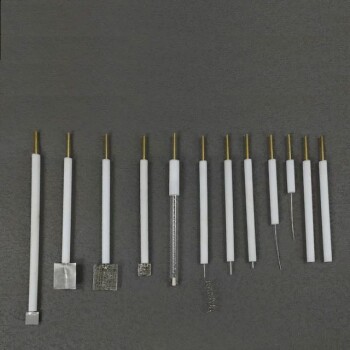
- Platinum Auxiliary Electrode for Laboratory Use
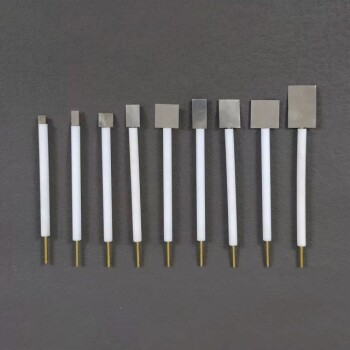
- Platinum Sheet Electrode for Laboratory and Industrial Applications
- Rotating Platinum Disk Electrode for Electrochemical Applications
- Platinum Sheet Electrode for Battery Lab Applications
- RRDE rotating disk (ring disk) electrode / compatible with PINE, Japanese ALS, Swiss Metrohm glassy carbon platinum
People Also Ask
- What is the function of a platinum electrode as an auxiliary electrode? Ensure Precise Nickel Coating Corrosion Testing
- Why is platinum typically selected as the auxiliary electrode for electrochemical testing of oxazoline inhibitors?
- What does the auxiliary electrode do? Ensuring Accurate Electrochemical Measurements
- What are the roles of Pt counter and reference electrodes in nitrided steel testing? Optimize Your Electrochemical Data
- What are the advantages of using a platinum counter electrode? Ensure Purity in Photocatalytic Coating Deposition