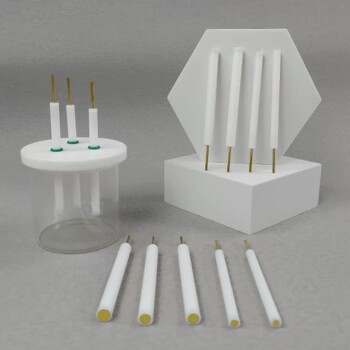
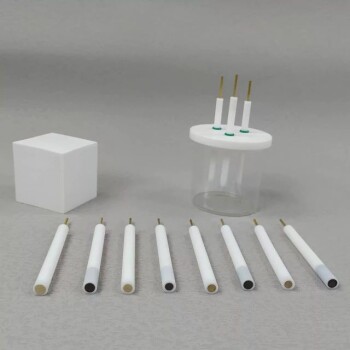
Platinum is the standard choice for the auxiliary electrode because it combines high electrical conductivity with superior chemical inertness. In the harsh environment of strong electrolytes, it completes the current circuit without dissolving or introducing impurities, ensuring that the measured signals come exclusively from the interaction between the corrosion inhibitor and the metal surface.
Core Takeaway An auxiliary electrode must be an invisible participant in the experiment—facilitating charge transfer without altering the chemical environment. Platinum is chosen because it ensures the data reflects the true performance of the oxazoline inhibitor, rather than artifacts caused by electrode corrosion or electrolyte contamination.
The Critical Role of Chemical Inertness
Preventing Oxidative Dissolution
In electrochemical testing, particularly in strong electrolytes like simulated geothermal water, the auxiliary electrode is subjected to significant polarization.
A less stable metal would undergo oxidative dissolution, physically breaking down during the test. Platinum withstands these conditions, remaining physically intact even when acting as a current source or sink.
Eliminating Impurity Ions
When an electrode dissolves, it releases metal ions into the solution.
These "impurity ions" can alter the electrolyte chemistry or deposit onto the working electrode (the carbon steel). Platinum’s resistance to dissolution prevents this contamination, ensuring the solution composition remains constant throughout the experiment.
Isolating the Target Signal
The goal of the test is to measure the interfacial interaction between the carbon steel surface and the oxazoline inhibitor.
By refusing to participate in the chemical reaction, platinum ensures that the captured electrochemical signals are accurate. You can be confident the data reflects the inhibitor's efficiency, not the breakdown of your measurement tools.
Electrical Conductivity and Loop Stability
Smooth Closure of the Current Loop
For an electrochemical cell to function, the current path must be complete.
Platinum’s high electrical conductivity allows for the smooth closure of this current loop. This efficiency minimizes the voltage drop across the auxiliary electrode itself, focusing the potential control on the working electrode where it belongs.
Acting as a Stable Charge Carrier
The auxiliary electrode acts as a carrier for charge exchange.
Because platinum does not participate in the redox reactions itself, it serves as a stable conduit for electrons. This stability prevents fluctuations in the current that could be misinterpreted as noise or changes in the corrosion rate.
Understanding the Trade-offs
While platinum is the ideal technical choice, it is important to recognize practical limitations in certain contexts.
The Cost Factor
Platinum is a precious metal, making it significantly more expensive than alternatives like graphite or stainless steel.
However, in high-precision corrosion testing, the cost is usually justified by the data reliability. Using a cheaper material risks compromising the entire dataset through contamination.
Surface Area Considerations
To prevent the auxiliary electrode from becoming the rate-limiting component, it must have a larger surface area than the working electrode.
This is why platinum is often used in a mesh configuration rather than a simple sheet. A small platinum wire or sheet might limit the current flow, whereas a mesh ensures the auxiliary electrode does not introduce polarization impedance.
Ensuring Accuracy in Your Setup
To guarantee the reliability of your oxazoline inhibitor testing, align your electrode choice with your specific experimental needs.
- If your primary focus is data precision: Stick with Platinum. Its inertness is non-negotiable for distinguishing subtle corrosion currents from background noise.
- If your primary focus is budget or rough screening: You might consider Graphite, but be aware that it can degrade over time and may absorb species from the solution.
- If you are testing in highly specific media: Verify that platinum does not catalyze a secondary reaction (like hydrogen evolution) that could overshadow the corrosion reaction, though this is rare in standard inhibitor testing.
The integrity of your electrochemical data relies as much on the stability of your auxiliary electrode as it does on the quality of your inhibitor.
Summary Table:
| Feature | Platinum (Pt) Auxiliary Electrode | Benefit for Inhibitor Testing |
|---|---|---|
| Chemical Stability | Exceptional inertness in strong electrolytes | Prevents electrode dissolution and impurity contamination |
| Electrical Conductivity | High conductivity | Ensures stable current loop closure and accurate potential control |
| Physical Integrity | Resists oxidative breakdown | Maintains constant electrolyte composition for reliable data |
| Configuration | Typically used as a mesh | Provides high surface area to avoid rate-limiting impedance |
| Data Reliability | High signal-to-noise ratio | Isolates the true interaction between the inhibitor and metal |
Elevate Your Electrochemical Research with KINTEK Precision
Ensure the integrity of your corrosion studies with premium laboratory solutions from KINTEK. Our specialized range of electrolytic cells and high-performance electrodes provides the stability and precision required for advanced inhibitor testing.
Whether you are conducting high-precision electrochemical measurements or scaling up material synthesis, KINTEK offers a comprehensive portfolio including:
- High-Temperature High-Pressure Reactors & Autoclaves
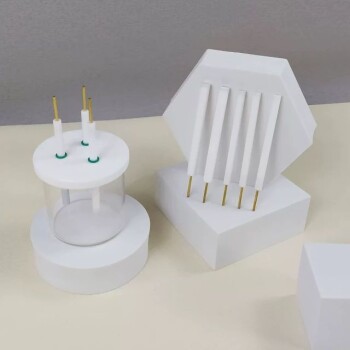
- Advanced Electrolytic Cells & Inert Electrodes
- Muffle, Tube, and CVD Furnaces for material preparation
- Precision Hydraulic Presses & Crushing Systems
Don't let equipment impurities compromise your findings. Our technical experts are ready to help you select the ideal tools for your specific research needs.
Contact KINTEK Today to Optimize Your Lab Setup
References
- Chahinez Helali, Ioannis Ignatiadis. Corrosion Inhibition of Carbon Steel Immersed in Standardized Reconstituted Geothermal Water and Individually Treated with Four New Biosourced Oxazoline Molecules. DOI: 10.3390/met14121439
This article is also based on technical information from Kintek Solution Knowledge Base .
Related Products
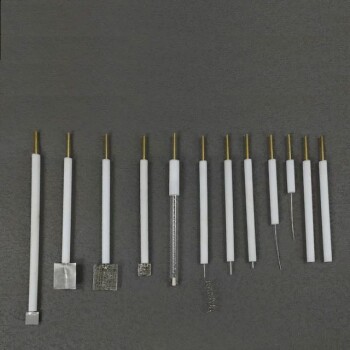
- Platinum Auxiliary Electrode for Laboratory Use
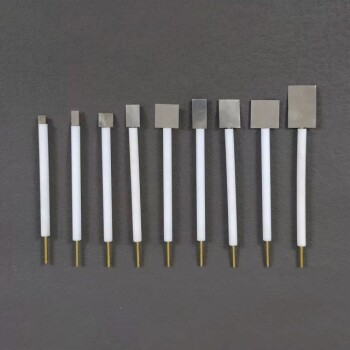
- Platinum Sheet Electrode for Laboratory and Industrial Applications
- Platinum Sheet Electrode for Battery Lab Applications
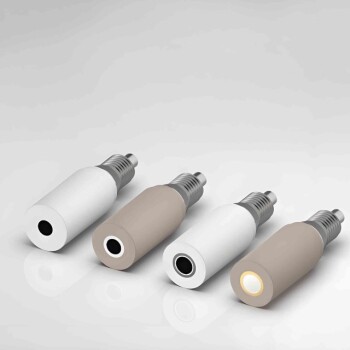
- Rotating Platinum Disk Electrode for Electrochemical Applications
- RRDE rotating disk (ring disk) electrode / compatible with PINE, Japanese ALS, Swiss Metrohm glassy carbon platinum
People Also Ask
- What is the function of a platinum electrode as an auxiliary electrode? Ensure Precise Nickel Coating Corrosion Testing
- What does the auxiliary electrode do? Ensuring Accurate Electrochemical Measurements
- What are the roles of Pt counter and reference electrodes in nitrided steel testing? Optimize Your Electrochemical Data
- What are the advantages of using a platinum counter electrode? Ensure Purity in Photocatalytic Coating Deposition
- What role does a platinum counter electrode play in a three-electrode cell? Ensuring Data Purity & Circuit Stability