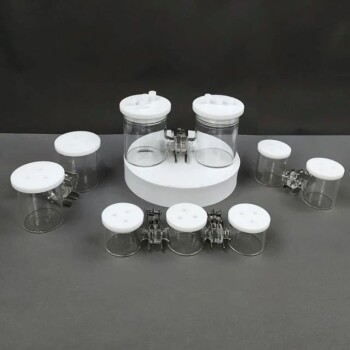
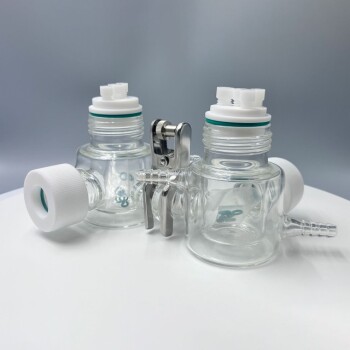
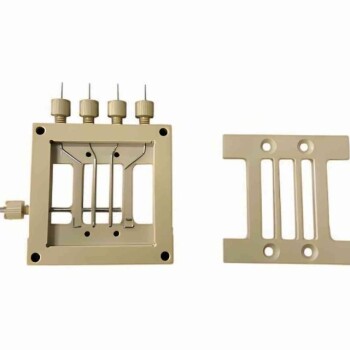
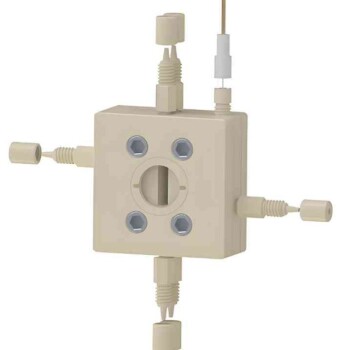
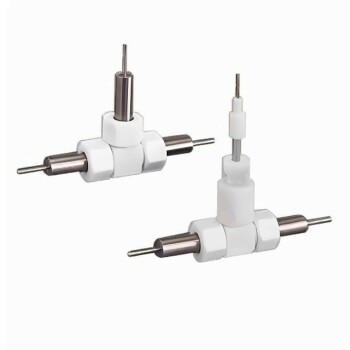
The electrolytic cell functions as a precision instrument for driving ion intercalation and structural separation. In the context of graphene production, this system utilizes a specific configuration—typically a graphite working electrode, a platinum counter electrode, and a reference electrode—to apply a controlled electric field. This field forces electrolyte ions between graphite layers, weakening their bonds and causing rapid exfoliation into graphene.
Core Insight: The electrolytic cell is not merely a reaction vessel; it is a tunable processing environment. By manipulating the electrical parameters within the cell, you do not just separate graphite layers—you actively engineer the final material’s properties, specifically controlling defect density, oxidation levels, and grain size.
Mechanisms of Electrochemical Exfoliation
Ion Intercalation
The primary function of the cell is to facilitate ion intercalation. The applied electric field drives ions from the electrolyte into the van der Waals gaps (interlayer spaces) of the graphite electrode.
Weakening Interlayer Forces
Once inserted, these ions mechanically and chemically disrupt the stability of the graphite structure. This process significantly weakens the interlayer forces that hold the graphite stack together.
Rapid Layer Separation
The culmination of this process is the physical expansion of the material. At sufficiently high voltages, the weakened forces lead to the rapid separation of graphite layers, resulting in the formation of high-quality graphene sheets.
The Role of the Electrode System
The Working Electrode (Graphite)
The graphite working electrode serves as the precursor material and the primary site of the electrochemical reaction. It acts as the "anode" (typically) where oxidation occurs, or the site where the physical exfoliation takes place as ions penetrate its structure.
The Counter Electrode (Platinum)
A platinum counter electrode is used to complete the electrical circuit. It facilitates the flow of electrons without introducing impurities into the electrolyte, ensuring the reaction remains focused on the graphite source.
The Reference Electrode
The reference electrode is critical for precision. It provides a stable voltage benchmark, allowing the system to apply specific potentials to the working electrode with high accuracy, independent of current flow.
Controlling Material Properties
Regulating Defect Density
The cell allows for the precise regulation of graphene defect density. By adjusting the electrical input, you can determine how aggressively the layers are separated and how much structural damage is introduced to the carbon lattice.
Managing Oxidation Degree
The chemical composition of the final product is also tunable. The parameters set within the cell directly influence the oxidation degree of the graphene, allowing for the creation of either pristine graphene or highly functionalized graphene oxide derivatives.
Determining Grain Size
The physical dimensions of the resulting flakes are not random. Through the adjustment of electrical parameters, the cell enables control over the grain size, dictating the surface area and aspect ratio of the produced nanomaterials.
Understanding the Trade-offs
Voltage Intensity vs. Material Integrity
While higher voltages can drive rapid separation and yield high-quality graphene, they must be carefully managed. Excessive voltage or aggressive intercalation can lead to unintended fragmentation or over-oxidation, altering the material's conductive properties.
Complexity of Parameter Optimization
The versatility of the electrolytic cell is also its challenge. Because the system allows for the independent adjustment of current, voltage, and electrolyte composition, finding the "sweet spot" for a specific application requires rigorous testing and precise calibration.
Making the Right Choice for Your Goal
To maximize the utility of the electrolytic cell for your specific application, consider the following approach:
- If your primary focus is electrical conductivity: Prioritize parameters that minimize oxidation and defect density to preserve the pristine carbon lattice.
- If your primary focus is chemical functionalization: Adjust voltage settings to deliberately increase the oxidation degree, creating reactive sites for further chemical modification.
- If your primary focus is mechanical reinforcement: Tune the electrical parameters to maximize grain size, ensuring large-area flakes that provide better structural support in composites.
Success in electrochemical exfoliation relies on viewing the cell not as a passive container, but as an active tool for atomic-level engineering.
Summary Table:
| Component | Role in Exfoliation | Key Benefit |
|---|---|---|
| Working Electrode (Graphite) | Precursor & Reaction Site | Directs physical layer separation |
| Counter Electrode (Platinum) | Completes Electrical Circuit | Ensures purity & electron flow |
| Reference Electrode | Voltage Benchmark | Provides high-precision potential control |
| Applied Electric Field | Ion Intercalation | Weakens interlayer van der Waals forces |
| Electrolyte Ions | Structural Disruption | Enables rapid expansion into graphene sheets |
Advance Your Graphene Research with KINTEK
Precise atomic-level engineering requires equipment that delivers absolute stability and control. KINTEK specializes in high-performance electrolytic cells and electrodes specifically designed for the rigorous demands of electrochemical exfoliation.
Whether you are refining graphene oxide derivatives or producing pristine carbon lattices, our comprehensive portfolio—including high-temperature furnaces, high-pressure reactors, and advanced cooling solutions—ensures your lab has the tools to succeed.
Ready to optimize your material properties? Contact us today to explore our laboratory solutions!
References
- Ghazaleh Ramezani, Ion Stiharu. Novel In-Situ Synthesis Techniques for Cellulose-Graphene Hybrids: Enhancing Electrical Conductivity for Energy Storage Applications. DOI: 10.21926/rpm.2501004
This article is also based on technical information from Kintek Solution Knowledge Base .
Related Products
- PTFE Electrolytic Cell Electrochemical Cell Corrosion-Resistant Sealed and Non-Sealed
- Super Sealed Electrolytic Electrochemical Cell
- Electrolytic Electrochemical Cell with Five-Port
- H Type Electrolytic Cell Triple Electrochemical Cell
- Electrolytic Electrochemical Cell Gas Diffusion Liquid Flow Reaction Cell
People Also Ask
- What is the necessity of selecting a PTFE electrolytic cell? Ensure Precise Graphene Corrosion Testing Accuracy
- What is the proper method for cleaning the surface of an all-PTFE electrolytic cell? Ensure Accurate Results with a Pristine Surface
- How should an all-PTFE electrolytic cell be stored after use? Expert Maintenance Tips for Long-Lasting Performance
- What is the proper cleaning method for an all-PTFE electrolytic cell? Essential Tips for Surface Integrity
- What are the standard opening specifications for all-PTFE electrolytic cells? A Guide to Sealed vs. Non-Sealed Ports