A laboratory magnetic stirrer acts as the kinetic driver for both physical suspension and surface activation. In the context of oxidizing water-reactive powders, it drives a rotor at high speeds to maintain a uniform suspension, preventing the powder from settling at the bottom of the vessel. Beyond simple mixing, its mechanical action is critical for stripping away hydrogen gas bubbles and solid reaction byproducts, such as magnesium hydroxide, ensuring the metal surfaces remain exposed and reactive.
The magnetic stirrer does more than mix; it actively renews the reaction interface by mechanically removing physical barriers—gas and solids—that would otherwise choke the reaction, while simultaneously preventing dangerous thermal localization.
Mechanics of Surface Activation
For water-reactive powders to oxidize efficiently, the aqueous solution must constantly touch the metal surface. The magnetic stirrer plays an aggressive role in maintaining this contact.
Removing Gaseous Barriers
Oxidation reactions with water-reactive metals often generate hydrogen gas. These hydrogen bubbles can adhere to the surface of the metal particles.
The stirrer creates rapid fluid motion that physically strips these bubbles away. By dislodging the gas, the stirrer ensures that the aqueous solution can re-establish contact with the metal, preventing the reaction from stalling due to gas blanketing.
Preventing Solid Passivation
As the reaction progresses, solid byproducts (such as magnesium hydroxide) form on the surface of the powder. If left undisturbed, these solids create a passivation layer that blocks further reaction.
The continuous, high-speed impact of the fluid driven by the rotor acts as a scouring agent. It knocks these solid byproducts off the metal surface, exposing fresh, unreacted material to the solution.
Ensuring Physical and Thermal Homogeneity
Apart from surface chemistry, the stirrer manages the bulk physical properties of the reaction environment.
Combating Sedimentation
Metal powders are typically denser than water and prone to rapid settling. Without intervention, they would accumulate at the bottom of the reactor.
The magnetic stirrer drives the rotor to create sufficient turbulence to keep these heavy particles uniformly suspended. This ensures the entire surface area of the powder is utilized, rather than just the top layer of a sediment pile.
Facilitating Heat Exchange
Oxidation reactions of reactive metals are often exothermic (heat-releasing). Static solutions can develop localized "hot spots" around the particles, which can alter reaction rates unpredictably or pose safety risks.
The forced convection provided by the stirrer promotes efficient heat exchange. It dissipates the heat generated at the particle surface into the bulk solution, maintaining a consistent temperature profile throughout the vessel.
Understanding the Operational Risks
While the stirrer is essential, relying on it requires understanding the risks of mechanical failure or improper speed settings.
The Risk of Stalled Kinetics
If the stirring speed is insufficient, the "stripping" effect diminishes. Bubbles and solid byproducts will adhere to the metal, causing the reaction rate to plummet or cease entirely.
Thermal Runaway vs. Quenching
Inadequate stirring leads to poor heat transfer. This can cause the particles to overheat locally while the surrounding liquid remains cool, leading to erroneous temperature readings and potential safety hazards. Conversely, consistent stirring is required to ensure the reaction environment matches the controlled temperature of your external bath or heater.
Optimizing Your Reaction Setup
To achieve reproducible results with water-reactive powders, you must tune the stirrer to your specific experimental goals.
- If your primary focus is Reaction Efficiency: Prioritize higher speeds to maximize shear force, ensuring rapid removal of hydrogen bubbles and passivation layers for maximum surface exposure.
- If your primary focus is Thermal Safety: Ensure the vortex is stable and continuous to prevent hot spots and guarantee that the bulk solvent temperature accurately reflects the temperature of the reacting particles.
Mastering the use of the magnetic stirrer ensures that your data reflects true chemical kinetics rather than physical limitations like sedimentation or surface clogging.
Summary Table:
| Function | Primary Mechanism | Benefit to Reaction |
|---|---|---|
| Surface Activation | Stripping hydrogen bubbles & solids | Prevents passivation & maintains high reaction rates |
| Suspension | High-speed turbulent mixing | Prevents sedimentation & ensures uniform particle exposure |
| Thermal Control | Forced convection | Dissipates exothermic heat & prevents dangerous hot spots |
| Kinetics Driving | Mechanical interface renewal | Ensures data reflects chemical kinetics, not physical limits |
Optimize Your Lab’s Reaction Efficiency with KINTEK
Don't let sedimentation or passivation compromise your research results. KINTEK specializes in high-performance laboratory equipment designed for the most demanding applications. Whether you are working with water-reactive powders, conducting battery research, or managing complex chemical synthesis, our comprehensive range of magnetic stirrers, homogenizers, and high-pressure reactors ensures precise control over every variable.
From advanced crushing and milling systems to specialized electrolytic cells and ceramics, KINTEK provides the tools you need for reproducible and safe laboratory outcomes. Let our experts help you select the perfect equipment for your specific needs.
Contact KINTEK Today for a Professional Consultation
References
- Olesya A. Buryakovskaya, А. О. Дудоладов. Waste to Hydrogen: Elaboration of Hydroreactive Materials from Magnesium-Aluminum Scrap. DOI: 10.3390/su14084496
This article is also based on technical information from Kintek Solution Knowledge Base .
Related Products
- Laboratory Small Constant Temperature Heated Magnetic Stirrer Heater and Stirrer
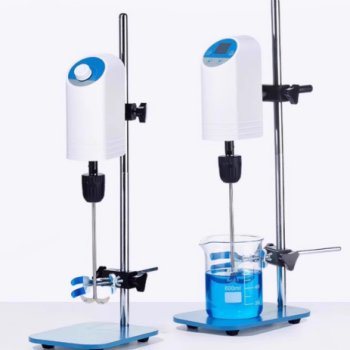
- High Performance Laboratory Stirrers for Diverse Applications
- Custom PTFE Teflon Parts Manufacturer for Magnetic Stirring Bar
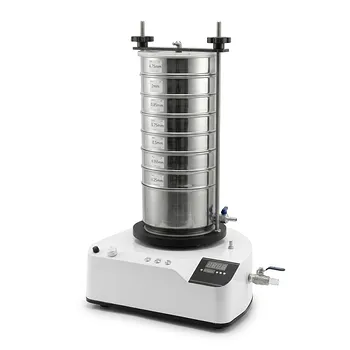
- Laboratory Vibratory Sieve Shaker Machine for Dry and Wet Three-Dimensional Sieving
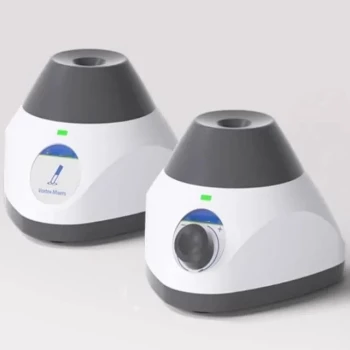
- Laboratory Vortex Mixer Orbital Shaker Multifunctional Rotation Oscillation Mixer
People Also Ask
- What role does a magnetic stirrer with heating play in ZnO nanoparticle synthesis? Precision Control for Quality Results
- What role does a constant temperature heating magnetic stirrer play in MFC-HAp synthesis? Achieve Material Homogeneity
- What is the function of a laboratory magnetic stirrer in Ni–Cr–P electrodeposition? Optimize Ion Transport & Coating
- Why is a laboratory magnetic stirrer required for benzoic acid esters? Boost Reaction Speed & Yield with High RPM
- What role does a laboratory magnetic stirrer play in TiO2 and TiO2-Ag sol preparation? Master Chemical Kinetics