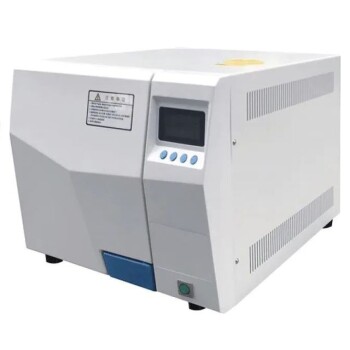
The cornerstone of autoclave validation and process monitoring lies in three distinct physical parameters: process time, temperature, and pressure. These variables act as the primary indicators of a successful sterilization cycle, ensuring that the conditions within the chamber were sufficient to eliminate microbial life.
Core Takeaway Validation is not a one-time event; it is a continuous verification of the "sterilization triangle." While biological indicators prove lethality, strictly monitoring time, temperature, and pressure is the only way to guarantee the mechanical consistency required for safety and compliance.
The "Holy Trinity" of Physical Parameters
To validate an autoclave process, you must meticulously track three physical variables. If any one of these drifts outside the established range, the cycle is considered compromised.
Temperature
Temperature is the primary agent of sterilization. You must verify that the autoclave reaches the specific thermal death point required for the organisms you intend to destroy.
Monitoring ensures the chamber hits this peak temperature and maintains it without fluctuation.
Pressure
Pressure is the facilitator that allows steam to reach temperatures required for sterilization (typically 121°C or higher). Without adequate pressure, water boils at 100°C, which is insufficient for destroying many endospores.
Validation checks that the vessel maintains a pressurized seal to sustain high-temperature steam saturation.
Process Time
Reaching the right temperature is irrelevant if the duration is too short. Process time measures how long the load is exposed to the sterilization temperature.
Monitoring this parameter ensures the load is "soaked" in heat long enough to penetrate the center of the densest items.
Protocols for Routine Testing
Beyond monitoring physical parameters during every cycle, specific testing schedules are required to validate the equipment's ongoing performance.
Initial and Routine Validation
An autoclave must be fully tested and validated before its initial use.
Following this, routine testing schedules depend entirely on the type of material being processed.
High-Risk Materials (Pathogens)
For autoclaves used to inactivate human pathogens, blood, or clinical samples, the validation schedule is aggressive.
You must test these units after every 40 hours of use to ensure no biohazardous material survives the process.
General Laboratory Materials
For units sterilizing non-hazardous materials, the testing cadence is less frequent but still mandatory.
These units generally require testing every six months to ensure mechanical reliability.
Biological Verification
While physical parameters tell you the machine is working, biological indicators tell you the microbes are dying.
Guidelines recommend using biological indicators (such as spore strips) at least once per month as a secondary validation layer.
Common Pitfalls and Trade-offs
The limit of Physical Monitoring
Monitoring time, temperature, and pressure confirms the machine met the set points, but it does not guarantee steam penetration into the load.
Trade-off: Relying solely on physical sensors may lead to "false positives" if the load is packed too tightly, preventing steam from reaching the center of the items.
Frequency vs. Downtime
Increasing the frequency of validation (e.g., the 40-hour rule) increases safety but reduces operational uptime.
Trade-off: You must balance the strict requirements of pathogen safety against the throughput needs of the laboratory.
Making the Right Choice for Your Protocol
To ensure your validation strategy is robust, align your monitoring schedule with your specific risk profile.
- If your primary focus is High-Risk Safety (Pathogens/Blood): Implement a strict protocol to test physical parameters and efficacy after every 40 hours of operation without exception.
- If your primary focus is General Equipment Maintenance: Adhere to a baseline six-month testing schedule, supplemented by monthly biological indicator checks to catch mechanical drift early.
- If your primary focus is Cycle Validation: Ensure every single run log is reviewed to verify that the specific combination of time, temperature, and pressure was sustained for the full duration.
Treat your autoclave parameters not just as settings, but as the critical data points that define the safety of your laboratory environment.
Summary Table:
| Parameter | Role in Sterilization | Monitoring Objective |
|---|---|---|
| Temperature | Primary sterilization agent | Verify peak thermal death point is reached and maintained. |
| Pressure | Steam facilitator | Enables steam to reach temperatures above 100°C for spore destruction. |
| Process Time | Exposure duration | Ensures heat penetrates the center of the densest items in the load. |
| Biological Indicators | Efficacy verification | Confirms actual microbial lethality through spore strip testing. |
Ensure Sterile Precision with KINTEK
Don't compromise on laboratory safety or mechanical consistency. KINTEK specializes in high-performance laboratory equipment, providing the advanced high-temperature high-pressure reactors, autoclaves, and sterilization tools necessary for rigorous validation protocols. Whether you are handling high-risk pathogens or routine lab materials, our comprehensive range of high-temperature furnaces and sterilization solutions ensures your research meets the highest safety standards.
Ready to upgrade your sterilization workflow? Contact our laboratory equipment experts today to find the perfect autoclave or reactor for your specific risk profile!
Related Products
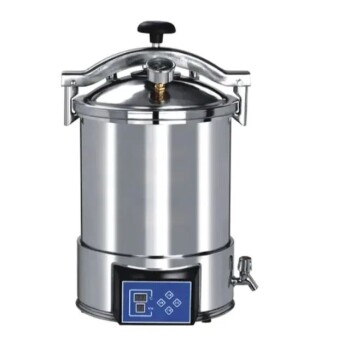
- Portable High Pressure Laboratory Autoclave Steam Sterilizer for Lab Use
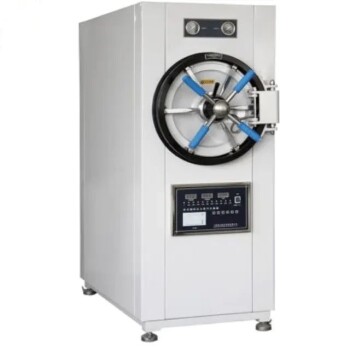
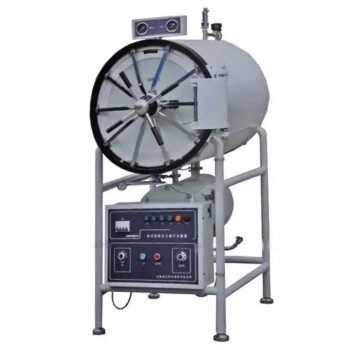
- Laboratory Horizontal Autoclave Steam Sterilizer Lab Microcomputer Sterilizer
- Desktop Fast High Pressure Laboratory Autoclave Sterilizer 16L 24L for Lab Use
- Portable Digital Display Automatic Laboratory Sterilizer Lab Autoclave for Sterilization Pressure
- Desktop Fast Laboratory Autoclave Sterilizer 35L 50L 90L for Lab Use
People Also Ask
- Why is a laboratory high-pressure autoclave sterilizer necessary? Ensure Accuracy in Antibacterial Research
- What is the role of a laboratory high-pressure autoclave in the conversion of furfural to piperidine? Optimize Yields
- What are the two types of autoclave used in the laboratory? Gravity vs. Pre-Vacuum Explained
- What precautions should be taken during autoclave in laboratory? A Complete Safety Guide to Prevent Burns and Explosions
- What extreme conditions does a laboratory autoclave simulate? Testing Wear Resistance of Nuclear Fuel Cladding