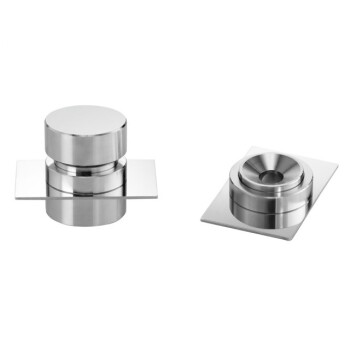
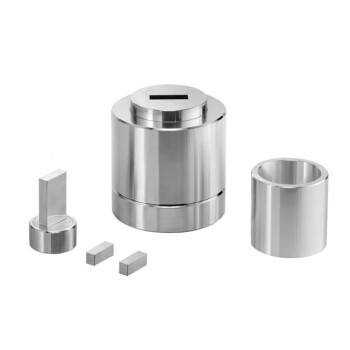
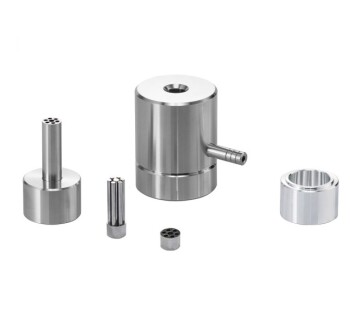
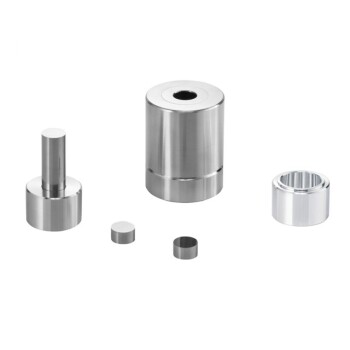
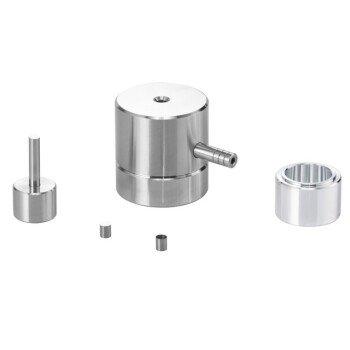
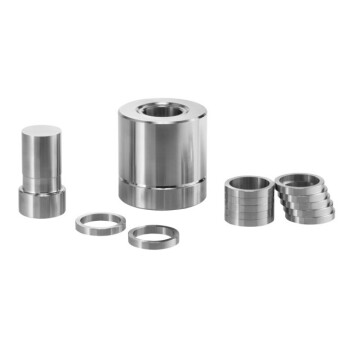
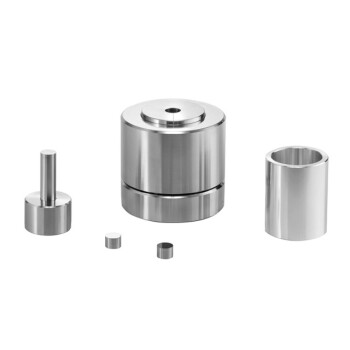
PEEK test molds serve as the structural and chemical foundation for assembling and testing all-solid-state batteries. Their primary function is to act as a robust, insulating container that withstands the extreme mechanical pressures (200 to 450 MPa) required for powder compression while preventing electrical shorts and chemical contamination during electrochemical testing.
Core Takeaway PEEK molds enable the fabrication of solid-state batteries by bridging the gap between mechanical requirements and chemical sensitivity. They allow researchers to apply the massive pressure needed to densify electrolytes without triggering the short circuits or side reactions common with metal housings.
The Mechanical Role: Pressure and Containment
Facilitating High-Pressure Compression
Solid-state batteries rely on powder densification to function. PEEK molds are specifically engineered to withstand molding pressures ranging from 200 to 450 MPa.
This extreme pressure is necessary to compress the powdered electrolyte and electrode materials into a solid, cohesive pellet.
Maintaining Interfacial Contact
Beyond initial forming, the mold plays a critical role during operation. It helps maintain tight physical contact between the internal layers of the battery.
This is vital for preventing delamination or "interface separation" caused by the volume expansion and contraction of materials (like high-nickel cathodes) during charge cycles.
The Chemical Role: Stability and Inertness
Preventing Side Reactions
The chemical environment inside a solid-state battery is highly reactive. PEEK provides exceptional chemical stability, specifically ensuring inertness against aggressive materials like sulfide electrolytes and lithium or sodium metal electrodes.
By resisting corrosion, the mold prevents "parasitic" side reactions that would otherwise degrade the battery's performance or contaminate the sample.
Ensuring Data Integrity
Because PEEK is chemically inert, it ensures that test results are accurate.
During Electrochemical Impedance Spectroscopy (EIS) and cycling tests, researchers can be confident that the measured signals come from the battery chemistry itself, not from an interaction between the electrolyte and the mold wall.
The Electrical Role: Isolation and Safety
Preventing Internal Short Circuits
A primary failure mode in battery assembly is an internal short circuit. PEEK is an excellent electrical insulator.
It physically and electrically separates the conductive plungers (often made of Titanium) and current collectors, ensuring current flows only through the active battery materials.
Directing Current Flow
By insulating the sidewalls of the battery assembly, PEEK molds force the electrical current to travel vertically through the electrode stack.
This controlled pathway is essential for accurate electrochemical measurements and efficient battery operation.
Understanding the Trade-offs
Pressure Limits
While PEEK is mechanically strong, it is still a polymer. Although it can handle 450 MPa, exceeding this limit or subjecting it to high heat under load for extended periods can cause deformation or "creep."
Thermal Management Limitations
PEEK is a thermal insulator as well as an electrical one.
In high-rate cycling tests where the battery generates significant heat, the mold may trap thermal energy, potentially influencing the internal temperature of the cell differently than a metal casing would.
Making the Right Choice for Your Goal
To maximize the effectiveness of PEEK molds in your assembly process, align your setup with your specific testing objectives.
- If your primary focus is fabrication quality: Ensure your hydraulic press settings stay within the 200–450 MPa range to achieve optimal density without deforming the PEEK sleeve.
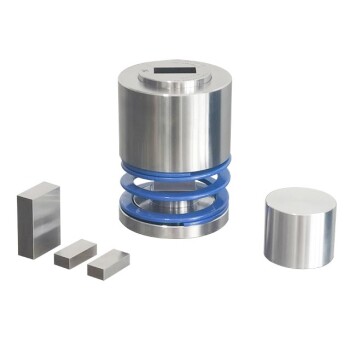
- If your primary focus is long-term cycling: Utilize a mold setup that includes external pressure retention (like a clamp or spring) to accommodate volume expansion without cracking the solid electrolyte.
- If your primary focus is chemical compatibility: Verify that PEEK is compatible with your specific novel electrolyte, though it is the industry standard for sulfides and reactive alkali metals.
PEEK molds are the critical enabler that allows the high-pressure physics of solid-state batteries to coexist with delicate electrochemical chemistry.
Summary Table:
| Feature | Function in Battery Assembly | Benefit for Researchers |
|---|---|---|
| Mechanical Strength | Withstands 200–450 MPa pressure | Enables dense powder electrolyte compression |
| Chemical Inertness | Resists sulfides & alkali metals | Prevents side reactions and sample contamination |
| Electrical Insulation | Separates conductive plungers | Prevents short circuits and ensures data integrity |
| Interfacial Contact | Maintains internal layer pressure | Prevents delamination during charge/discharge cycles |
| Pressure Retention | Structural containment | Facilitates accurate EIS and electrochemical testing |
Elevate Your Battery Research with KINTEK's Precision Engineering
Unlock the full potential of your energy storage innovations with KINTEK. We specialize in high-performance laboratory equipment and consumables designed for the rigorous demands of all-solid-state battery development.
Our PEEK test molds, combined with our industry-leading hydraulic presses (pellet, hot, isostatic) and battery research tools, provide the stability and precision required for molding pressures up to 450 MPa without compromising chemical integrity. From high-temperature furnaces and crushing systems to specialized electrolytic cells and PTFE/ceramic consumables, KINTEK is your single-source partner for laboratory excellence.
Ready to optimize your assembly process? Contact us today to find the perfect solution for your lab!
Related Products
- No Demolding Lab Infrared Press Mold for Laboratory Applications
- Assemble Square Lab Press Mold for Laboratory Applications
- Anti-Cracking Press Mold for Lab Use
- Special Shape Press Mold for Lab
- Carbide Lab Press Mold for Laboratory Applications
People Also Ask
- What is the process of mold press? A Step-by-Step Guide to Compression Molding
- What is the primary function of mold pressing for LAGP powders? Achieve High-Performance Solid Electrolytes
- How to use a press mold? Master the Art of Creating Consistent Ceramic Forms
- What is the press mould method? A Guide to Consistent, Detailed Ceramic Forms
- What is a laboratory press? Achieve Precise Sample Preparation for Reliable Analysis