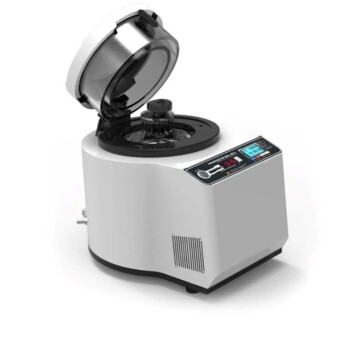
High-energy ball milling equipment offers a distinct process advantage by utilizing mechanical energy to drive chemical reactions between solid monomers, rather than relying on thermal energy in a liquid medium. This approach significantly streamlines the synthesis of Covalent Organic Frameworks (COFs) by eliminating the need for large volumes of hazardous organic solvents, enabling rapid reaction rates, and facilitating scalable production under ambient conditions.
Mechanochemical synthesis through ball milling prioritizes environmental safety and industrial scalability, offering a rapid and solvent-free alternative to traditional methods, albeit with a potential trade-off in the material's long-range structural order.
Environmental and Safety Implications
drastic Reduction of Solvents
Traditional liquid-phase methods require substantial quantities of organic solvents to facilitate reactions. High-energy ball milling eliminates this dependency by inducing reactions directly between solid monomers.
Eco-Friendly Processing
By removing the need for hazardous solvents, the process becomes inherently more environmentally friendly. This reduces both the cost of solvent disposal and the safety risks associated with handling volatile chemicals.
Efficiency and Operational Simplicity
Synthesis Under Ambient Conditions
Unlike solvothermal methods that often require elevated temperatures or specific pressure vessels, ball milling operates effectively under ambient conditions. This simplifies the hardware requirements and reduces energy consumption related to heating.
Rapid Reaction Rates
The direct application of mechanical energy accelerates the reaction kinetics. This allows for the rapid preparation of COFs, significantly shortening the production cycle compared to the lengthy reaction times often found in liquid-phase synthesis.
Scalability and Production Capacity
Highly Scalable Architecture
The simplicity of the ball milling process makes it exceptionally well-suited for scaling up. Transitioning from laboratory samples to larger batches is more linear and less complex than scaling liquid-based reactions.
Capability for Large-Scale Preparation
The equipment is capable of handling the large-scale preparation of materials reliably. This makes it a viable candidate for industrial applications where volume and throughput are critical factors.
Understanding the Trade-offs
Impact on Structural Order
While ball milling excels in speed and ecology, it may impact the final quality of the crystal lattice. The intense mechanical forces used can result in materials with slightly lower long-range order.
Comparison to Solvothermal Synthesis
If your application requires pristine, highly ordered crystalline structures, solvothermal synthesis remains the benchmark. Ball milling produces viable materials, but they may lack the perfect crystallinity achieved through slower, solvent-based growth.
Making the Right Choice for Your Goal
To determine if high-energy ball milling is the right synthesis route for your specific COF application, consider your primary constraints.
- If your primary focus is environmental sustainability and safety: Choose ball milling to eliminate hazardous solvents and reduce chemical waste.
- If your primary focus is industrial scalability and speed: Opt for ball milling to achieve rapid, large-scale production under ambient conditions.
- If your primary focus is maximum crystallinity: Stick to liquid-phase solvothermal methods to ensure the highest degree of long-range structural order.
High-energy ball milling represents a shift toward practical, green manufacturing, prioritizing process efficiency over structural perfection.
Summary Table:
| Feature | High-Energy Ball Milling | Liquid-Phase (Solvothermal) |
|---|---|---|
| Medium | Solvent-free (Solid-state) | Large volumes of organic solvents |
| Conditions | Ambient temperature & pressure | Elevated temperature & pressure |
| Reaction Speed | Very rapid (Minutes to hours) | Slow (Days) |
| Scalability | High; industrial throughput | Complex; difficult to scale |
| Crystallinity | Moderate (Reduced long-range order) | High (Superior structural order) |
| Eco-Friendliness | Excellent; minimal waste | Lower; hazardous solvent disposal |
Maximize Your Material Synthesis Efficiency with KINTEK
Ready to transition from laboratory-scale experiments to high-throughput industrial production? KINTEK specializes in advanced crushing and milling systems, including high-energy ball mills designed to optimize the mechanochemical synthesis of COFs.
Beyond milling, our comprehensive portfolio supports your entire research and production workflow with high-temperature furnaces, hydraulic presses, and high-pressure reactors. Whether you are refining battery materials or developing novel covalent organic frameworks, our expert team provides the precision equipment and high-quality consumables (PTFE, ceramics, and crucibles) you need to succeed.
Contact KINTEK today to find the perfect equipment solution for your lab!
References
- Prashant Dubey, Shashank Sundriyal. Unveiling the Potential of Covalent Organic Frameworks for Energy Storage: Developments, Challenges, and Future Prospects. DOI: 10.1002/aenm.202400521
This article is also based on technical information from Kintek Solution Knowledge Base .
Related Products
- High Energy Planetary Ball Mill Milling Machine for Laboratory
- High Energy Planetary Ball Mill for Laboratory Horizontal Tank Type Milling Machine
- High Energy Planetary Ball Mill Machine for Laboratory Horizontal Tank Type
- High-Energy Omnidirectional Planetary Ball Mill Milling Machine for Laboratory
- High Energy Planetary Ball Mill Milling Machine for Laboratory
People Also Ask
- What role do planetary ball mills and zirconia media play in LLZT preparation? Optimize Your Solid Electrolyte Research
- What is the primary function of a planetary ball mill? Mastering SiC/Al Composite Mixing for Homogeneity
- What is the primary purpose of using a planetary ball mill for LAGP? Achieve High-Purity Solid-State Electrolytes
- What role does a planetary ball mill play in the preparation of LGVO powders? Precision Refinement for Aerosol Deposition
- What is the function of a planetary ball mill in the preparation of high-entropy rare earth silicate multi-phase ceramics?