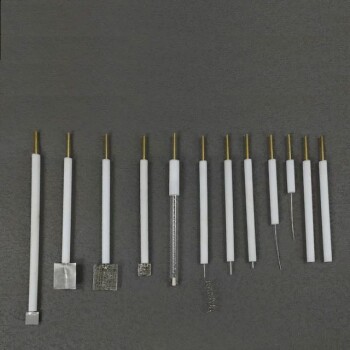
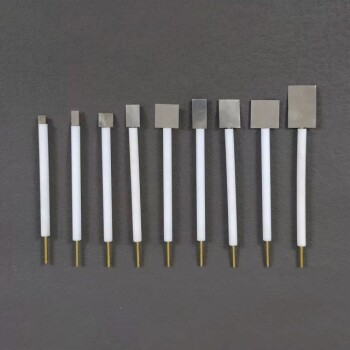
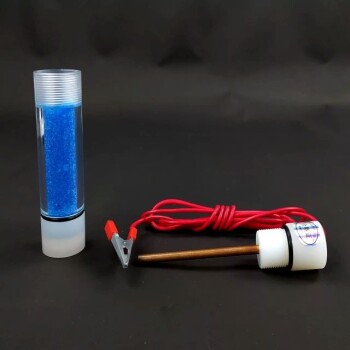
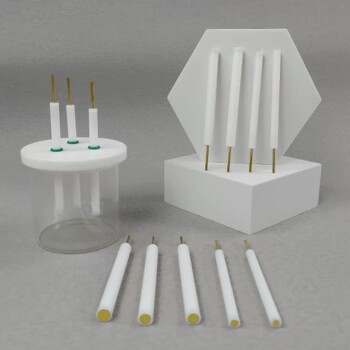
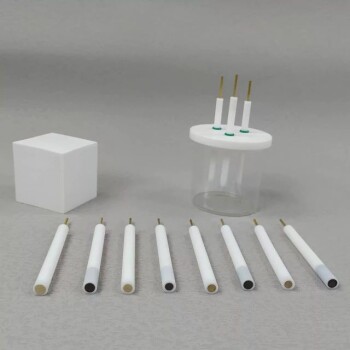
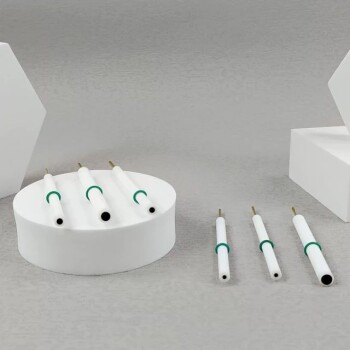
In a three-electrode electrochemical system, the platinum and silver/silver chloride components perform distinct, complementary functions to decouple current flow from potential measurement. The platinum electrode serves as the Counter Electrode (CE), acting as the conduit for the current required to drive the reaction. The silver/silver chloride (Ag/AgCl) electrode serves as the Reference Electrode (RE), providing a stable, invariant baseline voltage against which your sample’s potential is measured.
The core advantage of this setup is the isolation of variables: the platinum electrode handles the heavy lifting of current transmission without chemically interfering, while the silver/silver chloride electrode acts as an unshakeable standard for voltage accuracy.
The Role of the Platinum Counter Electrode
The platinum electrode, often referred to as the auxiliary electrode, is the power broker of the system. Its primary function is to complete the electrical circuit with the working electrode (your test sample).
Facilitating Current Flow
The counter electrode provides the necessary pathway for current to flow through the electrolyte solution. High conductivity is essential here to ensure the current moves efficiently through the circuit without significant resistance.
Ensuring Chemical Inertness
Platinum is selected primarily for its chemical stability. It acts as an inert carrier for charge exchange, meaning it facilitates the flow of electrons without participating in the reaction itself.
Preventing Experimental Interference
Because platinum resists oxidation and dissolution, it does not release impurity ions into the electrolyte. This ensures that the reactions observed on your working electrode are genuine and not artifacts caused by byproducts from the counter electrode.
The Role of the Silver/Silver Chloride Reference Electrode
While the platinum electrode manages current, the Ag/AgCl electrode is strictly a measurement tool. It does not carry significant current; instead, it acts as a "voltage ruler."
Providing a Stable Potential
The Ag/AgCl electrode (typically with saturated KCl) maintains a highly stable and known electrochemical potential. This stability is critical because it provides a fixed zero-point or baseline for the system.
Enabling Accurate Measurement
By comparing the fluctuating potential of the working electrode against the fixed potential of the Ag/AgCl reference, the system can calculate the exact voltage changes occurring at the sample surface.
Standardization and Comparability
Using a standardized reference like Ag/AgCl ensures that your data is objective and comparable. It allows researchers to verify results across different experiments, samples (such as U71Mn or coated steel), and laboratories.
Understanding the Trade-offs
While this specific configuration is the gold standard for many applications, it is important to understand the operational constraints to maintain data integrity.
Cost vs. Inertness (Platinum)
Platinum is chosen for its superior inertness, but it is expensive. While cheaper metals could complete a circuit, they risk corroding and contaminating the electrolyte, which would invalidate the test results.
Maintenance of the Reference Environment (Ag/AgCl)
The stability of the Ag/AgCl electrode relies on the internal solution (usually saturated KCl). If this solution becomes contaminated or the concentration changes (e.g., through evaporation), the "fixed" reference potential will drift, leading to inaccurate readings.
Making the Right Choice for Your Goal
To ensure your electrochemical workstation yields valid data, apply these principles based on your specific testing objectives:
- If your primary focus is high-current polarization: Ensure your platinum counter electrode has a sufficient surface area to prevent it from limiting the current flow to your sample.
- If your primary focus is precise potential mapping: Verify the integrity of the Ag/AgCl electrode's saturated KCl solution before every test to prevent reference drift.
By allowing the platinum electrode to drive the current and the silver/silver chloride electrode to define the voltage standard, you ensure that your measurements reflect the true behavior of your material rather than the limitations of your equipment.
Summary Table:
| Electrode Component | Primary Role | Key Characteristic | Function in 3-Electrode System |
|---|---|---|---|
| Platinum (Pt) | Counter Electrode (CE) | Chemically Inert | Completes the circuit and facilitates current flow without interfering. |
| Silver/Silver Chloride (Ag/AgCl) | Reference Electrode (RE) | Stable Potential | Provides a fixed voltage baseline for accurate measurement of the working electrode. |
Elevate Your Electrochemical Research with KINTEK
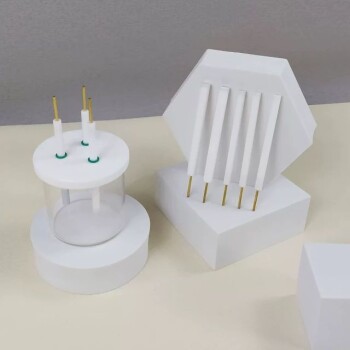
Precision in electrochemical testing starts with high-quality components. KINTEK specializes in advanced laboratory solutions, providing a comprehensive range of electrolytic cells and electrodes, including high-purity platinum counter electrodes and stable silver/silver chloride reference standards.
Whether you are performing high-current polarization or precise potential mapping, our premium electrodes and consumables ensure your data remains accurate and free from experimental artifacts. Boost your lab's performance today—Contact our specialists now to find the perfect electrochemical tools for your application!
References
- Tingting Liao, Fei Chen. Microstructural Evolution and Micro-Corrosion Behaviour of Flash-Welded U71Mn Joints as a Function of Post-Weld Heat Treatment. DOI: 10.3390/ma16155437
This article is also based on technical information from Kintek Solution Knowledge Base .
Related Products
- Reference Electrode Calomel Silver Chloride Mercury Sulfate for Laboratory Use
- Platinum Auxiliary Electrode for Laboratory Use
- Platinum Sheet Electrode for Laboratory and Industrial Applications
- Rotating Platinum Disk Electrode for Electrochemical Applications
- Platinum Sheet Electrode for Battery Lab Applications
People Also Ask
- What is the function of a reference electrode? Master Precision in Three-Electrode Reactor Reconstruction
- What is the recommended maintenance for the filling solution of a reference electrode? A Guide to Stable & Accurate Readings
- Which electrode is used as a ground reference? Master the Key to Accurate Electrochemical Measurements
- What is the reference electrode in potentiometry? The Key to Stable & Accurate Measurements
- Which electrode is used as a reference? A Guide to Accurate Electrochemical Measurements