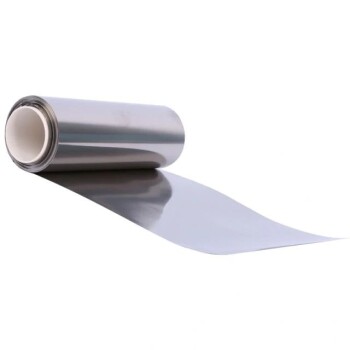
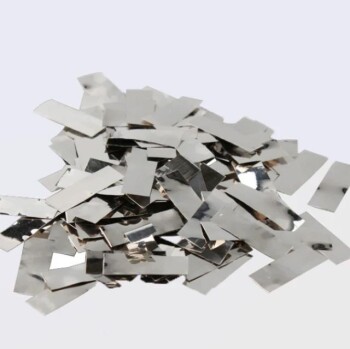
Industrial-grade titanium plates serve as a high-performance cathode solution primarily due to their superior electrical conductivity, mechanical strength, and resistance to chemical corrosion. These attributes allow them to withstand the physical stress of high-voltage environments while actively enhancing complex electrochemical processes, such as wastewater treatment.
Core Takeaway Titanium plates do not merely complete an electrical circuit; they act as a catalyst for efficiency by enabling the two-electron reduction of oxygen and accelerating ion regeneration, significantly improving reaction outcomes in harsh electrolytic environments.
Foundational Material Properties
Robust Mechanical Strength
For an electrochemical system to function reliably, the cathode must maintain its physical shape under stress. Industrial-grade titanium offers high mechanical strength. This ensures the electrode maintains physical integrity even when subjected to high-voltage and high-current conditions.
Exceptional Corrosion Resistance
Electrolytic environments are often chemically aggressive and damaging to standard materials. Titanium plates possess robust resistance to chemical corrosion. This property is critical for ensuring long-term durability and consistent performance across various electrolyte compositions.
Efficient Electrical Conductivity
The primary function of the cathode is to facilitate electron transfer. Titanium provides excellent electrical conductivity. This ensures a stable, low-resistance surface to complete the electrochemical circuit, minimizing energy loss during operation.
Enhancing Reaction Efficiency
Facilitating the Electro-Fenton Process
In advanced applications like Electro-Fenton, the material of the cathode dictates the reaction pathway. The titanium surface facilitates the two-electron reduction of oxygen. This specific chemical pathway generates hydrogen peroxide ($H_2O_2$) directly within the solution, which is essential for the treatment process.
Accelerating Ion Regeneration
System efficiency often relies on the continuous cycling of reactive elements. Titanium cathodes accelerate the cyclic regeneration of iron ions. By efficiently refreshing these ions, the system maintains high reaction rates without stalling.
Improving Treatment Outcomes
The synergy between the titanium cathode and the anode leads to tangible performance gains. This interaction improves the removal rates of Chemical Oxygen Demand (COD). Additionally, it significantly enhances decolorization efficiency in wastewater treatment scenarios.
Operational Reliability and System Integrity
Maintaining Consistency Under Load
A common challenge in electrochemical systems is maintaining performance as conditions intensify. Titanium ensures overall reliability by withstanding environmental stress. By resisting degradation, it prevents the fluctuations in conductivity or structural failure that jeopardize process consistency.
The Importance of Surface Stability
Reliable data and treatment results depend on a stable conductive surface. Titanium electrodes provide a stable surface that does not degrade rapidly. This stability is vital for ensuring that the electrochemical circuit remains complete and efficient over the lifespan of the equipment.
Making the Right Choice for Your Goal
When selecting cathode materials, align the properties of titanium with your specific operational targets:
- If your primary focus is Equipment Longevity: Prioritize titanium for its mechanical strength and corrosion resistance to prevent failure under high-current and acidic conditions.
- If your primary focus is Process Efficiency: Leverage titanium to accelerate the Electro-Fenton process, specifically for generating hydrogen peroxide and regenerating iron ions to lower COD.
By utilizing industrial-grade titanium, you transform the cathode from a passive component into an active driver of system stability and chemical reaction efficiency.
Summary Table:
| Feature | Technical Advantage | Impact on Performance |
|---|---|---|
| Material Strength | High mechanical integrity | Withstands high-voltage & high-current stress |
| Chemical Resistance | Robust corrosion resistance | Ensures long-term durability in aggressive electrolytes |
| Conductivity | Low-resistance electron transfer | Minimizes energy loss and stabilizes the circuit |
| Reaction Pathway | Facilitates 2-electron reduction | Enhances $H_2O_2$ generation and COD removal rates |
| Ion Regeneration | Accelerates $Fe^{2+}$ cycling | Maintains high reaction rates in wastewater treatment |
Elevate Your Electrochemical Systems with KINTEK Solutions
Maximize your laboratory's efficiency and process reliability with KINTEK’s premium industrial-grade titanium plates and electrochemical components. Whether you are optimizing wastewater treatment through Electro-Fenton processes or conducting advanced battery research, our high-performance materials are engineered to withstand the most demanding environments.
Why Choose KINTEK?
- Comprehensive Range: From high-temperature furnaces and vacuum systems to specialized electrolytic cells and electrodes.
- Precision Engineering: Our titanium cathodes and PTFE/ceramic consumables ensure unmatched chemical resistance and stability.
- Expert Support: We provide the tools needed for consistent, high-accuracy results in crushing, milling, and high-pressure applications.
Ready to transform your cathode from a passive component into an active driver of reaction efficiency? Contact our technical experts today to find the perfect fit for your specific research or industrial goals.
References
- Edison GilPavas, Miguel Ángel Gómez García. Statistical optimization of industrial textile wastewater treatment by electrochemical methods. DOI: 10.1007/s10800-014-0767-y
This article is also based on technical information from Kintek Solution Knowledge Base .
Related Products
- High-Purity Titanium Foil and Sheet for Industrial Applications
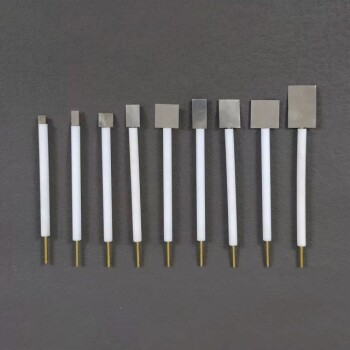
- Platinum Sheet Electrode for Battery Lab Applications
- Platinum Sheet Electrode for Laboratory and Industrial Applications
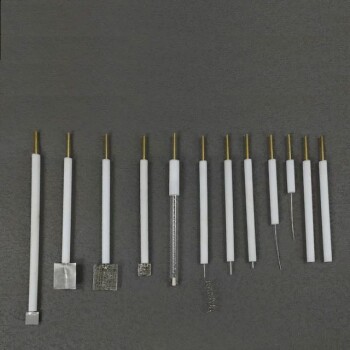
- Platinum Auxiliary Electrode for Laboratory Use
People Also Ask
- What products are manufactured with titanium? The Ultimate Guide to High-Performance Materials
- What are the advantages of utilizing Polytetrafluoroethylene (PTFE) sheets as casting substrates? | KINTEK Solution
- In what way do portable laboratory consumables like PTFE sheets define a functional workspace? Transform Your Lab Bench
- What are the advantages of using titanium? Achieve Unmatched Strength and Corrosion Resistance
- What are the safety considerations for titanium? From Biocompatible Metal to Fire Hazard