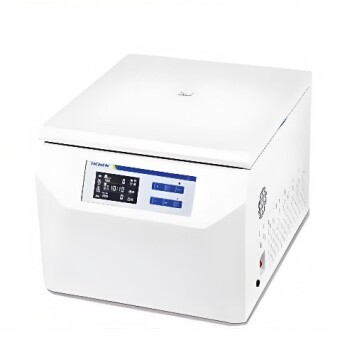
The core function of a high-pressure reactor in the hydrothermal synthesis of magnetic wood is to create a controlled physicochemical environment that forces the chemical precipitation of iron and nickel salts directly into the wood's structure. By maintaining a constant temperature (typically 90°C) under autogenous pressure, the reactor drives redox reactions between metal ions and oxidants deep within the wood pores, rather than just coating the exterior.
The reactor serves as a forcing function that merges inorganic chemistry with organic biology. It ensures that magnetic nanoparticles are generated in-situ (inside the material), transforming the wood into a magnetic composite without destroying its structural integrity.
The Mechanism of In-Situ Synthesis
Driving Redox Reactions
The reactor’s primary role is to facilitate the chemical precipitation of precursors, specifically iron and nickel salts.
Inside the vessel, the sealed environment maintains the necessary thermal energy to trigger redox reactions.
This process converts the metal ions and oxidants into solid magnetic particles, specifically NiFe2O4 (Nickel Ferrite) nanoparticles.
Penetrating the Wood Matrix
Standard immersion methods often fail to penetrate the complex, cellular structure of wood.
The pressure generated within the reactor forces the liquid reaction medium deep into the wood vessels and pores.
This ensures that the magnetic nanoparticles nucleate and grow inside the cellular structure, anchoring them firmly to the wood substrate.
Surface and Sub-Surface Modification
The reaction does not occur only in the deep pores; it also modifies the wood's surface.
The reactor promotes the formation of a micro-nano structural layer of particles on the wood surface.
This layer provides functional benefits beyond magnetism, specifically imparting anti-UV properties to the wood, protecting it from photodegradation.
Why the "Reactor" Aspect Matters
Controlled Thermal Environment
The primary reference specifies a constant temperature of 90°C.
A high-pressure reactor allows for precise thermal regulation, ensuring the reaction remains stable without fluctuating.
This temperature is critical: it is high enough to drive the precipitation of ferrite nanoparticles but low enough to avoid severe thermal degradation of the wood's cellulose and lignin.
Creating a Permeable System
While the primary reaction creates the magnetic particles, the reactor environment also prepares the wood.
As noted in supplementary contexts, hydrothermal treatments help dissolve soluble substances (like gums or simple sugars) within the wood.
This "clearing out" of the wood vessels enhances permeability, creating pathways for the iron and nickel ions to distribute uniformly before precipitation occurs.
Understanding the Trade-offs
Process Intensity vs. Material Integrity
While the reactor ensures deep penetration, the environment must be carefully balanced.
If the temperature exceeds the 90°C target significantly (moving toward 100°C+ as seen in biomass processing), you risk hydrolyzing the wood's hemicellulose.
This would increase permeability but could severely weaken the mechanical strength of the final magnetic wood product.
Complexity and Scalability
Using a high-pressure reactor introduces complexity compared to simple dip-coating.
It acts as a closed system, meaning you cannot easily adjust chemical concentrations once the process begins.
This requires precise calculation of precursor ratios (Fe/Ni salts) beforehand to ensure the desired crystal phase purity.
Making the Right Choice for Your Goal
When designing a synthesis protocol for magnetic wood, your equipment settings dictate the material's final properties.
- If your primary focus is Magnetic Durability: Prioritize the in-situ generation capability; the reactor pressure ensures particles are embedded inside the pores, preventing them from washing or rubbing off.
- If your primary focus is Wood Preservation: Strictly adhere to the 90°C temperature limit; this facilitates nanoparticle precipitation without triggering the hydrolysis that degrades wood strength.
- If your primary focus is UV Resistance: Ensure the reaction time is sufficient to form the micro-nano structural layer on the surface, which acts as the physical barrier against light.
The high-pressure reactor is not just a heating vessel; it is the tool that allows you to engineer a hybrid material where the durability of stone meets the versatility of wood.
Summary Table:
| Feature | Function in Hydrothermal Synthesis | Benefit to Magnetic Wood |
|---|---|---|
| In-situ Synthesis | Drives redox reactions of Fe/Ni salts inside wood pores | Permanent anchoring of magnetic nanoparticles |
| Autogenous Pressure | Forces liquid reaction medium into deep cellular structures | Uniform distribution of magnetic properties |
| Thermal Control | Maintains constant 90°C environment | Prevents cellulose degradation while driving precipitation |
| Surface Modification | Forms a micro-nano structural layer | Imparts anti-UV properties and photodegradation resistance |
Elevate Your Material Science Research with KINTEK
Precise hydrothermal synthesis requires equipment that balances high-pressure performance with exacting temperature control. At KINTEK, we specialize in providing researchers with the high-performance tools needed to engineer next-generation hybrid materials.
Whether you are developing magnetic wood composites or advanced catalysts, our comprehensive range of high-temperature high-pressure reactors and autoclaves ensures your reactions remain stable and reproducible. Beyond reactors, our portfolio includes:
- Advanced Thermal Processing: Muffle, tube, and vacuum furnaces.
- Material Preparation: Crushing, milling, and hydraulic presses (pellet, hot, isostatic).
- Electrochemical Tools: Specialized electrolytic cells and electrodes.
- Laboratory Essentials: Ceramic crucibles, PTFE products, and ULT cooling solutions.
Ready to optimize your synthesis protocol? Contact us today to discover how KINTEK’s laboratory equipment can enhance your material integrity and research efficiency.
References
- Doğu Ramazanoğlu, Ferhat Özdemir. Intelligent nano biomimetic reflection of hydrothermal approach on lignocellulosic surface. DOI: 10.18182/tjf.695613
This article is also based on technical information from Kintek Solution Knowledge Base .
Related Products
- Customizable Laboratory High Temperature High Pressure Reactors for Diverse Scientific Applications
- Customizable High Pressure Reactors for Advanced Scientific and Industrial Applications
- Stainless High Pressure Autoclave Reactor Laboratory Pressure Reactor
- Mini SS High Pressure Autoclave Reactor for Laboratory Use
- High Pressure Laboratory Autoclave Reactor for Hydrothermal Synthesis
People Also Ask
- How do high-pressure and high-temperature reactors ensure the effective treatment of lignocellulosic wastewater in WAO?
- What equipment is required for high-pressure high-temperature reactions? Master Extreme Chemistry Safely
- How do you control high pressure in a reactor? A Guide to Safe & Stable Operation
- Why is argon better than nitrogen for inert atmosphere? Ensure Absolute Reactivity & Stability
- How does initial oxygen pressure affect the wet oxidation of pharmaceutical sludge? Master Your Oxidation Depth