Laboratory shakers act as the metabolic engine for electronic waste leaching experiments by establishing and maintaining a precise bio-chemical environment. They provide critical conditions such as high dissolved oxygen levels, uniform mass transfer through continuous oscillation, and strict temperature regulation to ensure effective interaction between microbes and waste particles.
Bio-leaching success depends on sustaining a delicate equilibrium between biological activity and chemical reaction. Laboratory shakers facilitate this by creating a homogeneous system where oxygen, temperature, and physical contact are rigorously controlled to maximize strain efficiency.
Establishing the Bio-Leaching Environment
To understand the value of a laboratory shaker, one must look beyond simple agitation. These devices engineer the specific micro-conditions required for bacteria to effectively extract metals from electronic waste.
Regulating Dissolved Oxygen
Microbial leaching is an aerobic process. The primary function of the shaker is to introduce a necessary dissolved oxygen environment into the liquid medium.
Through continuous motion, the shaker increases the surface area of the liquid, allowing oxygen to permeate the solution. This ensures that the bacteria have the respiratory fuel required to drive the leaching reactions.
Ensuring Uniform Mass Transfer
Stagnation is the enemy of chemical extraction. Shakers utilize reciprocal or rotary oscillation to generate fluid motion throughout the vessel.
This movement prevents concentration gradients from forming, ensuring that nutrients and metabolic byproducts are distributed evenly. This uniform mass transfer allows the leaching process to proceed at a consistent rate throughout the entire volume of the experiment.
Facilitating Three-Way Contact
Effective leaching requires the physical interaction of three distinct components: the bacteria, the nutrient media, and the waste particles.
The shaker ensures sufficient contact between these elements by keeping the solids suspended in the liquid. Without this continuous suspension, waste particles would settle, isolating them from the microbial agents and halting the extraction process.
Precision Temperature Control
Microbial activity is highly sensitive to thermal fluctuations. Laboratory shakers provide precise temperature control alongside agitation.
maintaining the specific optimal temperature for a given strain is essential for survival and metabolic efficiency. This thermal stability allows researchers to isolate variables effectively when screening for high-efficiency leaching strains.
Understanding the Trade-offs
While laboratory shakers are fundamental for screening and optimization, researchers must be mindful of the physical limitations inherent in agitation.
The Balance of Agitation Intensity
The goal is to maximize contact and oxygenation, but excessive oscillation speed can introduce shear forces that may damage sensitive bacterial cell walls.
Conversely, insufficient speed leads to sedimentation of the heavy electronic waste particles. Success requires finding the exact rotational speed that maintains suspension and oxygenation without disrupting microbial integrity.
Optimizing Your Experimental Setup
When utilizing laboratory shakers for electronic waste research, your operational focus should shift based on your specific research stage.
If your primary focus is Screening Strains:
- Prioritize temperature precision and consistent oxygenation to determine exactly which strains perform best under ideal standard conditions.
If your primary focus is Process Optimization:
- Focus on manipulating oscillation speeds (mass transfer rates) to define the minimum energy required to keep waste particles in sufficient contact with the media.
By precisely controlling these variables, you transform the shaker from a simple mixing tool into a rigorous instrument for biological optimization.
Summary Table:
| Critical Condition | Function in E-Waste Leaching | Research Benefit |
|---|---|---|
| Dissolved Oxygen | Increases liquid surface area for aerobic respiration | Supports high microbial metabolic activity |
| Mass Transfer | Prevents concentration gradients via oscillation | Ensures consistent reaction rates throughout medium |
| Three-Way Contact | Maintains suspension of bacteria, media, and waste | Maximizes interaction for efficient metal extraction |
| Temperature Control | Sustains optimal thermal environment for strains | Protects sensitive microbes and ensures reproducibility |
| Agitation Balance | Mitigates shear forces vs. particle sedimentation | Optimizes strain survival and physical contact efficiency |
Maximize Your Leaching Efficiency with KINTEK Precision Shakers
Unlock the full potential of your bio-hydrometallurgy research with KINTEK’s advanced laboratory equipment. Our high-performance laboratory shakers and shakers are engineered to provide the precise oscillation and temperature stability required for sensitive e-waste leaching experiments.
Beyond agitation, KINTEK offers a comprehensive range of laboratory solutions including high-temperature furnaces (muffle, tube, vacuum), crushing and milling systems, and hydraulic presses to support every stage of your material processing. Whether you are screening microbial strains or optimizing industrial-scale recovery, our expert team is ready to provide the tools you need for success.
Contact KINTEK Today to Enhance Your Lab Capability
References
- Mohammed Sultan, Birgül Benli. Recent sustainable trends for e-waste bioleaching. DOI: 10.37190/ppmp/167375
This article is also based on technical information from Kintek Solution Knowledge Base .
Related Products
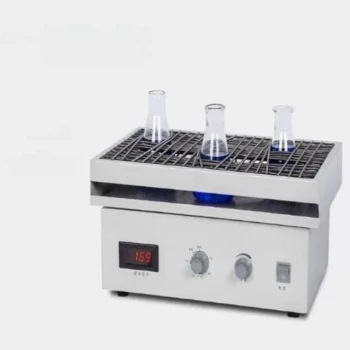
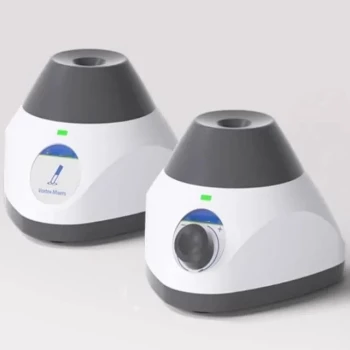
- Laboratory Multifunctional Small Speed-Adjustable Horizontal Mechanical Shaker for Lab
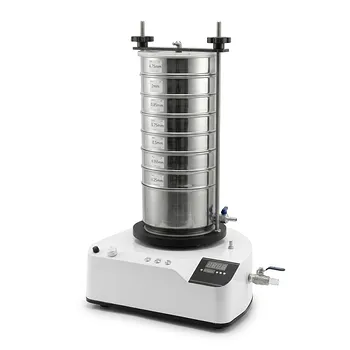
- Laboratory Vibratory Sieve Shaker Machine for Dry and Wet Three-Dimensional Sieving
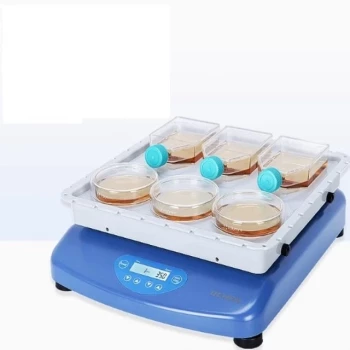
- Laboratory Oscillating Orbital Shaker
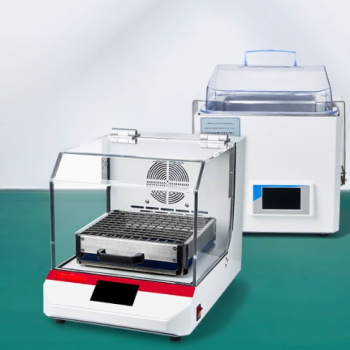
- Shaking Incubators for Diverse Laboratory Applications
- Laboratory Vibratory Sieve Shaker Machine Slap Vibrating Sieve
People Also Ask
- How do static culture and shaking culture affect the morphology of BC? Optimize Lab Shaker Results
- What is the role of a laboratory shaker in silane sol preparation? Master Uniform Aramid Fabric Coating
- Why is a laboratory shaker required for continuous 24-hour catalyst treatment? Achieve Deep Uniform Impregnation
- What is the function of a laboratory shaker in evaluating Fe-C@C nanoparticles? Optimize Methylene Blue Adsorption
- How do laboratory shakers or stirrers influence the efficiency of hydrogen production during dark fermentation?