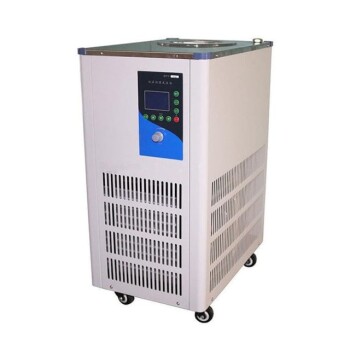
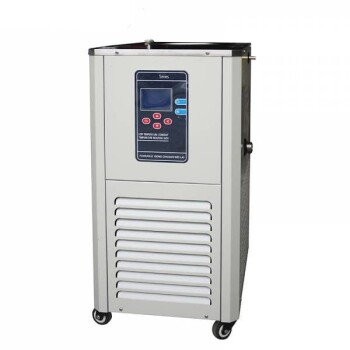
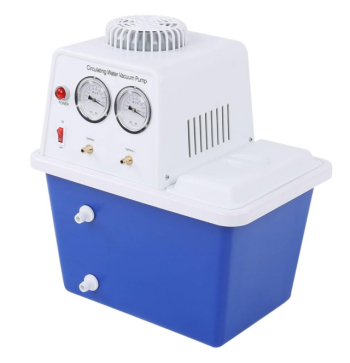
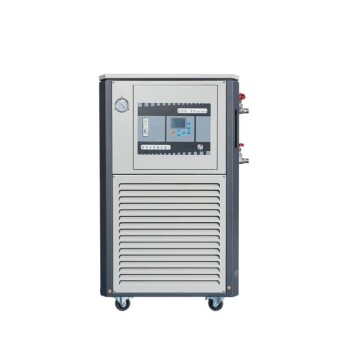
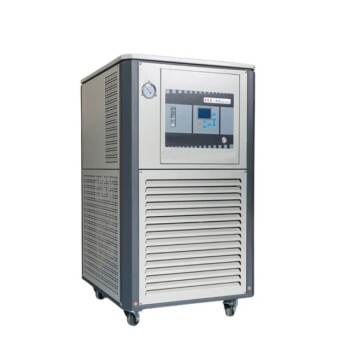
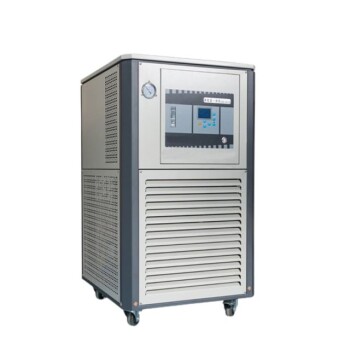
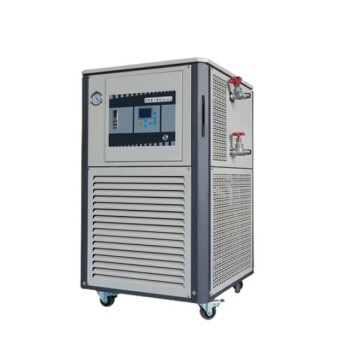
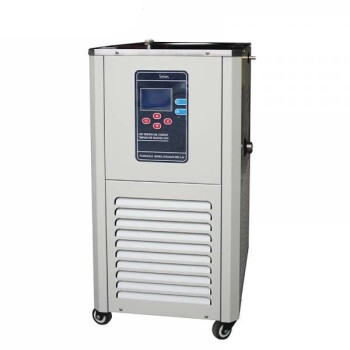
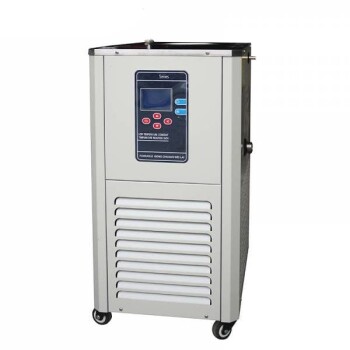
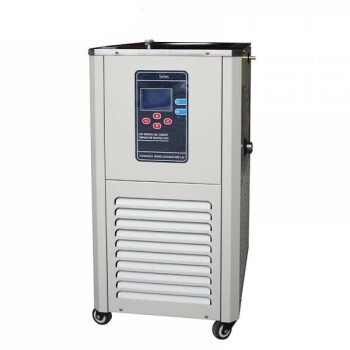
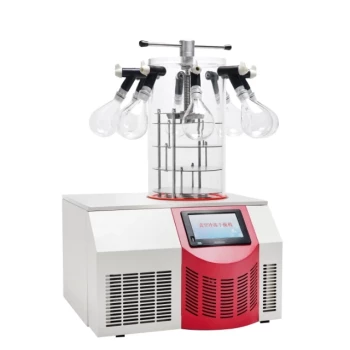
A laboratory circulating cooling system acts as the primary thermal stabilizer in photocatalytic reaction setups. Its specific function is to actively dissipate the substantial heat generated by high-power UV lamps by circulating a cooling medium through the reactor's jacket. This process locks the reaction environment at a precise temperature, preventing external thermal variables from corrupting experimental data.
The core function of the cooling system is to isolate the photocatalytic effect; by neutralizing heat from the light source, it ensures that observed chemical changes are driven strictly by light interactions rather than temperature fluctuations.
The Mechanism of Thermal Regulation
Combating Heat from Light Sources
Photocatalytic experiments require high-power ultraviolet (UV) lamps to simulate sunlight or activate catalysts.
While these lamps provide the necessary photons, they also generate significant thermal energy as a byproduct.
Without active intervention, this heat transfers to the reaction solution, causing a rapid and uncontrolled rise in temperature.
The Role of the Reactor Jacket
To counteract this, the cooling system pumps a chilled fluid (the medium) through a jacket surrounding the reactor vessel.
This creates a thermal barrier that absorbs excess heat immediately as it is produced.
The system maintains the reaction solution at a constant, user-defined set point, such as 25 °C or 15 °C.
Why Temperature Control defines Data Integrity
Distinguishing Between Oxidation and Thermal Degradation
In kinetic studies, it is vital to know exactly what causes a pollutant to break down.
Substances like amoxicillin can degrade simply because they are heated (thermal degradation), regardless of light exposure.
By keeping the solution cool, the system eliminates thermal degradation as a variable. This proves that any reduction in pollutant concentration is due strictly to photocatalytic oxidation.
Validating Kinetic Models
Chemical reaction rates are inherently sensitive to temperature changes.
If the temperature fluctuates during an experiment, the kinetic data becomes unreliable, making it impossible to calculate accurate reaction rates.
A stable temperature is a prerequisite for supporting the validity of standard mathematical models, such as pseudo-first-order kinetic models.
Common Pitfalls to Avoid
Overlooking Thermal Interference
The most critical error in photocatalytic setups is assuming that light is the only active variable.
Failing to regulate temperature often leads to "false positive" data, where degradation rates appear higher than they actually are due to unwanted heating.
Inconsistent Medium Circulation
For the system to be effective, the cooling medium must circulate continuously and evenly.
Stagnant pockets or interruptions in flow will create "hot spots" within the reactor, reintroducing the very variables you are trying to eliminate.
Making the Right Choice for Your Goal
To ensure your experimental setup yields publishable, accurate data, consider the following regarding your thermal control:
- If your primary focus is determining reaction mechanisms: Ensure your cooling capacity is sufficient to completely negate the heat output of your specific lamp wattage, guaranteeing that results are purely photochemical.
- If your primary focus is kinetic modeling: Prioritize a system with tight temperature stability (e.g., ±0.1 °C) to maintain the constant conditions required for pseudo-first-order calculations.
Ultimately, the cooling system is not just a safety feature; it is the control variable that validates the scientific accuracy of your photocatalytic research.
Summary Table:
| Feature | Role in Photocatalytic Research | Impact on Data |
|---|---|---|
| Heat Dissipation | Neutralizes thermal energy from high-power UV lamps. | Prevents uncontrolled temperature spikes. |
| Thermal Barrier | Circulates chilled fluid through the reactor jacket. | Maintains a constant user-defined set point. |
| Process Isolation | Distinguishes light-driven oxidation from thermal degradation. | Eliminates false positives in degradation rates. |
| Kinetic Stability | Provides a steady environment for rate calculations. | Validates pseudo-first-order kinetic models. |
Precision Cooling for Accurate Photocatalysis
Don't let thermal interference compromise your research results. KINTEK provides high-performance cooling solutions, including ULT freezers, cold traps, and laboratory chillers, designed to work seamlessly with our specialized high-temperature high-pressure reactors and photocatalytic setups.
Whether you are focusing on kinetic modeling or reaction mechanisms, our equipment ensures your data is driven by light—not heat. Our experts are ready to help you optimize your laboratory with precision cooling and advanced material processing tools.
Ready to upgrade your lab's thermal control? Contact KINTEK today for a customized quote!
References
- Deysi Gómez-Cholula, Sandra Cipagauta‐Díaz. Ni-doped Al2O3-based materials for the photocatalytic degradation of phenol. DOI: 10.1557/s43580-024-01097-4
This article is also based on technical information from Kintek Solution Knowledge Base .
Related Products
- 100L Chilling Circulator Cooling Water Circulator for Low Temperature Constant Temperature Reaction Bath Water Bath Cooling
- 5L Chilling Circulator Cooling Water Bath Circulator for Low Temperature Constant Temperature Reaction Bath
- 80L Chilling Circulator Cooling Water Circulator for Water Bath Cooling and Low Temperature Constant Temperature Reaction Bath
- Circulating Water Vacuum Pump for Laboratory and Industrial Use
- High Temperature Constant Temperature Heating Circulator Water Bath Chiller Circulator for Reaction Bath
People Also Ask
- What function does a circulating cooling chiller perform during the gas adsorption isotherm testing of nanoporous carbon?
- Why is a circulating water chiller required for Prussian Blue nanoparticles? Ensure Stability & Batch Reproducibility
- What is the purpose of a cooling circulation water bath system in electrochemical experiments? Enhance Lab Precision
- How does a constant temperature circulator support the leaching reaction of gold scrap? Optimize Gold Recovery Results
- How do constant temperature circulators impact weight-loss immersion tests? Ensure Precision in Corrosion Analysis