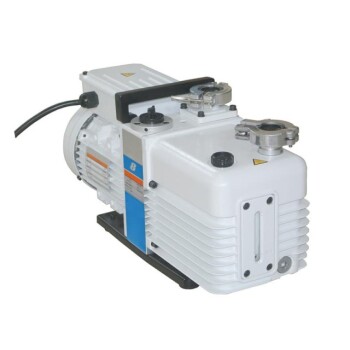
Maintaining a low-pressure environment is the critical variable that governs both the chemical purity and the structural integrity of Schottky-like hybrid interfaces. Technically, the vacuum pump performs two distinct functions: it creates an oxygen-free zone to prevent substrate degradation before heating, and it regulates gas dynamics during growth to ensure atomic-level bonding.
Precise vacuum control acts as both a purification step and a structural regulator. By eliminating reactive contaminants and optimizing the mean free path of carbon molecules, you ensure the formation of a stable, high-performance junction rather than a defective composite.
Preventing Material Degradation
Before the growth process begins, the primary technical challenge is maintaining the chemical integrity of the titanium foil substrate.
Eliminating Residual Oxygen
The initial function of the vacuum pump is to evacuate the system to a pressure below 200 mTorr.
This deep evacuation is necessary to thoroughly remove residual oxygen trapped within the quartz tube.
Preventing Uncontrolled Oxidation
At the high temperatures required for interface formation, titanium becomes highly reactive.
If the initial pressure is not sufficiently low, residual oxygen will cause uncontrolled oxidation of the titanium foil. This degrades the substrate surface, making it unsuitable for forming a high-quality electronic junction.
Optimizing Junction Formation
Once the experiment transitions to the growth phase, the role of pressure shifts from purification to kinetic control.
Controlling the Mean Free Path
During the growth of the graphene layer, the system pressure must be maintained at a constant 4 Torr.
This specific pressure level controls the mean free path of the carbon source molecules. It regulates the distance molecules travel between collisions, optimizing their trajectory toward the substrate.
Ensuring Atomic-Level Contact
Proper control of the mean free path ensures that carbon atoms deposit efficiently onto the titanium/titanium dioxide surface.
This results in an atomic-level tight bond between the graphene layer and the interface. Without this close physical contact, the electronic properties required for a Schottky-like junction cannot be established.
Stabilizing the Interface
The ultimate goal of this pressure regulation is the stability of the final hybrid structure.
By maintaining the 4 Torr environment, you facilitate the formation of a robust, stable Schottky-like junction that creates the desired rectification barrier.
Understanding the Risks of Deviation
Failure to strictly adhere to these pressure parameters results in specific structural failures.
The Cost of Insufficient Evacuation
If the pre-experiment pressure remains above 200 mTorr, the interface will suffer from impurity defects.
The resulting oxides will be chemically uncontrolled, creating unpredictable barriers that ruin the reproducibility of the device.
The Impact of Unstable Growth Pressure
Fluctuations away from the 4 Torr target during growth disrupt the deposition kinetics.
If the mean free path is inconsistent, the graphene layer may not adhere uniformly, leading to weak bonding and a mechanically unstable interface.
Making the Right Choice for Your Goal
To ensure the successful fabrication of a Schottky-like hybrid interface, prioritize your vacuum parameters based on the specific phase of the experiment.
- If your primary focus is Substrate Purity: Ensure your system reaches a baseline pressure below 200 mTorr to eliminate oxygen before any heating occurs.
- If your primary focus is Junction Quality: Implement a downstream pressure controller to lock the environment at exactly 4 Torr during the carbon deposition phase.
Rigorous pressure management is the bridge between a raw material and a functional electronic device.
Summary Table:
| Process Phase | Target Pressure | Technical Function | Risk of Failure |
|---|---|---|---|
| Pre-Heating | < 200 mTorr | Eliminates residual oxygen & impurities | Uncontrolled substrate oxidation |
| Growth Phase | 4 Torr | Regulates mean free path of molecules | Weak bonding & unstable interfaces |
| Interface Formation | Constant 4 Torr | Ensures atomic-level contact | Defective junctions & low conductivity |
Elevate Your Material Research with KINTEK Precision
Precision in pressure control is the difference between a defective composite and a high-performance Schottky junction. At KINTEK, we specialize in providing the high-end laboratory equipment necessary for advanced material synthesis.
Whether you are developing Schottky-like interfaces or conducting complex chemical vapor deposition, our comprehensive range of vacuum pumps, high-temperature furnaces (CVD, PECVD, and vacuum models), and high-pressure reactors ensure your experiments meet the most rigorous standards for purity and structural integrity.
Ready to optimize your lab’s capabilities? Contact KINTEK today to discover how our expert-grade crushing systems, hydraulic presses, and thermal solutions can empower your next breakthrough in battery research and material science.
References
- Zhifeng Yi, Ludovic F. Dumée. Single step synthesis of Schottky-like hybrid graphene - titania interfaces for efficient photocatalysis. DOI: 10.1038/s41598-018-26447-9
This article is also based on technical information from Kintek Solution Knowledge Base .
Related Products
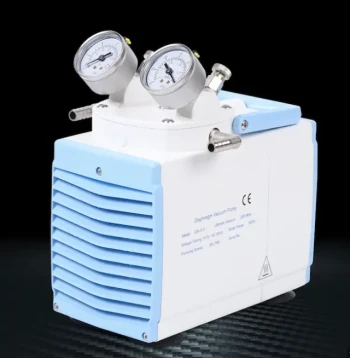
- Oil Free Diaphragm Vacuum Pump for Laboratory and Industrial Use
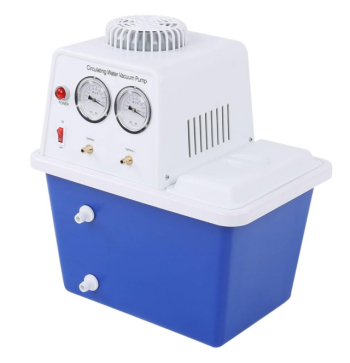
- Circulating Water Vacuum Pump for Laboratory and Industrial Use
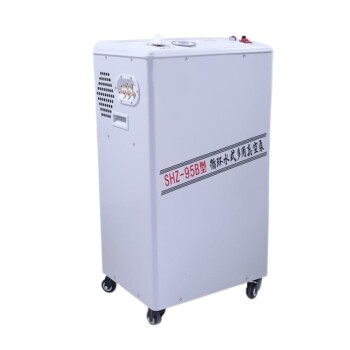
- Laboratory Vertical Water Circulating Vacuum Pump for Lab Use
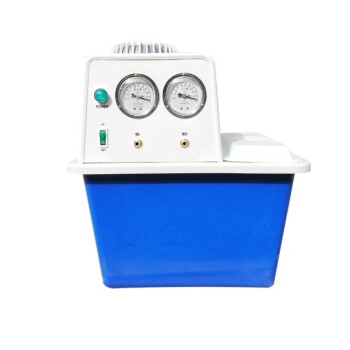
- Laboratory Benchtop Water Circulating Vacuum Pump for Lab Use
- Laboratory Rotary Vane Vacuum Pump for Lab Use
People Also Ask
- What are some typical applications for oil-free diaphragm vacuum pumps? Ensure Process Purity in Your Lab
- What is an oil-free diaphragm vacuum pump? The Ultimate Guide to Clean, Low-Maintenance Vacuum
- How does an oil-free diaphragm vacuum pump work? A Guide to Clean, Contamination-Free Vacuum
- What are the advantages of using oil-free diaphragm vacuum pumps? Achieve Clean, Low-Maintenance Vacuum
- What factors should be considered when selecting an oil-free diaphragm vacuum pump? A Guide to Optimal Performance & Longevity