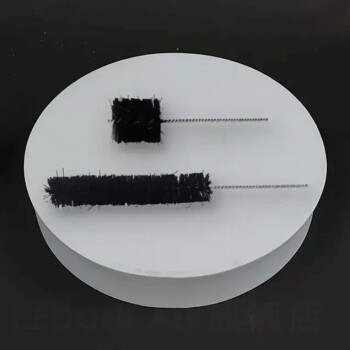
The carbon fiber brush electrode serves as the high-efficiency anode within an electrochemical membrane bioreactor (EMBR). Its primary function is to provide a massive specific surface area that supports the growth of electrogenic bacteria, which are responsible for breaking down organic matter and generating electrical current.
Core Takeaway The carbon fiber brush acts as the biological engine of the system. By maximizing surface area for bacterial colonization, it facilitates the simultaneous oxidation of pollutants (COD removal) and the generation of electron flow needed to mitigate membrane fouling at the cathode.
The Biological Foundation: Surface Area and Colonization
Maximizing Bacterial Density
The unique "brush" architecture is selected specifically to create a large specific surface area.
This vast surface area provides ample space for electrogenic bacteria to colonize and form a biofilm.
The Role of Electrogenic Bacteria
These specialized bacteria are the functional workers of the anode.
They attach to the carbon fibers and actively degrade organic matter present in the wastewater.
The Electrochemical Mechanism: Oxidation and Electron Flow
Acting as the Anode
In the context of the electrochemical cell, the carbon fiber brush functions as the anode, the site where oxidation occurs.
As the bacteria degrade organic matter, they release electrons directly to the conductive carbon fibers.
Completing the Circuit
Once captured by the brush, these electrons flow out of the anode and through an external circuit.
The circuit is completed by a conductive copper membrane cathode, allowing the system to harness the energy generated by the bacterial activity.
Systemic Benefits: Treatment and Maintenance
Chemical Oxygen Demand (COD) Removal
The degradation of organic matter by the bacteria on the brush directly results in water treatment.
This process significantly lowers the Chemical Oxygen Demand (COD) of the wastewater.
Mitigation of Membrane Fouling
The electron flow generated by the brush provides essential electrochemical assistance to the system.
This electrical current interacts with the cathode (the membrane) to actively reduce or prevent the buildup of foulants, extending the lifespan of the filtration system.
Understanding the Operational Dependencies
The Necessity of Circuit Completion
The carbon fiber brush cannot function in isolation; it relies entirely on a closed electrochemical loop.
If the connection to the conductive copper membrane cathode is broken, the electrons cannot flow, and the biological oxidation process stalls.
Bacterial Health is Critical
The electrode's efficiency is dictated by the health of the living biofilm.
Unlike a standard metal electrode, the carbon fiber brush requires conditions that sustain the electrogenic bacteria, making the system sensitive to biological shocks or toxicity.
Making the Right Choice for Your Goal
To optimize your EMBR setup, consider how the carbon fiber brush aligns with your specific objectives:
- If your primary focus is Water Quality (COD Removal): Prioritize the brush's surface area to maximize the density of the bacterial biofilm for faster organic degradation.
- If your primary focus is Membrane Longevity: Focus on maintaining a consistent electrical connection between the brush and the cathode to ensure continuous electrochemical fouling mitigation.
The carbon fiber brush transforms biological waste into the electrical energy required to keep the treatment system clean and efficient.
Summary Table:
| Feature | Function in EMBR |
|---|---|
| Component Role | High-efficiency Anode |
| Primary Material | Carbon Fiber (High Conductivity) |
| Key Mechanism | Biofilm support for electrogenic bacteria |
| System Benefit | Massive surface area for organic oxidation |
| Environmental Impact | Efficient COD removal & wastewater treatment |
| Synergy | Generates electron flow to mitigate cathode fouling |
Elevate Your Electrochemical Research with KINTEK
Maximize the efficiency of your Electrochemical Membrane Bioreactor (EMBR) with high-performance electrodes and specialized lab equipment from KINTEK. Whether you are optimizing COD removal or developing advanced fouling-mitigation strategies, we provide the precision tools necessary for success.
Our extensive portfolio includes:
- Electrolytic cells and electrodes specifically designed for advanced electrochemical applications.
- High-quality ceramics, crucibles, and PTFE products for chemical stability.
- Comprehensive battery research tools and consumables for energy storage studies.
- Precision high-temperature furnaces and reactors for material synthesis.
Ready to optimize your laboratory setup? Contact our technical experts today to discover how KINTEK's specialized equipment can drive your innovation forward.
References
- Defei Liu, Yue Situ. Dual-Function Conductive Copper Hollow Fibers for Microfiltration and Anti-biofouling in Electrochemical Membrane Bioreactors. DOI: 10.3389/fchem.2018.00445
This article is also based on technical information from Kintek Solution Knowledge Base .
Related Products
- Conductive Carbon Fiber Brush for Static Removal and Cleaning
- CF KF Flange Vacuum Electrode Feedthrough Lead Sealing Assembly for Vacuum Systems
- Conductive Carbon Cloth Carbon Paper Carbon Felt for Electrodes and Batteries
- Glassy Carbon Electrochemical Electrode
- Glassy Carbon Sheet RVC for Electrochemical Experiments
People Also Ask
- What environmental conditions should be avoided when operating or storing a carbon fiber brush? Protect Your Investment from Damage
- What is the recommended cleaning procedure for a carbon fiber brush after use? Extend Brush Life and Maintain Performance
- Why is it important to prevent mechanical damage to a carbon fiber brush? Ensure Peak Performance & Longevity
- What does the regular maintenance inspection of a carbon fiber brush entail? Ensure Peak Performance and Longevity
- Under what conditions should a carbon fiber brush be replaced? Identify Critical Failure to Ensure Performance