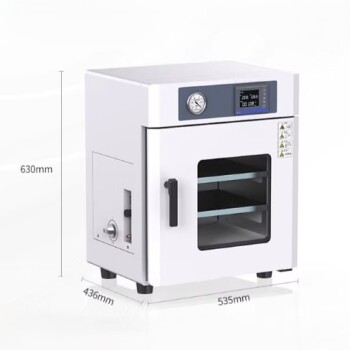
In the workflow of magnesite flotation testing, the constant temperature blast drying oven serves the essential function of dehydrating and drying concentrate foam and tailings products. By maintaining a stable, controlled thermal environment, it effectively removes moisture while preventing the thermal decomposition of minerals or residual chemical reagents. This preservation is vital for ensuring the accuracy of subsequent weighing and chemical analyses.
Accurate mineral analysis begins with proper sample preparation. This oven ensures samples are fully dried without thermal degradation, a vital step for calculating precise yield and recovery rates.
The Necessity of Controlled Dehydration
Processing Concentrates and Tailings
Once the flotation process is complete, you are left with wet concentrate foam and tailings products. Before any meaningful data can be extracted, these products must be converted from a slurry or foam state into a dry solid. The drying oven is the primary tool used to execute this phase change efficiently.
Enabling Accurate Measurement
Water weight is the enemy of precision in mineral processing. To calculate yield and recovery rates correctly, the mass of the mineral must be measured without the variable of moisture content. The oven ensures that the final weight recorded is purely that of the mineral and remaining reagents, eliminating calculation errors caused by retained water.
Preserving Sample Integrity
Preventing Thermal Decomposition
Heat can be destructive if not carefully managed. A standard oven might fluctuate in temperature, potentially altering the physical structure of the magnesite or other minerals present. The constant temperature feature ensures the heat remains within a specific range that dries the sample without causing thermal decomposition.
Protecting Residual Reagents
Flotation relies heavily on chemical reagents, traces of which remain on the concentrate. High or unstable temperatures can degrade these chemical residues. By providing a controlled environment, the oven preserves the chemical state of the sample, ensuring that subsequent chemical analysis reflects the true outcome of the flotation test.
Understanding the Operational Trade-offs
Temperature Limits vs. Drying Speed
While the "blast" function accelerates drying by circulating air, there is a strict limit to how much heat you can apply. Pushing the temperature too high to save time risks burning the reagents or altering the mineral properties. You must balance the need for rapid workflow turnover against the absolute necessity of sample stability.
The Risk of Residual Moisture
Conversely, if the temperature is set too low to protect sensitive reagents, drying may be incomplete. Even trace amounts of moisture can skew weighing results significantly. The operator must find the precise thermal window that guarantees total moisture removal without crossing the threshold of thermal damage.
Making the Right Choice for Your Goal
To maximize the reliability of your magnesite flotation data, consider your specific analytical needs:
- If your primary focus is Yield Calculation: Ensure the oven is calibrated to a temperature that guarantees complete moisture removal to prevent water weight from inflating your yield data.
- If your primary focus is Chemical Analysis: Prioritize a lower, highly stable temperature setting to protect residual reagents from thermal degradation, ensuring your chemical profiling is accurate.
The constant temperature blast drying oven is not just a drying tool; it is a preservation chamber that safeguards the integrity of your data between extraction and analysis.
Summary Table:
| Feature | Function in Magnesite Flotation | Impact on Data Accuracy |
|---|---|---|
| Constant Temperature | Prevents thermal decomposition of minerals | Preserves chemical integrity for analysis |
| Blast Air Circulation | Accelerates moisture removal (dehydration) | Improves workflow efficiency and drying speed |
| Controlled Environment | Protects residual flotation reagents | Ensures accurate chemical profiling |
| Complete Dehydration | Eliminates water weight from samples | Crucial for precise yield and recovery calculations |
Optimize Your Mineral Processing with KINTEK Precision
Accuracy in flotation testing starts with reliable sample preparation. KINTEK specializes in high-performance laboratory equipment designed to meet the rigorous demands of mineral research. From our constant temperature blast drying ovens that ensure sample stability to our comprehensive range of crushing and milling systems, sieving equipment, and high-temperature furnaces, we provide the tools you need for precise results.
Whether you are conducting battery research, material synthesis, or mineral analysis, KINTEK offers a full portfolio of high-temperature high-pressure reactors, PTFE consumables, ceramics, and cooling solutions like ULT freezers and freeze dryers.
Ready to elevate your lab's efficiency and data precision? Contact our technical experts today to find the perfect drying solution for your flotation workflow.
Related Products
- Laboratory Scientific Electric Heating Blast Drying Oven
- 23L Laboratory Vacuum Drying Oven
- High Temperature Muffle Oven Furnace for Laboratory Debinding and Pre Sintering
- 56L Vertical Laboratory Vacuum Drying Oven
- 10L Chilling Circulator Cooling Water Bath Low Temperature Constant Temperature Reaction Bath
People Also Ask
- How does a laboratory electric drying oven contribute to the formation of the initial coating? Expert Insights
- What role does a precision laboratory drying oven play in the synthesis of GO-PANI nanocomposites? Protect Material Integrity
- What role does a laboratory drying oven play in the preparation of zinc oxide nanoparticle precursors?
- What is the necessity of using a laboratory drying oven when processing MoO3/GO composite nanopowders? Find out here.
- What is the role of a laboratory drying oven in cellulose citrate production? Ensure Material Stability & Purity