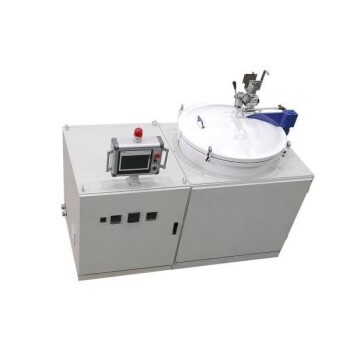
The primary function of a laboratory box furnace in biochar preparation is the controlled thermal devolatilization and pyrolysis of biomass. By providing a precise heating environment under an inert atmosphere, the furnace facilitates the thermochemical conversion of raw organic materials into biochar with high fixed carbon content. This process is essential for tailoring the porosity and volatile profile of the material to ensure it functions effectively as a reducing agent.
Core Takeaway: A laboratory box furnace acts as a precision reactor that transforms raw biomass into a high-carbon reducing agent by strictly controlling temperature, heating rates, and atmospheric conditions to optimize chemical reactivity.
Thermal Devolatilization and Pyrolysis
Carbon Enrichment through Controlled Heating
The box furnace facilitates the pyrolysis of biomass materials, such as lignin or corn stalks, by applying high temperatures in the absence of oxygen. This thermal treatment drives off moisture and non-carbonaceous gases, effectively concentrating the fixed carbon content. A higher concentration of fixed carbon is vital for the material's performance as a reducing agent in metallurgical or chemical processes.
Establishing an Inert Atmosphere
To prevent the biomass from simply combusting into ash, the box furnace must maintain an inert or oxygen-limited atmosphere, typically using nitrogen (N2). This anaerobic environment ensures that the biomass undergoes devolatilization, dehydrogenation, and deoxygenation without being consumed by flames. This controlled decomposition is what allows the organic structure to stabilize into a solid carbon skeleton.
Engineering Reactivity for Reduction Processes
Regulating Volatile Content and Reactivity
The furnace’s ability to maintain specific isothermal zones allows researchers to determine the final volatile matter remaining in the biochar. The balance between volatiles and fixed carbon directly influences the reactivity of the biochar during the reduction process. Higher temperatures generally result in lower volatile content, which can alter the speed and efficiency of the reduction reaction.
Developing Porous Structures
Precise control over the heating rate and holding time is critical for the formation of highly developed microporous structures. These pores increase the specific surface area of the biochar, providing more active sites for chemical reactions. A box furnace allows for the long-duration high-temperature treatment necessary for the carbonization and graphitization required in high-performance applications.
Understanding the Trade-offs
Batch Processing Limitations
Unlike continuous tube furnaces, laboratory box furnaces are typically batch processors, which can lead to slight variations between different production runs. Maintaining a perfectly uniform temperature and atmosphere across a large volume of biomass requires careful calibration of the furnace's heating elements.
Carbon Yield vs. Surface Activity
There is a fundamental trade-off between the carbon yield and the chemical activity of the biochar. Increasing the pyrolysis temperature to 1000°C or higher maximizes carbon purity but may cause the pore structure to collapse or the surface functional groups to degrade. This reduces the number of active sites available for the reduction of ores or other chemical species.
Selecting Parameters for Biochar Reducing Agents
How to Apply This to Your Project
When utilizing a box furnace for biochar preparation, your heating profile should align with your specific performance requirements for the reducing agent.
- If your primary focus is maximizing fixed carbon: Use a high pyrolysis temperature (above 700°C) with a long holding time to ensure thorough carbonization and graphitization.
- If your primary focus is high surface reactivity: Utilize a lower pyrolysis temperature (300°C to 500°C) and a slower heating rate to preserve surface functional groups and micropore integrity.
- If your primary focus is determining mineral influence: Use the furnace in an oxidizing environment (muffle mode) at 720°C to determine the total ash content, which reflects the inorganic nutrient load.
By mastering the thermal environment of the box furnace, you can precisely tune the chemical and physical properties of biochar to serve as a highly efficient reducing agent.
Summary Table:
| Parameter | Function in Biochar Preparation | Impact on Reducing Agent Performance |
|---|---|---|
| High Temperature | Facilitates pyrolysis & devolatilization | Increases fixed carbon content and purity |
| Inert Atmosphere | Prevents combustion/oxidation | Stabilizes the solid carbon skeleton |
| Heating Rate | Controls volatile release speed | Dictates microporosity and specific surface area |
| Holding Time | Ensures thorough carbonization | Enhances graphitization and structural stability |
| Isothermal Zones | Regulates volatile matter profile | Tunes chemical reactivity for specific reduction tasks |
Elevate Your Biochar Research with KINTEK Precision
Achieve unmatched consistency in your thermochemical conversion processes with KINTEK’s high-performance laboratory equipment. Whether you are optimizing pyrolysis in our advanced box and muffle furnaces, preparing biomass with our precision crushing and milling systems, or requiring specialized high-temperature high-pressure reactors, we provide the tools necessary to engineer superior biochar reducing agents.
Why choose KINTEK?
- Precision Control: Strict temperature and atmospheric regulation for repeatable research results.
- Comprehensive Portfolio: From rotary and vacuum furnaces to PTFE consumables and crucibles, we cover your entire workflow.
- Tailored Solutions: Expert support to help you balance carbon yield and surface reactivity.
Ready to refine your carbonization process? Contact our technical experts today to find the ideal furnace solution for your laboratory!
References
- Desmond Attah-Kyei, Daniel Lindberg. A Crucial Step Toward Carbon Neutrality in Pyrometallurgical Reduction of Nickel Slag. DOI: 10.1007/s40831-023-00763-5
This article is also based on technical information from Kintek Solution Knowledge Base .
Related Products
- 1400℃ Muffle Oven Furnace for Laboratory
- 1700℃ Muffle Oven Furnace for Laboratory
- 1200℃ Split Tube Furnace with Quartz Tube Laboratory Tubular Furnace
- Vertical Laboratory Tube Furnace
- 1700℃ Laboratory High Temperature Tube Furnace with Alumina Tube
People Also Ask
- How does a muffle furnace ensure reliability in calcification roasting? Achieve Precision in Pellets Conversion
- Why is a laboratory high-temperature muffle furnace required for the post-annealing treatment of copper oxide?
- What role does a laboratory high-temperature muffle furnace play in iron-based composite phase structure development?
- How does a muffle furnace influence 8YSZ ceramic densification? Master Precision Sintering at 1500°C
- How is a laboratory high-temperature muffle furnace utilized in sol-gel synthesis for perovskite catalysts?