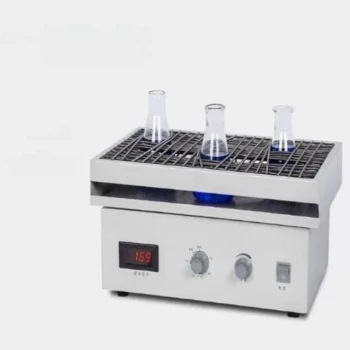
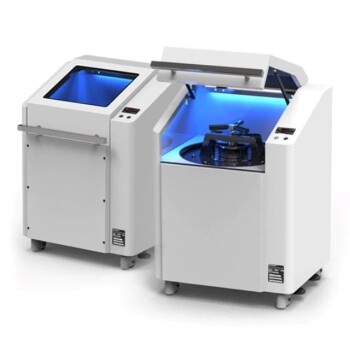
Mechanical alloying equipment functions as a high-energy kinetic reactor that drives atomic-level mixing through physical force rather than heat. Specifically for self-passivating tungsten alloys, utilizes a high-energy ball milling process to subject raw powders—typically Tungsten (W), Chromium (Cr), and Yttrium (Y)—to repeated cycles of cold welding, fracturing, and re-welding. This mechanical trauma forces these distinct elements into a highly uniform, pre-alloyed powder state necessary for subsequent consolidation.
The core function of this equipment is to overcome thermodynamic barriers by forcing atomic diffusion at room temperature. It transforms separate elemental powders into a homogeneous alloy structure, ensuring the uniform distribution of passivating elements required for superior oxidation resistance.
The Mechanism of Atomic Integration
The Cycle of Cold Welding and Fracturing
The equipment does not simply stir the powders; it subjects them to high-frequency impacts and shear forces. Through high-energy ball milling, particles are repeatedly flattened, cold-welded together, and then fractured. This continuous cycle breaks down agglomerates and exposes fresh surfaces, allowing different elements to bond physically.
Forcing Atomic Diffusion
Under normal conditions, elements like Tungsten and Yttrium may be thermodynamically immiscible or difficult to blend due to drastic melting point differences. The mechanical force induces severe plastic deformation, which shortens diffusion distances and drives atomic-level mixing. This process creates solid solutions that would be difficult or impossible to achieve through conventional melting.
Refinement of Grain Structure
Beyond mixing, the equipment drastically alters the microstructure of the powder. The high-energy impacts introduce work hardening and reduce the particle grain size to the nanometer scale. This structural refinement is critical for developing high-performance, nanostructured bulk materials.
Why This is Critical for Self-Passivating Alloys
Ensuring Oxidation Resistance
Self-passivating alloys rely on the formation of a protective oxide layer, usually driven by elements like Chromium. If these elements are not distributed uniformly at the atomic level, the protective layer will have gaps, leading to material failure. Mechanical alloying ensures that Chromium and Yttrium are evenly dispersed throughout the Tungsten matrix before sintering begins.
Preparation for Sintering
The output of this equipment is a high-quality pre-alloyed powder. This powder lowers the reaction temperatures required for subsequent processing steps. It provides the necessary feedstock to sinter bulk materials that maintain their integrity and passivation properties under extreme conditions.
Understanding the Trade-offs
The Risk of Contamination
A significant challenge in mechanical alloying is the wear of the grinding media (balls and jars), which can introduce impurities into the powder. The material of the grinding tools directly influences the purity of the final alloy. Using Chromium steel balls or ceramic tools like yttria-stabilized zirconia (YSZ) is often required to minimize foreign metal contamination.
Energy Transfer Efficiency
The process is time-intensive and reliant on the kinetic energy transfer from the milling media to the powder. The specific material properties (density) and geometry of the grinding balls determine the energy release density. Incorrect media selection can lead to incomplete alloying or excessively long processing times.
Making the Right Choice for Your Goal
To optimize the preparation of self-passivating tungsten alloys, consider the following operational priorities:
- If your primary focus is Oxidation Resistance: Ensure the milling duration is sufficient to achieve a fully homogeneous distribution of Chromium and Yttrium, as local segregations will become failure points.
- If your primary focus is Material Purity: rigorous selection of grinding media (such as YSZ or Chromium steel) is essential to prevent the degradation of alloy properties through iron or ceramic contamination.
Success in this process relies not just on mixing, but on delivering sufficient kinetic energy to force atomic integration without introducing impurities.
Summary Table:
| Process Component | Functional Role in Mechanical Alloying | Key Outcome |
|---|---|---|
| High-Energy Milling | Cold welding & fracturing cycles | Homogeneous atomic-level integration |
| Severe Plastic Deformation | Forcing atomic diffusion at room temp | Overcomes thermodynamic blending barriers |
| Structural Refinement | Continuous high-frequency impact | Nanometer-scale grain size reduction |
| Media Selection | Controlled grinding environment | Minimal contamination & high energy density |
Elevate Your Material Research with KINTEK Precision
Precision in mechanical alloying is the foundation of high-performance self-passivating alloys. KINTEK specializes in advanced laboratory equipment and consumables designed to meet the rigorous demands of material science.
Whether you are refining nanostructured powders or developing next-generation tungsten alloys, our comprehensive portfolio offers the tools you need for success:
- High-Energy Ball Mills & Grinding Media: Including YSZ and Chromium steel to ensure purity.
- Sieving & Crushing Systems: For perfect powder morphology and size distribution.
- High-Temperature Furnaces: Muffle, vacuum, and atmosphere furnaces for superior sintering results.
- Hydraulic Presses: Pellet and isostatic presses for high-density consolidation.
Ready to achieve superior oxidation resistance and material purity? Contact KINTEK today to discover how our high-performance reactors, milling systems, and laboratory consumables can optimize your research and production workflows.
References
- Diana Bachurina, Ch. Linsmeier. Self-passivating smart tungsten alloys for DEMO: a progress in joining and upscale for a first wall mockup. DOI: 10.1007/s42864-021-00079-5
This article is also based on technical information from Kintek Solution Knowledge Base .
Related Products
- Laboratory Ball Mill Jar Mill with Metal Alloy Grinding Jar and Balls
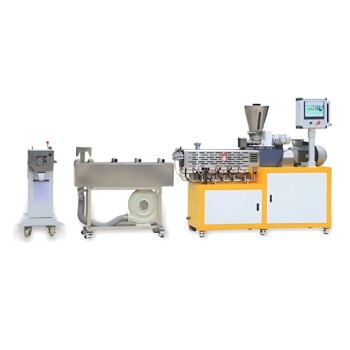
- Twin Screw Extruder Plastic Granulation Machine
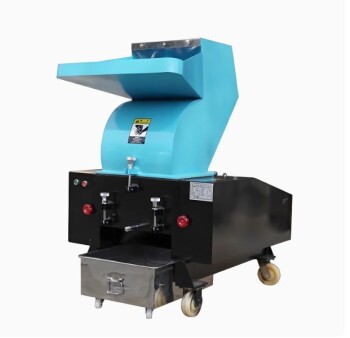
- Powerful Plastic Crusher Machine
- Laboratory Single Horizontal Jar Mill
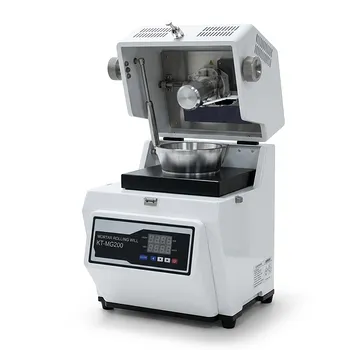
- Mini Planetary Ball Mill Machine for Laboratory Milling
People Also Ask
- What is the function of a laboratory ball mill in the preparation of AMMCs? Optimize Dispersion & Grain Refinement
- What is the primary function of a laboratory ball mill in the modification of sulfide-based solid electrolytes with LiPO2F2?
- What is the function of a laboratory ball mill in the pretreatment of waste tire char (WTC)? Optimize Material Reactivity
- What is the primary function of a laboratory ball mill in Rice Husk Ash (RHA) modification? Achieve Peak Densification
- How do laboratory ball mills facilitate the mechanochemical synthesis of ZIF-8? Solvent-Free Synthesis Explained