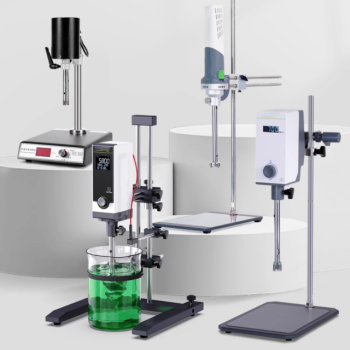
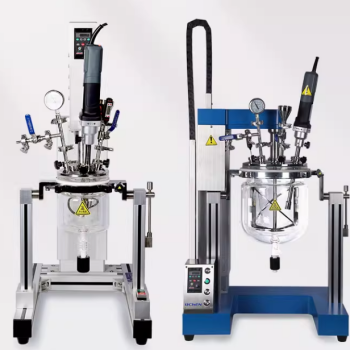
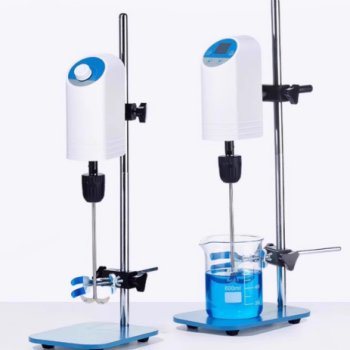
The critical role of a high-pressure homogenizer is to mechanically rupture bacterial cell walls to release stored polyhydroxyalkanoates (PHA). By utilizing a displacement pump to force biomass through a discharge valve, the machine applies extreme pressure and shear forces, effectively breaking open the cells to expose the valuable intracellular biopolymer granules.
High-pressure homogenization represents the industrial standard for solvent-free PHA extraction. It converts biological accumulation into recoverable material by applying the physical force necessary to shatter microbial membranes at scale.
The Mechanics of Disruption
Generating Extreme Shear
The homogenizer operates by driving bacterial suspensions through a specialized narrow-gap homogenization valve.
This process creates a combination of intense shear forces, high-velocity impact, and rapid pressure drops.
These forces are distinct from simple mixing; they are violent enough to physically tear apart the robust cell walls of bacteria.
Releasing the Intracellular Payload
PHA is accumulated intracellularly, meaning the polymer granules are locked inside the bacterial cell.
Without rupturing the cell, the bioplastic cannot be processed or utilized.
The homogenizer ensures the efficient release of these granules, separating the valuable polymer from the residual biomass.
Why It Is Essential for Industry
Enabling Large-Scale Production
While various methods exist for cell disruption, high-pressure homogenization is specifically engineered for large-scale biomass removal.
It allows for continuous processing of high volumes of bacterial suspension, a requirement for commercially viable bioplastic production.
A Sustainable Alternative
One of the most significant advantages of this mechanical approach is the elimination of hazardous chemicals.
Traditional extraction often relies on halogenated organic solvents, which pose severe environmental and health risks.
Homogenization provides a physical, solvent-free extraction route, aligning the manufacturing process with the eco-friendly nature of the final bioplastic product.
Understanding the Trade-offs
Equipment vs. Scale
High-pressure homogenizers are heavy industrial equipment designed for throughput and durability.
For small-scale laboratory research, they may be oversized and overly complex compared to other methods.
The Cavitation Alternative
In a research and development setting, ultrasonic homogenizers are often preferred.
These devices use high-frequency ultrasound to generate cavitation for cell disruption, offering rapid processing for small batches.
However, ultrasonic methods are generally less suited for the continuous, high-volume demands of full-scale manufacturing.
Making the Right Choice for Your Goal
To ensure your extraction process aligns with your operational scale and environmental targets, consider the following:
- If your primary focus is large-scale industrial manufacturing: Rely on high-pressure homogenization to handle high volumes of biomass efficiently without bottlenecks.
- If your primary focus is small-scale R&D or strain testing: Utilize ultrasonic homogenization for rapid, convenient cell disruption without the need for heavy industrial machinery.
- If your primary focus is environmental sustainability: Prioritize mechanical disruption via homogenization to avoid the regulatory and ecological burdens of halogenated solvents.
Selecting the right disruption method allows you to balance extraction efficiency with economic and environmental viability.
Summary Table:
| Feature | High-Pressure Homogenizer | Ultrasonic Homogenizer |
|---|---|---|
| Mechanism | Mechanical shear & pressure drop | High-frequency cavitation |
| Best Use Case | Large-scale industrial production | Small-scale R&D and lab testing |
| Key Advantage | Continuous high-volume throughput | Rapid processing for small batches |
| Sustainability | Solvent-free mechanical disruption | Chemical-free physical disruption |
| Scalability | High (Industrial standard) | Low (Limited by probe size) |
Elevate Your Bioplastic Production with KINTEK
Maximize your PHA yield and embrace sustainable manufacturing with KINTEK’s high-performance homogenization solutions. Whether you are scaling up industrial production or conducting precise R&D, our range of industrial high-pressure homogenizers and ultrasonic shakers ensures efficient cell disruption without the need for hazardous solvents.
Beyond extraction, KINTEK provides a comprehensive ecosystem for your laboratory and production needs, including:
- High-Temperature Furnaces & Reactors: Precise thermal control for material synthesis.
- Crushing & Milling Systems: Advanced preparation for biomass processing.
- Cooling Solutions: High-stability ULT freezers and freeze dryers for sensitive biopolymers.
Ready to optimize your extraction efficiency? Contact KINTEK today to find the perfect equipment tailored to your specific research or manufacturing goals!
References
- Amandeep Girdhar, Archana Tiwari. Process Parameters for Influencing Polyhydroxyalkanoate Producing Bacterial Factories: An Overview. DOI: 10.4172/2157-7463.1000155
This article is also based on technical information from Kintek Solution Knowledge Base .
Related Products
- High Shear Homogenizer for Pharmaceutical and Cosmetic Applications
- High Performance Lab Homogenizer for Pharma Cosmetics and Food R&D
- Laboratory High Throughput Tissue Grinding Mill Grinder
- Desktop Fast High Pressure Laboratory Autoclave Sterilizer 16L 24L for Lab Use
- Lab Sterile Slapping Type Homogenizer for Tissue Mashing and Dispersing
People Also Ask
- Why Use a High Shear Homogenizer for Cathode Slurries? Optimize Double-Layer Solid-State Battery Production
- What is the function of high-shear dispersion equipment in corona-resistant nanocomposites? Elevate Your Insulation
- What is the necessity of using an industrial-grade high-shear homogenizer for biomass washing? Ensure Process Efficiency
- What are the advantages of using a high-shear homogenizer for BED/GMA coatings? Achieve Superior Nano-Dispersion
- What role does a high-shear homogenizer play in ODC catalyst suspensions? Unlock Superior Electrochemical Efficiency