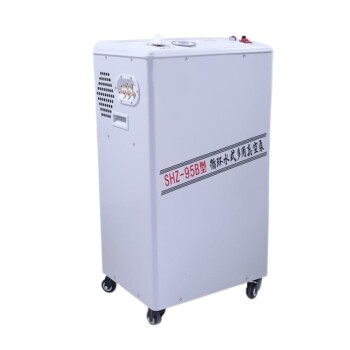
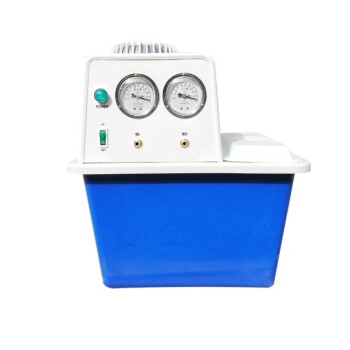
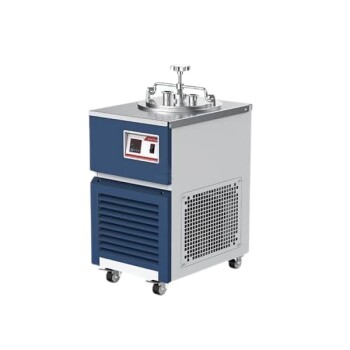
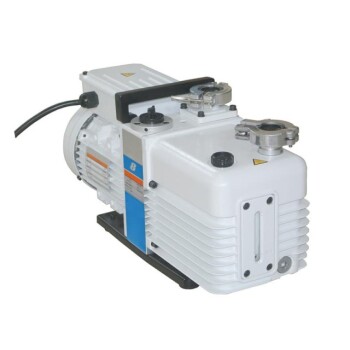
The primary vacuum system functions as the critical first step in establishing a controlled chemical environment for carbon fluorination. Its specific role is to thoroughly evacuate humid air and residual impurities from the reactor interior before the introduction of fluorine gas. By purging these contaminants, the system prevents dangerous side reactions and prepares the carbon surface for effective modification.
The vacuum process is a dual-purpose safeguard: it prevents the formation of corrosive hydrofluoric acid (HF) by removing moisture, while simultaneously ensuring the clean, direct contact between fluorine and carbon required for high-performance results.
The Chemistry of Contamination Control
Eliminating the Moisture Hazard
The most immediate threat to a fluorination reaction is atmospheric humidity. If water vapor is present when fluorine gas is introduced, the two react aggressively.
Preventing Acid Formation
This reaction between fluorine and residual moisture generates hydrofluoric acid (HF) as a byproduct. HF is highly corrosive and detrimental to both the chemical process and the physical reactor vessel.
Removing Residual Impurities
Beyond moisture, ambient air contains various impurities that can interfere with surface chemistry. The vacuum system strips these away, leaving a neutral environment.
Optimizing Surface Interaction
Establishing a Pristine Interface
For fluorination to be effective, the carbon substrate must be chemically accessible. The vacuum process removes the boundary layer of air and contaminants sitting on the carbon.
Ensuring Direct Gas-to-Solid Contact
The primary reference highlights this as a prerequisite for high-performance modification. Without a vacuum, impurities act as a barrier between the reactants.
Facilitating Uniform Modification
A clean surface allows the fluorine gas to interact evenly across the carbon material. This direct contact ensures the consistency required for high-quality surface fluorination.
Risks and Operational Trade-offs
The Cost of Incomplete Evacuation
It can be tempting to shorten the evacuation cycle to increase production speed. However, failing to achieve a sufficient vacuum level leaves moisture behind.
Balancing Time vs. Equipment Longevity
While a thorough vacuum takes time, the alternative is the generation of HF. This acid attacks reactor seals and walls, leading to expensive maintenance that far outweighs the time saved during evacuation.
Quality Consistency
Inadequate vacuuming leads to "blind spots" on the carbon surface where impurities blocked the fluorine. This results in unpredictable performance characteristics in the final product.
Ensuring Process Success
To maximize the effectiveness of your carbon fluorination reaction, consider the following approach:
- If your primary focus is Equipment Longevity: Ensure the vacuum system completely removes humidity to prevent corrosive HF formation that degrades reactor components.
- If your primary focus is Product Quality: Prioritize a deep vacuum to guarantee direct contact between the fluorine gas and a clean carbon surface.
The success of surface fluorination is determined before the reaction even begins, relying entirely on the purity of the vacuum environment.
Summary Table:
| Feature | Role in Carbon Fluorination | Impact on Process Success |
|---|---|---|
| Moisture Removal | Eliminates atmospheric humidity | Prevents formation of corrosive Hydrofluoric Acid (HF) |
| Impurity Purging | Strips residual air and contaminants | Ensures a neutral environment for clean chemical interaction |
| Surface Preparation | Removes the gas boundary layer | Guarantees direct gas-to-solid contact for uniform modification |
| System Protection | Minimizes chemical degradation | Extends reactor longevity and reduces maintenance costs |
Maximize Your Fluorination Precision with KINTEK
Don't let moisture and impurities compromise your material performance or damage your infrastructure. KINTEK specializes in advanced laboratory solutions, offering high-performance vacuum systems, high-temperature high-pressure reactors, and autoclaves designed to maintain the pristine environments required for critical surface chemistry.
Whether you are scaling up battery research or perfecting carbon modification, our comprehensive range of crushing systems, dental furnaces, and specialized consumables ensures consistent, high-quality results.
Ready to optimize your reactor environment? Contact our technical experts today to find the perfect equipment for your laboratory needs.
References
- Yasser Ahmad, Katia Guérin. Advances in tailoring the water content in porous carbon aerogels using RT-pulsed fluorination. DOI: 10.1016/j.jfluchem.2020.109633
This article is also based on technical information from Kintek Solution Knowledge Base .
Related Products
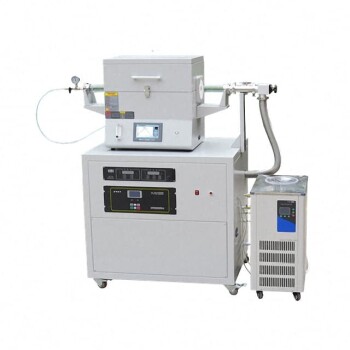
- Split Chamber CVD Tube Furnace with Vacuum Station Chemical Vapor Deposition System Equipment Machine
- CF KF Flange Vacuum Electrode Feedthrough Lead Sealing Assembly for Vacuum Systems
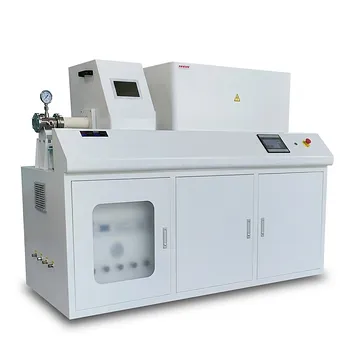
- Customer Made Versatile CVD Tube Furnace Chemical Vapor Deposition Chamber System Equipment
- Ultra-High Vacuum Flange Aviation Plug Glass Sintered Airtight Circular Connector for KF ISO CF
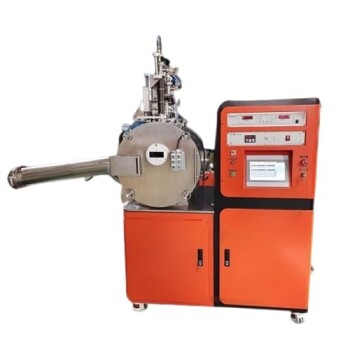
- Vacuum Induction Melting Spinning System Arc Melting Furnace
People Also Ask
- What is the function of a tube furnace in CVD SiC synthesis? Achieving Ultra-Pure Silicon Carbide Powders
- What is a CVD tube furnace? A Complete Guide to Thin-Film Deposition
- What are the technical advantages of using a CVD tube furnace? Optimize Silicon-Carbon Battery Anodes
- What is the function of a high-temperature CVD tube furnace in 3D graphene foam prep? Master 3D Nanomaterial Growth
- How does a CVD tube furnace inhibit the sintering of silver supports? Boost Membrane Durability and Performance