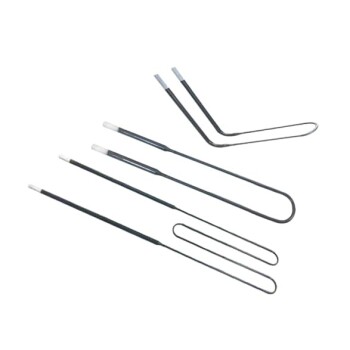
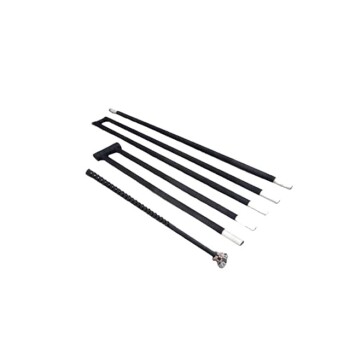
The heating module acts as the thermal engine of a Molten Salt Carbon Capture and Storage (CCMS) reactor prototype. Its fundamental role is to regulate the reaction chamber's environment, strictly maintaining the absorption stage at approximately 700 °C and elevating the system to approximately 940 °C for the desorption stage. Beyond simple temperature generation, it ensures the molten salt remains fluid and provides the precise energy required to drive reaction kinetics efficiently.
The module is not merely a heat source; it is the control mechanism for the reactor's chemical switch. By toggling temperatures between 700 °C and 940 °C, it physically dictates whether the system is trapping carbon or releasing it for storage.
Managing the Dual-Stage Thermal Cycle
The Absorption Phase (Carbonation)
The first critical function of the heating module is to stabilize the reactor at 700 °C.
At this specific temperature, the module creates the optimal thermodynamic conditions for carbonation. This promotes the chemical reaction where carbon dioxide is absorbed and trapped within the sorbent material.
The Desorption Phase (Decomposition)
To complete the capture cycle, the heating module must ramp the temperature up to 940 °C.
This high-energy state triggers the decomposition of calcium carbonate. This releases the captured CO2 in a controlled manner, regenerating the sorbent so the cycle can begin again.
Ensuring Operational Integrity and Efficiency
Maintaining Salt Fluidity
Beyond the chemical reaction, the heating module prevents mechanical failure by maintaining the physical state of the transport medium.
It ensures the fluidity of the molten salt is constant throughout the operation. If the module fails to maintain minimum temperatures, the salt could solidify, effectively seizing the reactor's internal components.
Optimizing Reaction Kinetics
The speed and completeness of the carbon capture process depend heavily on precise thermal management.
The heating module facilitates efficient reaction kinetics by ensuring the energy input matches the reaction's demand. Accurate temperature control prevents sluggish reactions that would reduce the overall capture rate of the prototype.
Understanding the Trade-offs
Energy Intensity vs. Process Speed
Achieving the 940 °C required for desorption demands significant energy input.
While higher temperatures ensure complete regeneration of the sorbent, they increase the operational cost of the prototype. Engineers must balance the speed of desorption against the energy penalty of maintaining such high heat.
Thermal Cycling Stress
The requirement to oscillate between 700 °C and 940 °C places immense thermal stress on the reactor materials.
Rapid heating and cooling cycles can lead to material fatigue. The heating module must be designed to change temperatures efficiently without damaging the structural integrity of the reaction chamber over time.
Implications for Prototype Development
To optimize your CCMS reactor design, you must align the heating module's capabilities with your specific testing goals.
- If your primary focus is maximizing carbon uptake: Prioritize thermal stability at 700 °C to ensure the absorption phase remains in the ideal kinetic window.
- If your primary focus is sorbent regeneration efficiency: Ensure the module has the power reserve to reach and hold 940 °C rapidly to fully decompose calcium carbonate.
Ultimately, the heating module is the governor of the CCMS process, dictating both the physical viability of the molten salt and the chemical success of carbon sequestration.
Summary Table:
| Feature | Absorption Stage | Desorption Stage |
|---|---|---|
| Temperature Target | Approximately 700 °C | Approximately 940 °C |
| Chemical Process | Carbonation (CO2 uptake) | Decomposition (CO2 release) |
| Module Function | Stabilize thermodynamic conditions | Provide high energy for regeneration |
| Key Objective | Maximize carbon capture rate | Regenerate sorbent for reuse |
| Physical State | Maintain molten salt fluidity | Manage thermal cycling stress |
Elevate Your Carbon Capture Research with KINTEK Precision
Achieving the precise 700°C to 940°C thermal oscillation required for Molten Salt Carbon Capture and Storage (CCMS) demands high-performance equipment that can withstand extreme environments. KINTEK specializes in advanced laboratory solutions, providing the robust high-temperature furnaces, high-pressure reactors, and specialized ceramics necessary to maintain your reactor's operational integrity.
Whether you are optimizing reaction kinetics or testing material durability under thermal stress, our comprehensive range of muffle furnaces, tube furnaces, and vacuum systems ensures your prototype delivers accurate, repeatable results. Our high-temperature high-pressure reactors and autoclaves are specifically engineered for the rigors of carbon sequestration research.
Ready to optimize your CCMS reactor design? Contact KINTEK today to discuss how our heating solutions and lab consumables can drive your carbon capture technology forward.
References
- Piotr Palimąka, Justyna Jaskowska-Lemańska. Evaluation of the Wear of Ni 200 Alloy After Long-Term Carbon Capture in Molten Salts Process. DOI: 10.3390/ma17246302
This article is also based on technical information from Kintek Solution Knowledge Base .
Related Products
- Molybdenum Disilicide (MoSi2) Thermal Elements Electric Furnace Heating Element
- Silicon Carbide SiC Thermal Heating Elements for Electric Furnace
- Double Plate Heating Press Mold for Lab
- High Temperature Constant Temperature Heating Circulator Water Bath Chiller Circulator for Reaction Bath
People Also Ask
- What is the temperature range of molybdenum disilicide heating elements? Choose the Right Grade for Your High-Temp Needs
- What is molybdenum disilicide used for? Powering High-Temperature Furnaces Up to 1800°C
- What is the temperature range of a MoSi2 heating element? Unlock 1900°C Performance for Your Lab
- What is MoSi2 heating element? A High-Temp Solution with Self-Healing Power
- What is the best heating element for a furnace? A Guide to Selecting the Right Material for Your Temperature Needs