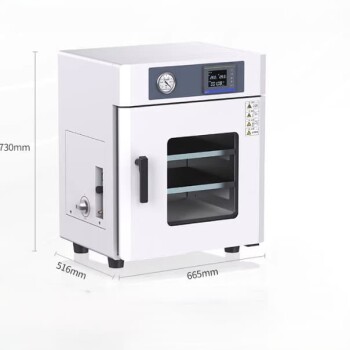
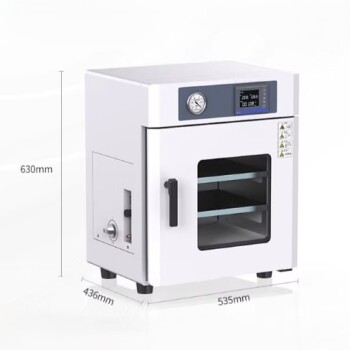
The primary function of a drying oven in this context is to systematically remove liquid milling media, such as ethanol, from the ceramic slurry.
Following the ball-milling process, the ZrB2-SiC mixture exists as a wet slurry. The drying oven operates at a constant temperature (typically around 80°C) to evaporate the solvent, converting the mixture into a dry, flowable powder suitable for mold loading.
Core Takeaway The drying phase is not merely about liquid removal; it is a critical quality control step for structural integrity. By ensuring the total evaporation of solvents before sintering, the drying oven prevents the formation of gas pores and cracks that would otherwise compromise the final ceramic component.
From Slurry to Sinter-Ready Powder
Evaporation of Milling Media
Ball milling requires a liquid medium (often ethanol) to facilitate the mixing of Zirconium Diboride (ZrB2) and Silicon Carbide (SiC).
Once milling is complete, this liquid is no longer needed. The drying oven provides a controlled thermal environment to drive off the ethanol.
Thermal Consistency
The process relies on maintaining a constant temperature, cited specifically as 80°C for this application.
This specific temperature is high enough to induce efficient evaporation of the ethanol solvent but low enough to manage the phase transition from slurry to solid without aggressive boiling that might segregate the particles.
Preparation for Mold Loading
The immediate goal of this stage is mechanical handling.
You cannot load a wet slurry into a sintering mold effectively. The oven ensures the material is transformed into a dry powder that can be evenly packed and compressed.
Preventing Catastrophic Failure During Sintering
Eliminating Solvent Residue
The most critical role of the drying oven is the prevention of defects during the subsequent high-temperature sintering phase.
If the powder retains any moisture or solvent residue, it becomes a distinct hazard when the material is subjected to sintering heat.
Stopping Gas Pore Formation
Trapped solvents will vaporize rapidly and expansively when heated during sintering.
If the solvent has not been removed in the drying oven, this rapid gas expansion creates voids or "gas pores" within the ceramic structure.
Avoiding Material Cracking
Beyond porosity, the internal pressure from expanding trapped gases can exceed the material's strength during the early stages of sintering.
This leads to macro-cracks or micro-cracking in the final piece, rendering the ceramic useless for high-stress applications.
Understanding the Trade-offs
Time vs. Integrity
The drying process introduces a bottleneck in the manufacturing line, as it requires the material to sit at a constant temperature until fully dry.
Rushing this step by increasing the temperature excessively or cutting the time short is a common pitfall. While higher temperatures might dry the powder faster, they risk uneven drying or surface crusting that traps solvent inside the bulk material.
Completeness is Non-Negotiable
Unlike some processes where "mostly done" is acceptable, drying for sintering requires absolute thoroughness.
Even trace amounts of ethanol left in the center of a powder batch can result in structural failure later. The trade-off is that you must invest the necessary time at a moderate temperature (80°C) to guarantee a defect-free internal structure.
Making the Right Choice for Your Goal
To ensure the success of your ZrB2-SiC ceramic fabrication, consider these specific priorities:
- If your primary focus is Structural Integrity: Ensure the drying cycle is long enough to remove all traces of ethanol, as even microscopic residue can cause cracking during sintering.
- If your primary focus is Process Repeatability: Maintain the oven strictly at 80°C to ensure the transition from slurry to powder remains consistent across different batches.
Ultimately, the drying oven acts as the safeguard that ensures your raw mixture survives the extreme conditions of sintering intact.
Summary Table:
| Feature | Function in ZrB2-SiC Processing | Impact on Final Product |
|---|---|---|
| Media Removal | Evaporates ethanol/liquid solvents from slurry | Converts mixture to flowable, loadable powder |
| Thermal Control | Constant 80°C temperature maintenance | Prevents particle segregation and boiling defects |
| Quality Safeguard | Eliminates internal solvent residues | Prevents gas pore formation and macro-cracking |
| Sintering Prep | Ensures absolute dryness of bulk material | Guarantees structural integrity for high-stress use |
Elevate Your Ceramic Research with KINTEK Precision
Don't let solvent residues compromise the integrity of your high-performance materials. KINTEK specializes in advanced laboratory solutions designed for the most demanding material science workflows.
From high-temperature furnaces (muffle, vacuum, and atmosphere) for perfect sintering to precision drying ovens and cooling solutions, we provide the tools you need for consistent, repeatable results. Whether you are working with ZrB2-SiC ceramics or advanced battery research, our comprehensive range of crushing and milling systems, hydraulic presses, and specialized crucibles ensures your laboratory is equipped for excellence.
Ready to optimize your ceramic processing?
Contact our technical experts today to find the ideal equipment for your laboratory and experience the KINTEK advantage!
Related Products
- Laboratory Scientific Electric Heating Blast Drying Oven
- 56L Vertical Laboratory Vacuum Drying Oven
- 23L Laboratory Vacuum Drying Oven
- High Temperature Muffle Oven Furnace for Laboratory Debinding and Pre Sintering
- Dental Porcelain Zirconia Sintering Ceramic Vacuum Press Furnace
People Also Ask
- How does a laboratory electric drying oven contribute to the formation of the initial coating? Expert Insights
- What role does a precision laboratory drying oven play in the synthesis of GO-PANI nanocomposites? Protect Material Integrity
- What role does a laboratory drying oven play in the preparation of zinc oxide nanoparticle precursors?
- What is the necessity of using a laboratory drying oven when processing MoO3/GO composite nanopowders? Find out here.
- What is the role of a laboratory drying oven in cellulose citrate production? Ensure Material Stability & Purity