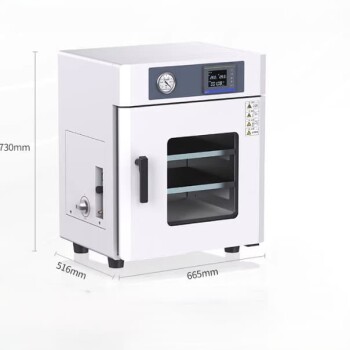
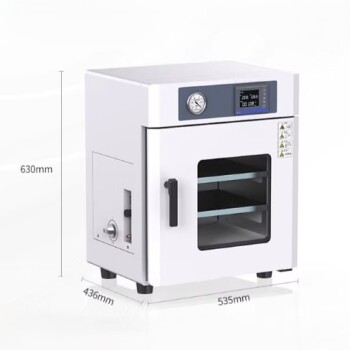
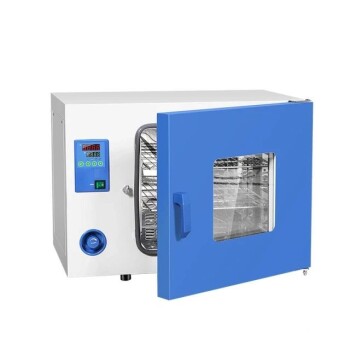
The primary function of a forced air drying oven in the Ni/CN catalyst workflow is to ensure the complete removal of residual organic solvents. Specifically, it eliminates wash solvents like 2-propanol by maintaining a constant temperature (typically 100°C) to clear the catalyst's internal pore structure. This step is the bridge between the washing phase and the next round of usage, ensuring the material is physically dry and chemically neutral before further activation or recycling.
Effective drying is about more than just evaporation; it is about accessibility. By removing liquid obstructions from the catalyst's pores, the oven restores the active surface area required for efficient reaction kinetics in subsequent cycles.
The Mechanics of Catalyst Restoration
Targeted Solvent Evaporation
After the Ni/CN catalyst is washed, it retains significant amounts of organic solvents, such as 2-propanol.
The forced air drying oven targets these volatiles by maintaining a steady environment, commonly set to 100°C. This temperature is sufficient to vaporize the solvent without inducing thermal stress on the catalyst material itself.
Clearing the Microstructure
Catalytic efficiency is heavily dependent on the available surface area within the material's pores.
Liquid solvents trapped within these pores block reactants from reaching active sites. The forced air circulation drives heat into these cavities, effectively "unclogging" the catalyst and restoring its porous architecture.
Preparing for Activation
Before a catalyst can be reduced or recycled, it must be chemically predictable.
Residual solvents can interfere with reaction kinetics if carried over into the next cycle. By ensuring a thoroughly dry state, the oven eliminates these variables, allowing for a controlled and stable reduction activation process.
Understanding the Trade-offs
Forced Air vs. Vacuum Drying
While forced air ovens are excellent for removing physical moisture and volatile solvents, they rely on thermal convection at atmospheric pressure.
They are generally faster for bulk drying but may be less effective than vacuum ovens for removing high-boiling-point solvents or trace impurities trapped deep within complex structures.
Thermal Risks
The temperature setting is a critical variable that requires precision.
While 100°C is standard for removing 2-propanol from Ni/CN, significantly exceeding this temperature could risk damaging the catalyst's physical support structure or altering the active metal sites before the controlled reduction phase begins.
Ensuring Process Consistency
To optimize the recovery of your Ni/CN catalyst, tailor your drying approach to your specific downstream requirements:
- If your primary focus is Direct Recycling: Ensure the catalyst remains in the oven until it achieves a constant weight, verifying that all physical solvents affecting mass balance are removed.
- If your primary focus is Reduction Activation: Prioritize thorough pore clearance to prevent solvent vapors from interfering with the delicate chemical reduction that follows.
A consistent drying protocol is the baseline requirement for maintaining high catalytic activity over multiple lifecycles.
Summary Table:
| Feature | Function in Ni/CN Workflow | Benefit |
|---|---|---|
| Temperature Control | Sustained 100°C environment | Safe removal of 2-propanol without thermal stress |
| Forced Air Circulation | Uniform heat distribution | Clears internal pore structures and "unclogs" active sites |
| Solvent Evaporation | Removal of residual wash agents | Prevents interference with downstream reaction kinetics |
| Process Stabilization | Achieving constant material weight | Ensures chemical predictability for reduction activation |
Optimize Your Catalyst Lifecycle with KINTEK Precision
Maintaining high catalytic activity requires consistent and reliable thermal processing. KINTEK specializes in advanced laboratory solutions, including high-performance forced air drying ovens, vacuum ovens, and high-temperature furnaces designed to protect your material microstructure.
Whether you are performing Ni/CN catalyst recovery, battery research, or complex chemical synthesis, our comprehensive range of crushing systems, hydraulic presses, and specialized glassware ensures your lab operates at peak efficiency.
Ready to enhance your recovery yields and process stability? Contact KINTEK today to discover how our high-precision equipment can streamline your research and production workflows.
References
- Trupti V. Kotbagi, Martin G. Bakker. Highly efficient nitrogen-doped hierarchically porous carbon supported Ni nanoparticles for the selective hydrogenation of furfural to furfuryl alcohol. DOI: 10.1039/c6ra14078e
This article is also based on technical information from Kintek Solution Knowledge Base .
Related Products
- 56L Vertical Laboratory Vacuum Drying Oven
- 23L Laboratory Vacuum Drying Oven
- Laboratory Scientific Electric Heating Blast Drying Oven
People Also Ask
- Why is a laboratory vacuum drying oven recommended for rice straw residues? Protect Your Biomass Integrity
- What role does a laboratory vacuum drying oven play in the preparation of modified multi-walled carbon nanotubes?
- What is the importance of using a laboratory vacuum drying oven? Preserving Slow-Release Microcapsule Integrity
- Why is a Laboratory Vacuum Drying Oven recommended for PBAT microspheres? Protect Sensitive Polymer Integrity
- What role does a laboratory vacuum drying oven play in processing nanoparticle powder samples? Protect Sample Integrity