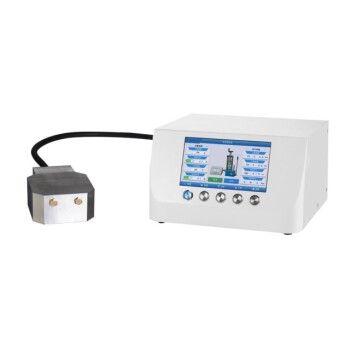
A heating reaction system equipped with a high-precision temperature controller serves as the primary regulator of reaction kinetics and thermodynamic equilibrium in the esterification of benzoic acid. Its fundamental purpose is to generate a stable heat source that maintains the reaction mixture within a strict, optimal thermal window, typically between 55°C and 75°C.
Core Takeaway Because esterification is an endothermic and kinetically controlled reaction, heat is a necessary reagent, not just an environmental factor. Precise temperature control is the single most important variable for maximizing the conversion rate of benzoic acid and ensuring that your experimental data is reproducible.
The Thermodynamics of Esterification
Supplying Essential Energy
The esterification of benzoic acid is an endothermic process. This means the reaction consumes heat to proceed.
Without a consistent energy input, the reaction lacks the thermodynamic drive required to form the ester product. The heating system ensures this energy demand is met continuously.
Shifting the Equilibrium
This reaction is an equilibrium process, meaning it can move forward (creating ester) or backward (reverting to acid).
By providing a stable heat source, the system applies thermodynamic pressure to drive the equilibrium toward product formation, preventing the reaction from stalling.
Kinetic Control and Efficiency
Regulating Reaction Speed
Esterification is kinetically controlled. Consequently, the rate at which the reaction occurs is directly dependent on the temperature of the system.
A precision controller allows you to maintain the exact temperature required to maximize reaction speed without crossing thermal limits.
The Optimal Thermal Window
Research indicates that this specific reaction proceeds most efficiently within a range of 55-75°C.
The controller’s job is to lock the system within these parameters. Dropping below this range slows the reaction significantly, while significant fluctuations can lead to inconsistent yields.
Ensuring Experimental Consistency
Maximizing Conversion Rates
The primary metric for success in this reaction is the conversion rate of benzoic acid into its ester.
Precise thermal regulation eliminates cold spots or temperature dips that lower conversion efficiency. This ensures the maximum amount of starting material is utilized.
Reproducibility of Data
For scientific validity, experiments must be repeatable.
A high-precision controller removes the variable of thermal fluctuation. This ensures that if you run the experiment today and again next week, the results will be identical, validating your data.
Understanding the Trade-offs
The Risk of Thermal Inertia
While controllers are precise, heating systems often have "thermal inertia"—they may continue heating slightly after the power is cut.
In a kinetically controlled reaction, even a slight overshoot beyond the 75°C upper limit could alter the reaction profile. High-quality controllers are required to mitigate this lag.
Complexity vs. Control
Adding a temperature controller increases the complexity of the setup compared to a simple heating mantle.
However, the trade-off is necessary. Attempting this reaction with unregulated heat sources makes it impossible to distinguish between chemical failure and thermal failure.
Making the Right Choice for Your Goal
To determine how strictly you need to manage your heating system, consider your primary experimental objective.
- If your primary focus is High Yield: Maintain the temperature at the upper end of the efficient range (near 75°C) to maximize the kinetic energy available for conversion.
- If your primary focus is Data Validation: Prioritize the stability of the controller over high heat to ensure zero fluctuation, guaranteeing that your reproducibility metrics are accurate.
Precision in heating is not a luxury in esterification; it is the control knob for chemical success.
Summary Table:
| Feature | Function in Esterification | Impact on Outcome |
|---|---|---|
| Energy Input | Supplies heat for endothermic process | Drives reaction forward |
| Equilibrium Shift | Maintains thermodynamic pressure | Increases ester formation |
| Kinetic Control | Regulates reaction speed | Minimizes reaction time |
| Precision Control | Locks temperature (55°C - 75°C) | Ensures high conversion rates |
| Stability | Eliminates thermal fluctuations | Guarantees data reproducibility |
Elevate Your Chemical Synthesis with KINTEK Precision
Don't let thermal fluctuations compromise your research. At KINTEK, we specialize in high-performance laboratory equipment designed for rigorous scientific applications. From high-temperature reactors and autoclaves to precision-controlled heating systems and crushing and milling systems, our solutions ensure your esterification reactions achieve maximum conversion and perfect reproducibility.
Whether you need advanced high-pressure reactors for specialized synthesis or essential PTFE products and crucibles, KINTEK provides the tools that professional researchers trust.
Ready to optimize your lab's efficiency? Contact us today to find the perfect thermal solution!
References
- Emine Sert, Ferhan Sami Atalay. Application of Green Catalysts for the Esterification of Benzoic Acid with Different Alcohols. DOI: 10.18466/cbayarfbe.370364
This article is also based on technical information from Kintek Solution Knowledge Base .
Related Products
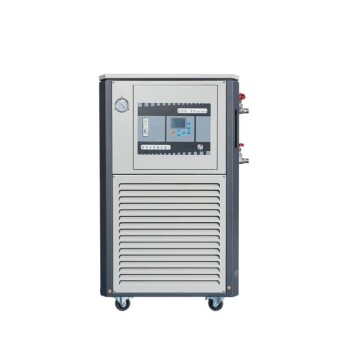
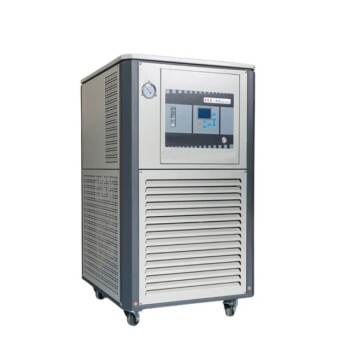
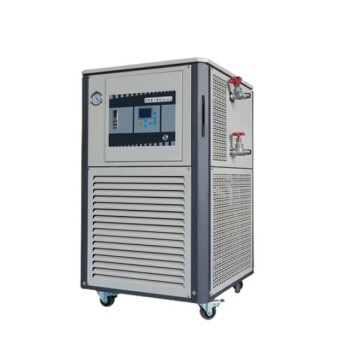
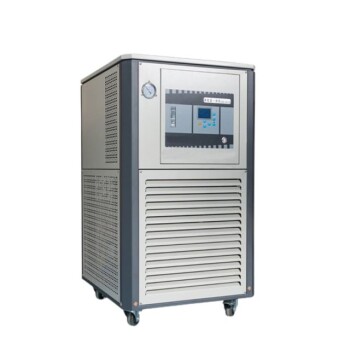
- 10L Heating Chilling Circulator Cooling Water Bath Circulator for High and Low Temperature Constant Temperature Reaction
- 5L Heating Chilling Circulator Cooling Water Bath Circulator for High and Low Temperature Constant Temperature Reaction
- 50L Heating Chilling Circulator Cooling Water Bath Circulator for High and Low Temperature Constant Temperature Reaction
- 20L Heating Chilling Circulator Cooling Water Bath Circulator for High and Low Temperature Constant Temperature Reaction
- High Temperature Constant Temperature Heating Circulator Water Bath Chiller Circulator for Reaction Bath
People Also Ask
- What is the necessity of a circulating water bath in chlorate production? Optimize Yield & Purity with Precision
- Why is a circulating water chiller required for Prussian Blue nanoparticles? Ensure Stability & Batch Reproducibility
- What is the purpose of a cooling circulation water bath system in electrochemical experiments? Enhance Lab Precision
- What function does a circulating cooling chiller perform during the gas adsorption isotherm testing of nanoporous carbon?
- How does a constant temperature circulator support the leaching reaction of gold scrap? Optimize Gold Recovery Results