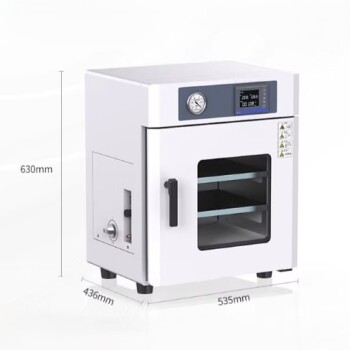
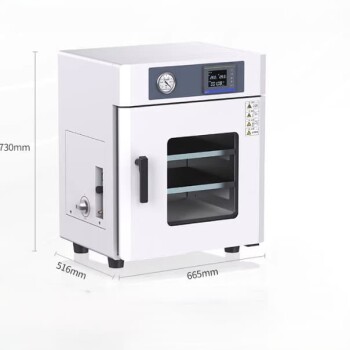
The primary function of a high-precision constant temperature drying oven in this context is to maintain a strictly controlled environment at 70°C for 12 hours. This specific thermal profile allows for the thorough removal of solvents from the sol-gel mixture while simultaneously preventing the over-agglomeration of tin oxide nanoparticles on the graphene sheets.
Core Insight: The value of this equipment lies not just in drying, but in structural preservation. It ensures the delicate balance between evaporating liquid components and maintaining the high specific surface area required for the nanomaterial's reactivity.
The Mechanics of Controlled Drying
Precise Temperature Stabilization
The preparation of graphene/tin oxide nanocomposites often involves a sol-gel process that is highly sensitive to thermal fluctuations.
The high-precision oven locks the temperature at exactly 70°C.
This prevents temperature spikes that could cause rapid boiling or uneven evaporation of the solvent.
Thorough Solvent Removal
During the 12-hour cycle, the oven drives off the liquid medium used to mix the graphene and metal oxide precursors.
Complete removal of these solvents is essential to solidify the composite structure.
Failure to remove all solvents can lead to structural instability or chemical impurities in the final product.
Critical Impact on Nanostructure
Preventing Over-Agglomeration
One of the greatest challenges in nanocomposite synthesis is the tendency of particles to clump together, or agglomerate.
Agglomeration reduces the effectiveness of the "nano" scale properties.
By providing gentle, constant heat rather than aggressive thermal shock, the oven ensures nanoparticles remain well-distributed across the graphene surface.
Maintaining Surface Area and Reactivity
The performance of graphene/tin oxide composites relies heavily on a high specific surface area.
The controlled drying process preserves the porous nature of the material.
This directly translates to higher chemical reactivity, which is the ultimate goal for applications like catalysis or sensing.
Understanding the Trade-offs
The Risk of Rapid Heating
It is tempting to increase temperatures to speed up the drying process, but this is a common pitfall.
As seen in similar composite preparations, rapid heating can cause pore structures to collapse or lead to the degradation of the material components.
Speed must be sacrificed for the sake of structural integrity.
Equipment Precision vs. General Drying
A standard laboratory oven may fluctuate significantly around the set point.
For robust nanocomposites, these fluctuations are unacceptable.
You must accept the necessity of using high-precision equipment, even if it represents a higher capital investment or lower throughput compared to rough drying methods.
Making the Right Choice for Your Goal
If your primary focus is maximizing catalytic reactivity: Ensure your drying protocol adheres strictly to the 70°C limit to prevent nanoparticle clumping that reduces active sites.
If your primary focus is structural uniformity: Prioritize the duration of the cycle (12 hours) over intensity to allow solvents to escape the sol-gel matrix without collapsing the pores.
Precision in the drying phase is the silent guardian of your nanocomposite's performance.
Summary Table:
| Feature | Specification/Action | Benefit to Graphene/SnO2 Composite |
|---|---|---|
| Temperature Setpoint | 70°C | Prevents rapid boiling and structural collapse. |
| Process Duration | 12 Hours | Ensures thorough solvent removal and solidifies the matrix. |
| Heating Method | Constant/Gentle | Minimizes nanoparticle agglomeration on graphene sheets. |
| Equipment Type | High-Precision Oven | Eliminates thermal fluctuations that degrade reactivity. |
| Core Goal | Structural Preservation | Maintains high specific surface area for sensing/catalysis. |
Elevate Your Nanomaterial Research with KINTEK Precision
Achieving the perfect graphene/tin oxide nanocomposite requires more than just heat—it requires absolute thermal stability. KINTEK specializes in high-performance laboratory equipment, providing the precision drying ovens, vacuum systems, and high-temperature furnaces essential for delicate sol-gel processes and structural preservation.
Our extensive portfolio supports every stage of your material science workflow, including:
- High-Precision Drying Ovens for consistent solvent removal.
- High-Temperature & Atmosphere Furnaces (Muffle, Tube, CVD, PECVD) for advanced synthesis.
- Crushing & Milling Systems for material refinement.
- Consumables including high-purity ceramics, crucibles, and PTFE products.
Don't let thermal fluctuations compromise your reactivity. Contact KINTEK today to find the perfect equipment solution for your lab!
References
- Farbod Sharif, Edward P.L. Roberts. Electrochemical Oxidation of an Organic Dye Adsorbed on Tin Oxide and Antimony Doped Tin Oxide Graphene Composites. DOI: 10.3390/catal10020263
This article is also based on technical information from Kintek Solution Knowledge Base .
Related Products
- High Temperature Muffle Oven Furnace for Laboratory Debinding and Pre Sintering
- 23L Laboratory Vacuum Drying Oven
- 56L Vertical Laboratory Vacuum Drying Oven
- 1400℃ Muffle Oven Furnace for Laboratory
- Laboratory Scientific Electric Heating Blast Drying Oven
People Also Ask
- Why is the annealing treatment in a high-temperature muffle furnace critical for the preparation of an Sb-SnO2 interlayer?
- Why is a high-temp muffle furnace essential for ZnO-WO3 & ZnO-BiOI? Optimize Heterojunction Catalyst Performance
- What role does a calcination furnace play in preparing hollow core-shell particles? Achieve Perfect Nano-Structures
- What function does a high-temperature muffle furnace serve in Ti3AlC2 MAX phase synthesis? Master Molten Salt Diffusion
- What is the primary function of high-temperature muffle or tube furnaces for ceramic coatings? Ensure Peak Durability