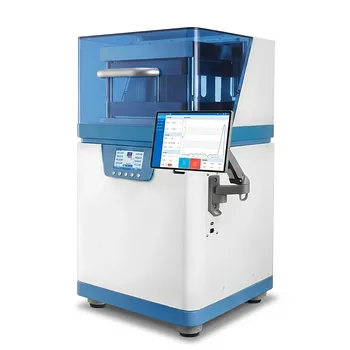
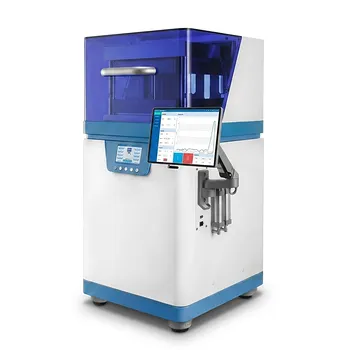
The high-pressure batch reactor serves as a closed thermochemical containment system designed to break down complex polymer chains. In the context of WEEE recycling, its primary function is to facilitate heavy thermal cracking at temperatures up to 500°C under autogenous pressure. This process transforms solid electronic waste plastics into high-value liquid pyrolysis oil, solid carbon black, and gaseous products.
The high-pressure batch reactor is the engine of chemical recycling, providing the controlled, high-energy environment necessary to decompose stable polymers into reusable raw materials. By leveraging pressure and temperature, it maximizes reaction speed and product yield from complex waste streams.
Facilitating Heavy Polymer Cracking
Achieving High-Temperature Decomposition
The reactor provides a sealed environment capable of reaching 500 °C, which is essential for breaking the sturdy bonds of long-chain polymers found in electronics. This intensive heat causes the plastic to undergo heavy cracking, reducing solid waste into smaller, more manageable molecular components.
Converting Waste into Value Streams
The primary output of this process is liquid pyrolysis oil, which can be refined into new fuels or chemical feedstocks. Secondary outputs include solid carbon black and gaseous products, ensuring that the majority of the waste mass is converted into economically viable materials.
Utilizing Autogenous Pressure
As the plastics heat up and begin to decompose within the sealed vessel, they generate autogenous pressure. This internal pressure environment is critical for maintaining reaction stability and ensuring the efficient breakdown of the feedstock without the need for external gas compressors.
Enhancing Reaction Efficiency and Speed
Accelerating Reaction Kinetics
Subjecting reactants to increased pressures significantly boosts the speed of chemical reactions. This leads to higher productivity and throughput, allowing recycling facilities to process larger volumes of WEEE plastics in shorter timeframes.
Maintaining Phase Integrity
High-pressure environments allow solvents to remain in a liquid state even when temperatures exceed their normal atmospheric boiling points. This is vital for hydrothermal synthesis, as it enables the dissolution and processing of substances that would otherwise remain solid or unreactive.
Reaching Subcritical and Supercritical States
Precise control over pressure and heat allows the reactor to push solvents into subcritical or supercritical states. In these states, solvents like water or acetone change their physical properties, allowing them to penetrate and decompose complex matrices like the epoxy resins often found in electronic circuit boards.
Ensuring Homogeneity and Process Control
The Role of Mechanical Mixing
Most high-pressure reactors utilize a magnetic stirrer or impeller to ensure the internal environment remains uniform. This mechanical mixing prevents "hot spots" and ensures that all plastic particles are exposed to the same thermal conditions.
Precision Heat Management
Uniform temperature distribution is critical for maintaining selectivity in the recycling process. Consistent heat ensures that the resulting pyrolysis oil has a predictable molecular weight and quality, which is essential for downstream industrial use.
Understanding the Trade-offs
Batch vs. Continuous Processing
As a batch reactor, the system processes one "load" at a time, which allows for precise control over the reaction cycle. However, this typically results in lower total volume compared to continuous-flow systems and requires downtime for loading and unloading.
Material and Safety Constraints
Operating at 500 °C and high pressure places immense mechanical stress on the reactor vessel. Furthermore, WEEE plastics often contain flame retardants that can release corrosive gases, requiring the use of high-grade alloys and frequent maintenance to prevent vessel failure.
How to Apply This to Your Recycling Project
Making the Right Choice for Your Goal
To maximize the effectiveness of a high-pressure batch reactor, you must align the reactor's parameters with your specific material recovery objectives.
- If your primary focus is maximizing liquid oil yield: Maintain temperatures near the lower end of the cracking range to prevent over-cracking the polymers into non-condensable gases.
- If your primary focus is recovering fibers from composites: Utilize a solvent-based approach to reach supercritical states, allowing for the gentle dissolution of resins without damaging the structural integrity of the fibers.
- If your primary focus is processing highly contaminated WEEE: Prioritize a reactor with a robust mechanical stirring system and corrosion-resistant linings to handle the heterogeneous nature of the waste.
By mastering the variables of pressure and temperature, you can transform hazardous electronic waste into a sustainable source of high-value industrial chemicals.
Summary Table:
| Feature | Function in WEEE Recycling | Impact on Output |
|---|---|---|
| Temperature (up to 500°C) | Facilitates heavy thermal cracking of polymer chains | High-value liquid pyrolysis oil |
| Autogenous Pressure | Maintains reaction stability & accelerates kinetics | Increased productivity & throughput |
| Supercritical States | Enables dissolution of complex epoxy resins | Recovery of fibers & clean resins |
| Mechanical Stirring | Ensures uniform heat distribution & prevents hot spots | Consistent product molecular weight |
Transform Your Waste into Value with KINTEK
Are you ready to optimize your chemical recycling process? KINTEK specializes in precision-engineered high-temperature high-pressure reactors and autoclaves designed to withstand the rigorous demands of WEEE plastic decomposition. Whether you are aiming to maximize pyrolysis oil yield or recover high-purity fibers, our equipment provides the stability and control your research requires.
Beyond reactors, KINTEK offers a comprehensive range of laboratory solutions, including:
- Material Processing: Crushing, milling systems, and hydraulic presses.
- Thermal Treatment: Muffle, tube, and vacuum furnaces.
- Consumables: High-grade ceramics, crucibles, and PTFE products.
Take the next step in sustainable innovation. Contact our technical experts today to find the perfect reactor configuration for your laboratory or industrial application!
References
- Asier Asueta, A. López-Urionabarrenechea. A Preliminary Study on the Use of Highly Aromatic Pyrolysis Oils Coming from Plastic Waste as Alternative Liquid Fuels. DOI: 10.3390/ma16186306
This article is also based on technical information from Kintek Solution Knowledge Base .
Related Products
- Stainless High Pressure Autoclave Reactor Laboratory Pressure Reactor
- Customizable Laboratory High Temperature High Pressure Reactors for Diverse Scientific Applications
- Customizable High Pressure Reactors for Advanced Scientific and Industrial Applications
- Mini SS High Pressure Autoclave Reactor for Laboratory Use
- High Pressure Laboratory Autoclave Reactor for Hydrothermal Synthesis
People Also Ask
- Why is a laboratory high-pressure reactor necessary for synthesizing fly ash-based zeolite? Achieve Pure Crystallization
- Why is a laboratory high-pressure reactor used in the hydrothermal synthesis of hydroxyapatite catalysts?
- What role does a laboratory high-pressure reactor play in the leaching process of spent cathode materials? Optimize Recovery
- What conditions do laboratory high-pressure reactors provide for HTC? Optimize Your Biochar Production Processes
- How are high-pressure reactors used to prepare metaphosphate electrocatalysts? Master In-Situ Precursor Growth