A precision-controlled stirring reaction vessel serves as the primary kinetic driver in the enzymatic synthesis of rosin starch esters. Its critical function is to force the uniform distribution of immobilized enzyme catalysts suspended within highly viscous starch slurries, such as DMSO/starch solutions. By applying constant, regulated shear force, the vessel overcomes the significant mass transfer resistance inherent to these heterogeneous systems.
Core Takeaway
In high-viscosity enzymatic reactions, the limiting factor is rarely chemical potential, but physical contact. The precision vessel solves this by generating shear forces that bridge the gap between bulky rosin acid molecules and starch hydroxyl groups, ensuring a bio-based polymer with a uniform degree of substitution.
Overcoming Physical Barriers in Synthesis
The synthesis of rosin starch esters is physically challenging due to the nature of the reactants. The vessel addresses two specific physical barriers: viscosity and heterogeneity.
Managing High-Viscosity Slurries
Starch solutions, particularly those dissolved in DMSO (Dimethyl sulfoxide), create dense, viscous slurries.
Without active intervention, these fluids resist flow. This stagnation prevents reactants from circulating effectively. The vessel’s stirring mechanism provides the mechanical energy required to fluidize this heavy mixture.
Optimizing Heterogeneous Catalysis
This process utilizes immobilized enzymes, meaning the catalyst exists as a solid distinct from the liquid reaction mixture.
In a static or poorly mixed vessel, these solid catalysts would settle or clump. The stirring action keeps the enzymes suspended in a homogeneous state. This maximizes the surface area available for the reaction to occur.
Enhancing Reaction Kinetics
Beyond simple mixing, the vessel plays a role in the molecular interaction between the rosin and the starch.
Bridging the Mass Transfer Gap
Enzymatic esterification in this context is a mass transfer-limited process.
The reactants cannot naturally migrate fast enough to sustain an efficient reaction rate. The vessel applies shear force to thin the boundary layers around the reactants. This allows fresh reactants to reach the active sites of the enzymes continuously.
Addressing Steric Hindrance
Rosin acid molecules are physically large and bulky.
This bulkiness creates "steric hindrance," making it difficult for the acid to physically fit against the target hydroxyl groups on the starch chains. The continuous, precision agitation increases the frequency of effective collisions. It literally forces the molecules into the proximity required for the esterification to take place.
Achieving Uniform Substitution
The ultimate goal of the synthesis is a consistent product.
If mixing is uneven, some starch chains will be heavily substituted while others remain unreacted. Precision control ensures the reaction environment is identical throughout the entire batch. This results in a polymer with a uniform degree of substitution, which is critical for stable physical properties.
Understanding the Trade-offs
While vigorous stirring is necessary, it introduces specific risks that must be managed through "precision" control.
The Risk of Shear Damage
High shear force improves mass transfer, but it can be destructive.
Excessive agitation can physically degrade the carrier material of the immobilized enzymes. It can also sheer the starch polymer chains themselves, altering the molecular weight and properties of the final product.
Energy Efficiency vs. Reaction Rate
Driving impellers through viscous DMSO/starch slurries is energy-intensive.
Increasing stirring speed yields diminishing returns after a certain point. You must balance the energy cost of high-torque stirring against the marginal gains in reaction speed and substitution degree.
Making the Right Choice for Your Goal
The configuration of your reaction vessel should be dictated by the specific requirements of your final polymer application.
- If your primary focus is Product Consistency: Prioritize impeller designs that ensure chaotic flow and eliminate "dead zones" in the vessel to guarantee uniform substitution.
- If your primary focus is Catalyst Longevity: Limit the maximum shear rate to the lowest effective velocity to preserve the structural integrity of the immobilized enzymes.
The reaction vessel is not merely a container; it is an active mechanical participant that determines whether your enzymatic synthesis is commercially viable or chemically stalled.
Summary Table:
| Feature | Function in Synthesis | Impact on Final Product |
|---|---|---|
| High-Torque Stirring | Overcomes viscosity of DMSO/starch slurries | Ensures fluidization and reactant circulation |
| Shear Force Control | Thinning of reactant boundary layers | Enhances reaction kinetics and molecular collisions |
| Suspension Management | Keeps immobilized enzymes in a homogeneous state | Maximizes catalyst surface area and efficiency |
| Precision Agitation | Eliminates "dead zones" within the vessel | Achieves a uniform degree of substitution (DS) |
Elevate Your Bio-Based Polymer Research with KINTEK
Precision is the difference between a stalled reaction and a high-yield synthesis. KINTEK specializes in advanced laboratory equipment designed to handle the most demanding chemical processes. Whether you are performing complex enzymatic esterification or high-viscosity mixing, our comprehensive range of high-temperature high-pressure reactors, autoclaves, and precision stirring systems provides the mechanical reliability and control needed for uniform results.
From PTFE-coated consumables to custom crushing and milling systems, we empower researchers to overcome mass transfer barriers and protect sensitive catalysts. Let our expertise in laboratory hardware accelerate your material science breakthroughs.
Ready to optimize your reaction kinetics? Contact our technical experts today to find the perfect reactor solution for your lab.
References
- Mardiah Mardiah, Antonius Indarto. Recent Progress on Catalytic of Rosin Esterification Using Different Agents of Reactant. DOI: 10.3390/agriengineering5040132
This article is also based on technical information from Kintek Solution Knowledge Base .
Related Products
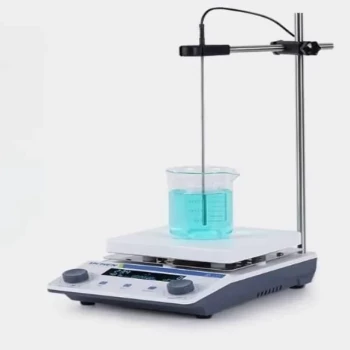
- Custom PTFE Teflon Parts Manufacturer for Magnetic Stirring Bar
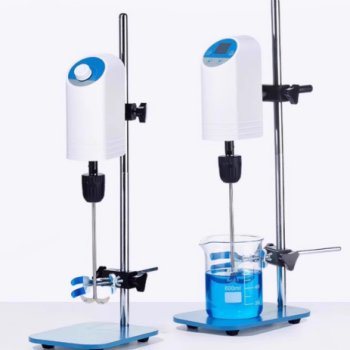
- High Performance Laboratory Stirrers for Diverse Applications
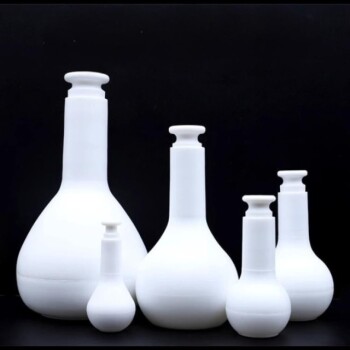
- Custom PTFE Teflon Parts Manufacturer for F4 PTFE Volumetric Bottle
- Customizable High Pressure Reactors for Advanced Scientific and Industrial Applications
- Stainless High Pressure Autoclave Reactor Laboratory Pressure Reactor
People Also Ask
- What is the function of a magnetic stirrer during the alkaline etching of nano-silicon carbide? Essential Mixing Guide
- Why is a powerful magnetic stirrer essential during photocatalytic degradation? Ensure Accurate Catalyst Performance
- What is the function of a magnetic stirrer in simulating industrial sulfolane environments? Master Fluid Dynamics
- What is the function of a magnetic stirrer in MgAl-LDH coprecipitation? Ensure Uniformity and Precision
- What is the function of a magnetic stirrer in co-precipitation? Ensure Homogeneity in Doped ZnO Synthesis