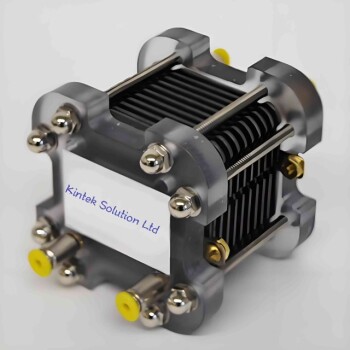
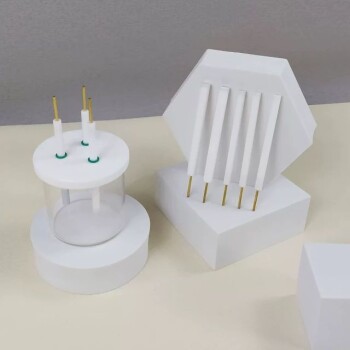
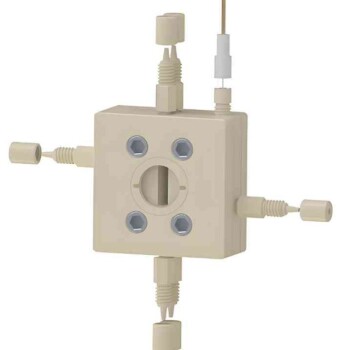
A split electrochemical reactor functions as the central processing unit for the degradation of complex pollutants, specifically azo dyes, in wastewater treatment. It serves as the primary physical vessel that houses the essential electrochemical components—the anode, cathode, and electrolyte—to create a controlled environment where electrical energy drives chemical decomposition.
Core Takeaway The split reactor is the fundamental infrastructure that enables Chlorine-Mediated Electrochemical Advanced Oxidation Processes (Cl-EAOP). It acts as the active site for generating powerful oxidants like hydroxyl radicals and active chlorine, facilitating both direct and indirect oxidation mechanisms required to break down persistent contaminants.
The Architecture of Degradation
Providing a Controlled Environment
The primary function of the split electrochemical reactor is to establish a controlled physical environment.
This isolation is critical for maintaining the specific conditions required to treat wastewater effectively.
It ensures that the degradation process occurs within a regulated system, minimizing external interference and maximizing reaction efficiency.
Housing Critical Components
The reactor serves as the structural foundation for the electrochemical circuit.
It houses the anode, cathode, and electrolyte, keeping them in the precise physical configuration necessary for operation.
Without this vessel acting as the central containment unit, the electrochemical interactions required for Cl-EAOP cannot take place.
The Chemical Engine: Generating Active Species
Electro-Generation of Hydroxyl Radicals
Within the reactor, the application of current facilitates the production of hydroxyl radicals.
These are highly reactive species generated at the electrode surface.
They act as potent oxidizing agents, attacking the molecular structure of the azo dyes directly.
Production of Active Chlorine Species
The reactor is specifically designed to support the generation of active chlorine species.
This is the defining feature of chlorine-mediated processes.
By converting chloride ions present in the electrolyte into active chlorine, the reactor creates a secondary cleaning agent that circulates through the solution.
Mechanisms of Action
Facilitating Direct Oxidation
The reactor provides the site for direct oxidation.
This process occurs strictly at the surface of the anode, where pollutants are destroyed via direct electron transfer.
Enabling Indirect Oxidation
Simultaneously, the reactor supports indirect oxidation.
This occurs in the bulk solution, mediated by the active chlorine and hydroxyl radicals generated by the reactor.
The split reactor design ensures that both direct surface reactions and indirect bulk reactions can proceed in tandem to degrade the dye molecules.
Understanding the Trade-offs
Dependence on Component Integrity
Because the reactor acts as the central housing vessel, the process is entirely dependent on the physical stability of the anode and cathode.
If the internal environment damages these components over time, the generation of active species will plummet.
Complexity of Control
While the reactor provides a "controlled environment," maintaining that control requires precise management of the electrolyte and electrical input.
The system relies on the continuous presence of precursors (like chloride) to function; without them, the "chlorine-mediated" aspect of the process fails.
Making the Right Choice for Your Goal
To maximize the utility of a split electrochemical reactor in your wastewater treatment projects, consider your specific objectives:
- If your primary focus is rapid pollutant breakdown: Prioritize the reactor's ability to facilitate indirect oxidation, ensuring sufficient generation of active chlorine species to attack dyes in the bulk solution.
- If your primary focus is system design: Focus on the reactor as a housing vessel, ensuring the physical layout optimizes the distance between the anode and cathode for efficient energy use.
The split electrochemical reactor is the indispensable engine that transforms raw electrical energy into the chemical power needed to neutralize hazardous wastewater.
Summary Table:
| Feature | Function in Cl-EAOP |
|---|---|
| Structural Foundation | Houses the anode, cathode, and electrolyte in a precise configuration. |
| Environment Control | Provides a regulated physical space for stable electrochemical reactions. |
| Direct Oxidation | Facilitates pollutant destruction via electron transfer at the anode surface. |
| Indirect Oxidation | Enables bulk solution cleaning via generated active chlorine and hydroxyl radicals. |
| Active Species Site | Acts as the chemical engine for producing reactive oxidizing agents. |
Revolutionize Your Electrochemical Research with KINTEK
Take your wastewater treatment and material science projects to the next level with KINTEK’s specialized laboratory equipment. Our high-performance electrolytic cells, electrodes, and high-pressure reactors are engineered to provide the precise controlled environment required for advanced oxidation processes like Cl-EAOP.
Why choose KINTEK?
- Precision Engineering: Optimized reactor designs for efficient direct and indirect oxidation.
- Comprehensive Range: From milling systems and hydraulic presses to high-temperature furnaces and battery research tools.
- Durability & Performance: High-quality consumables including PTFE, ceramics, and crucibles to withstand rigorous chemical environments.
Whether you are focusing on rapid pollutant breakdown or complex system design, our experts are ready to provide the tools you need for success. Contact KINTEK today to discuss your project requirements!
References
- Md. Dipu Malitha, Md. Shameem Ahsan. Parameter optimization of the chloride mediator-based electrochemical advanced oxidation process for the treatment of commercial azo dyes and actual dyeing effluent. DOI: 10.1007/s42452-025-06479-3
This article is also based on technical information from Kintek Solution Knowledge Base .
Related Products
- Side Window Optical Electrolytic Electrochemical Cell
- Customizable Laboratory High Temperature High Pressure Reactors for Diverse Scientific Applications
- Multifunctional Electrolytic Electrochemical Cell Water Bath Single Layer Double Layer
- Electrolytic Electrochemical Cell Gas Diffusion Liquid Flow Reaction Cell
- FS Electrochemical Hydrogen Fuel Cells for Diverse Applications
People Also Ask
- What are the critical safety and operational precautions when using a side-window optical electrolytic cell? Ensure Safe and Accurate Experiments
- What is the correct procedure for post-experiment shutdown and cleaning of a side-window optical electrolytic cell? Ensure Safety and Data Accuracy
- What maintenance procedures are recommended for a side-window optical electrolytic cell? Ensure Data Accuracy & Extend Cell Lifespan
- What are the ideal storage conditions for a side-window optical electrolytic cell? Ensure Long-Term Accuracy and Performance
- What is a side-window optical electrolytic cell? See Your Electrochemical Reactions in Action