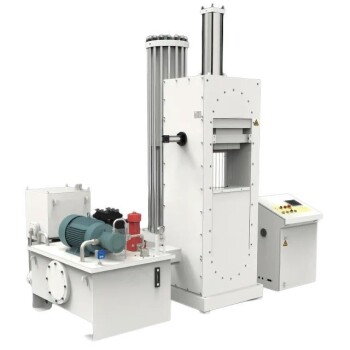
A stainless steel high-pressure reactor functions as a critical containment vessel that allows the transesterification of waste cooking oil to occur at temperatures far exceeding the boiling point of the reactants. By creating a sealed, pressurized environment, the reactor forces low-boiling components like methanol to remain in a liquid or dense vapor phase rather than evaporating. This ensures the reactants remain available for the chemical process, serving as the foundational hardware for achieving complete oil conversion.
The reactor’s primary value lies in its ability to decouple temperature from evaporation. It allows you to heat the mixture significantly to speed up the reaction without losing the methanol required to drive the chemical change.
Optimizing Reaction Kinetics
The central challenge in biodiesel production is that the necessary reactants often boil at temperatures lower than the ideal reaction temperature. The high-pressure reactor solves this thermodynamic conflict.
Managing Phase Equilibrium
Standard reactants, particularly methanol, have low boiling points. Without a pressurized vessel, heating the mixture to effective processing temperatures (typically around 160 °C) would cause the methanol to vaporize and escape.
The reactor acts as a pressure-resistant enclosure. It maintains the methanol in a liquid phase or high-pressure vapor equilibrium, ensuring it stays in physical contact with the oil.
Accelerating Chemical Conversion
By safely permitting these higher temperatures, the reactor significantly enhances reaction kinetics.
Heat increases the energy of the molecular collisions between the oil and the alcohol. Because the reactor prevents the solvent from boiling off, you can sustain these high-energy conditions, leading to faster and more complete conversion rates.
Overcoming Mass Transfer Limitations
Waste cooking oil is viscous, and oil generally does not mix well with methanol. This lack of natural mixing creates "mass transfer resistance," which slows down the process.
Creating a Homogeneous System
Under the high-pressure and high-temperature conditions facilitated by the reactor, the distinction between the oil and alcohol phases diminishes.
In advanced applications (such as supercritical transesterification), the reactor allows the methanol and oil to form a homogeneous system. This eliminates the barrier between the fluids, allowing the reaction to proceed much faster than in standard atmospheric setups.
Ensuring Efficient Mixing
High-pressure reactors are typically equipped with integrated mechanical stirring.
This constant-speed stirring ensures that the molar ratio of reactants remains consistent throughout the vessel. It guarantees that the oil and methanol are constantly forced into contact, preventing "dead zones" where no reaction occurs.
Operational Control and Safety
A stainless steel reactor is not just a vessel; it is a control system designed to handle the rigors of chemical processing.
Precise Process Monitoring
These reactors act as enclosed laboratories. They are often equipped with integrated temperature sensors and pressure gauges.
This instrumentation allows for real-time monitoring of the thermodynamic state. You can precisely verify that the conditions inside the vessel match the required parameters for the catalyst or process being used.
Durability Against Corrosive Feedstocks
Waste cooking oil can contain free fatty acids and other impurities that are corrosive, especially at high temperatures.
The stainless steel construction provides the necessary chemical resistance. It ensures the structural integrity of the vessel remains intact despite the autogenous pressure generated during heating and the aggressive nature of the hot chemical mixture.
Understanding the Trade-offs
While high-pressure reactors offer superior conversion rates, they introduce specific challenges that must be managed.
Safety and Complexity
Operating at high pressures (potentially reaching 24 MPa in supercritical applications) introduces significant safety risks compared to atmospheric batch reactors.
The system requires rigorous maintenance of seals and pressure relief valves. The operator must be skilled in monitoring autogenous pressure—the pressure built up naturally by heating the liquid—to prevent equipment failure.
Energy Consumption
While the reaction itself is faster, maintaining a reactor at high temperatures (150 °C to 250 °C) requires substantial energy input.
You must balance the efficiency gained in reaction speed against the energy cost of heating the steel mass and the reactants to these elevated levels.
Making the Right Choice for Your Project
The decision to use a high-pressure reactor depends on your specific production goals and constraints.
- If your primary focus is reaction speed and throughput: This reactor is essential. It enables high-temperature processing that reduces reaction times from hours to minutes by eliminating mass transfer limits.
- If your primary focus is reactant efficiency: The sealed nature of this vessel is critical. It prevents the loss of volatile methanol, ensuring you maintain the precise molar ratio needed for complete conversion without waste.
- If your primary focus is processing low-quality waste oil: The reactor provides the robust, corrosion-resistant environment necessary to handle high temperatures and aggressive impurities without equipment degradation.
Success in transesterification ultimately relies on controlling the environment; a high-pressure reactor gives you the authority to dictate that environment rather than being limited by the boiling point of your solvents.
Summary Table:
| Feature | Function in Transesterification | Benefit for Biodiesel Production |
|---|---|---|
| Pressure Containment | Prevents methanol evaporation at high temperatures | Maintains liquid phase and reactant molar ratios |
| Temperature Control | Facilitates processing at 160°C - 250°C | Significantly accelerates reaction kinetics |
| Phase Homogenization | Reduces mass transfer resistance | Eliminates barriers between oil and alcohol |
| Integrated Stirring | Constant mechanical agitation | Prevents dead zones and ensures uniform mixing |
| SS Construction | Corrosion resistance against FFAs | Ensures vessel durability and process safety |
Elevate Your Research with KINTEK Precision Engineering
Unlock the full potential of your chemical processes with KINTEK’s industry-leading laboratory equipment. Whether you are optimizing biodiesel transesterification or conducting advanced material synthesis, our high-temperature high-pressure reactors and autoclaves provide the precise control and durability your project demands.
Why partner with KINTEK?
- Comprehensive Portfolio: From high-temperature furnaces (muffle, vacuum, CVD) to hydraulic presses and crushing systems.
- Advanced Lab Solutions: Specialized electrolytic cells, battery research tools, and ultra-low temperature cooling systems.
- Expert Support: High-quality consumables including PTFE, ceramics, and crucibles tailored for corrosive environments.
Ready to enhance your lab's throughput and safety? Contact our technical experts today to find the perfect reactor or equipment solution for your specific application.
References
- Vincenzo Langellotti, Francesco Ruffo. Biodiesel from Waste Cooking Oil: Highly Efficient Homogeneous Iron(III) Molecular Catalysts. DOI: 10.3390/catal13121496
This article is also based on technical information from Kintek Solution Knowledge Base .
Related Products
- Stainless High Pressure Autoclave Reactor Laboratory Pressure Reactor
- Mini SS High Pressure Autoclave Reactor for Laboratory Use
- Customizable High Pressure Reactors for Advanced Scientific and Industrial Applications
- Customizable Laboratory High Temperature High Pressure Reactors for Diverse Scientific Applications
- High Pressure Laboratory Autoclave Reactor for Hydrothermal Synthesis
People Also Ask
- Why is a high-pressure laboratory reactor required for biomass hydrolysis at 160°C? Solve Solvent Evaporation.
- Why is a laboratory high-pressure reactor used in the hydrothermal synthesis of hydroxyapatite catalysts?
- How do the stainless steel shell and the PTFE liner function differently in a high-pressure autoclave reactor?
- What is the function of high-pressure reactors in the synthesis of MFI-type zeolites? Master Dry Gel Conversion.
- What conditions do laboratory high-pressure reactors provide for HTC? Optimize Your Biochar Production Processes