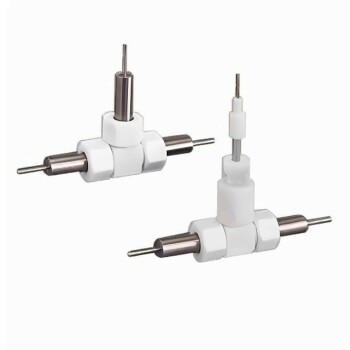
A Swagelok-type cell mold is a specialized laboratory fixture designed to mechanically encapsulate battery components for precise electrochemical testing. Its primary function is to utilize a threaded mechanical structure to apply and maintain constant stack pressure across the anode, electrolyte (or separator), and cathode, ensuring stable physical contact while isolating sensitive materials from the external environment.
In battery research, reliable data depends on minimizing variables that cause contact failure. The Swagelok-type cell ensures data accuracy by maintaining consistent interface pressure, which is essential for stable ion transport and reducing resistance during charge-discharge cycles.
The Mechanics of Consistent Pressure
Ensuring Tight Physical Contact
The core function of the mold is to compress the battery stack—typically a lithium or sodium metal anode, a solid electrolyte or separator, and the cathode material.
Using a threaded stainless steel structure, the mold applies force to eliminate gaps between these layers. This physical proximity is the foundation of a functioning test cell.
Minimizing Interface Resistance
Loose contact between battery components leads to high impedance, which distorts electrochemical data.
By applying constant pressure, the mold drastically reduces interface resistance. This facilitates the smooth transfer of ions between electrodes, allowing for an accurate assessment of the material's intrinsic performance.
Compensating for Volume Changes
During testing, active materials (such as lithium metal) often expand and contract during deposition and stripping.
The mechanical constraint provided by the mold compensates for these volume fluctuations. This prevents interfacial delamination—the physical separation of layers—which would otherwise cause the battery cell to fail prematurely.
Environmental Isolation and Stability
Protection from External Elements
Battery components, particularly alkali metal anodes, are highly reactive to moisture and air.
The Swagelok-type design provides a hermetic seal. This encapsulates the testing environment, ensuring that performance degradation is due to electrochemical limits, not environmental contamination.
Corrosion-Resistant Construction
Reliable testing requires hardware that does not react with the cell chemistry.
These molds typically utilize stainless steel components paired with insulating sleeves. This combination resists corrosion from electrolytes and prevents internal short circuits, ensuring the measured current flows strictly through the active materials.
Understanding the Trade-offs
Quantification of Pressure
While Swagelok cells apply pressure effectively, quantifying the exact force (MPa) can be challenging without integrated load cells.
Researchers relying on manual torque or "hand-tightening" may introduce variability in stack pressure between different test cells, potentially affecting reproducibility compared to automated pressure-controlled cells.
Lab-Scale vs. Commercial Reality
These molds are idealized testing environments designed for fundamental material research.
The mechanics of a rigid stainless steel mold do not perfectly replicate the mechanical stresses found in commercial formats, such as pouch or cylindrical cells. Data derived here should be viewed as material-level performance rather than system-level prediction.
Making the Right Choice for Your Goal
To ensure your testing setup aligns with your research objectives, consider the following:
- If your primary focus is Fundamental Material Analysis: The Swagelok cell is ideal for standardized half-cell testing where isolating the specific capacity of a new cathode or anode material is the priority.
- If your primary focus is Solid-State Battery Development: The ability to maintain high stack pressure is non-negotiable here; these molds are essential for maintaining the solid-solid interface contact required for these chemistries.
A standardized, pressure-maintaining testing vessel is the critical bridge between raw chemical potential and reproducible scientific data.
Summary Table:
| Feature | Primary Function | Research Benefit |
|---|---|---|
| Threaded Structure | Applies constant stack pressure | Reduces interface resistance & ensures stable ion transport |
| Hermetic Seal | Environmental isolation | Protects reactive anodes (Li/Na) from moisture and air |
| Mechanical Constraint | Compensates for volume changes | Prevents interfacial delamination during charge-discharge |
| Material Integrity | Corrosion-resistant construction | Prevents electrolyte contamination and internal short circuits |
Elevate Your Battery Research with KINTEK’s Precision Solutions
Reliable electrochemical data starts with a stable and controlled testing environment. KINTEK specializes in high-performance laboratory equipment designed to meet the rigorous demands of modern energy storage research.
From advanced battery research tools and consumables to specialized testing molds, our portfolio supports every stage of your material analysis. We offer a comprehensive range of equipment, including:
- High-Temperature Furnaces: Muffle, tube, vacuum, and CVD/PECVD systems for precise material synthesis.
- Sample Preparation: Crushing and milling systems, sieving equipment, and hydraulic presses (pellet, hot, isostatic).
- Electrochemical Tools: Electrolytic cells, electrodes, and high-pressure reactors.
- Lab Essentials: ULT freezers, freeze dryers, and high-purity ceramic crucibles.
Ensure your research is backed by the industry's most reliable hardware. Partner with KINTEK to achieve reproducible results and accelerate your path to innovation.
Contact our technical experts today to find the perfect solution for your lab!
Related Products
- Customizable Swagelok Type Test Cells for Advanced Battery Research Electrochemical Analysis
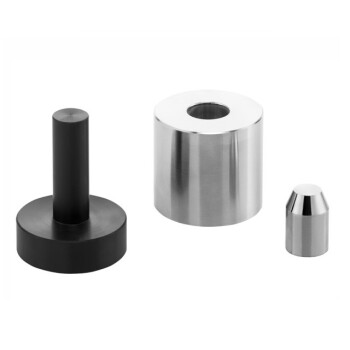
- Button Battery Tablet Press Sealing Mold for Lab Use
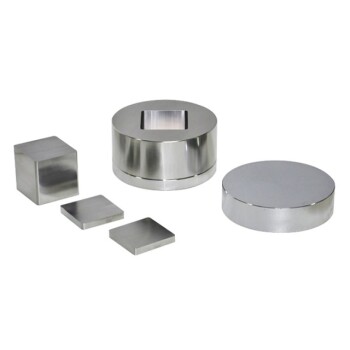
- Square Lab Press Mold for Laboratory Applications
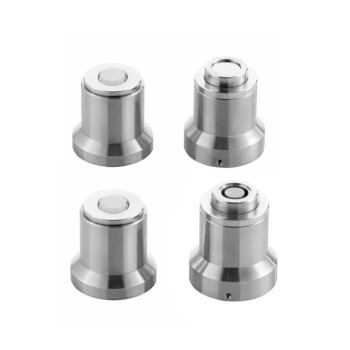
- Button Battery Disassembly and Sealing Mold for Lab Use
People Also Ask
- How does a standardized electrochemical test cell assist in MOx/CNTf electrode screening? Optimize Material Ratios
- Why is a dedicated electrochemical test cell necessary for carbon steel? Ensure Precise Geothermal Corrosion Data
- What is the difference between a voltaic cell and an electrochemical cell? Understand the Two Types of Energy Conversion
- How do the electrochemical cell and three-electrode testing system collaborate? Optimize Zinc Anode Deposition Control
- Why must the electrochemical cell be continuously purged with nitrogen? Ensure Precision in Ni-Cr Corrosion Tests