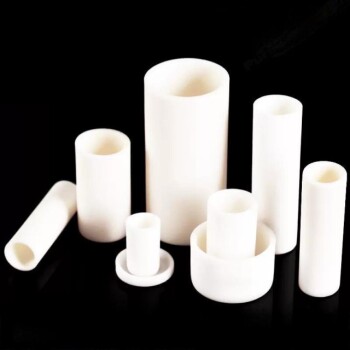
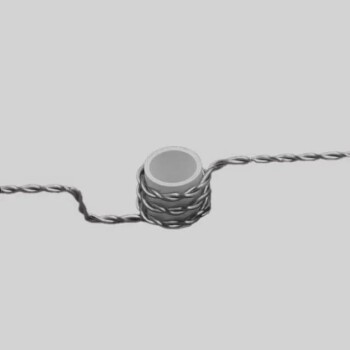
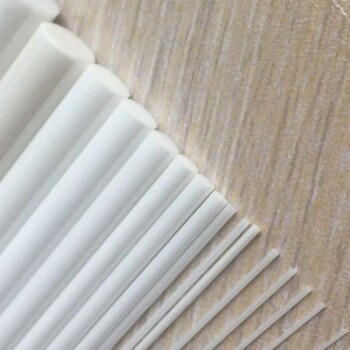
Alumina sheaths serve as critical protective barriers for electrode wires and thermocouples within a molten salt electrolytic cell assembly. Their primary function is to provide electrical insulation to prevent short circuits while simultaneously offering the structural rigidity required to keep thin metal components from deforming under the intense heat of the furnace environment.
By acting as both an electrical insulator and a mechanical backbone, alumina sheaths preserve the geometry of the electrode assembly and prevent signal interference, ensuring the accuracy and repeatability of electrochemical data.
The Dual Role of Protection and Support
Electrical Isolation
In an electrolytic cell, maintaining distinct electrical pathways is essential for accurate data collection. Alumina sheaths effectively isolate working electrodes, reference electrodes, and thermocouples from one another.
This insulation prevents short circuits that would occur if bare wires touched each other or conductive parts of the furnace lid. It ensures that the electrochemical signal measured originates solely from the intended active surface area of the electrode.
Mechanical Integrity at High Heat
Metals often lose structural strength and become pliable when subjected to the high temperatures required for molten salt electrolysis. Without support, long and thin electrode wires are prone to deformation due to gravity or mechanical stress.
The alumina sheath acts as a rigid exoskeleton for these wires. It prevents the electrodes from bending, drooping, or altering their position, which preserves the consistent geometry needed for repeatable experiments.
Protection of the Transition Zone
The assembly requires wires to pass from the ambient environment outside the furnace into the high-temperature zone. The sheath protects the wire through this transition.
By guiding the wire through the furnace lid, the sheath prevents physical damage and environmental exposure that could compromise the wire's integrity before it even reaches the molten salt.
Operational Considerations
The Necessity of Structural Continuity
The protective benefits of alumina sheaths rely entirely on their physical integrity. Because their role is to provide a total barrier, any breach in the sheath compromises the isolation.
Impact on Data Reliability
If the sheath fails to support the wire, the electrode position may shift during the experiment. This movement changes the cell geometry, rendering the resulting electrochemical signals inaccurate and making it impossible to compare data between runs.
Making the Right Choice for Your Goal
To maximize the effectiveness of your electrolytic cell assembly, consider how the sheath serves your specific experimental objectives:
- If your primary focus is signal precision: Ensure the alumina sheath covers the wire completely down to the active area to eliminate electrical noise and prevent shorts.
- If your primary focus is reproducibility: Rely on the sheath's rigidity to fix the electrode geometry, ensuring that every experimental run operates with identical spatial parameters.
Proper utilization of alumina sheaths is the baseline requirement for trustworthy electrochemical measurements in high-temperature environments.
Summary Table:
| Function | Key Role | Impact on Experiment |
|---|---|---|
| Electrical Isolation | Prevents short circuits between electrodes and furnace components. | Ensures signal accuracy and reduces electrical noise. |
| Mechanical Support | Acts as a rigid exoskeleton for wires at high temperatures. | Prevents electrode deformation and maintains cell geometry. |
| Thermal Protection | Shields wires through the furnace transition zone. | Maintains wire integrity and prevents environmental damage. |
| Data Reliability | Preserves consistent spatial parameters across runs. | Enables repeatable and trustworthy electrochemical data. |
Elevate Your Electrochemical Research Precision
Don't let electrode deformation or signal noise compromise your high-temperature experiments. KINTEK specializes in advanced laboratory solutions, providing high-performance electrolytic cells, electrodes, and a comprehensive range of high-temperature furnaces (tube, vacuum, and atmosphere) designed for demanding research environments.
Our expertise extends to essential consumables like PTFE products, ceramics, and alumina crucibles, ensuring your assembly maintains total integrity. From battery research tools to high-pressure reactors, we empower scientists with the reliability they need.
Ready to optimize your lab setup? Contact KINTEK today for expert guidance and premium equipment.
References
- S. A. Dowben, Michael F. Simpson. Electrochemical Analysis of Metal Stability in Candidate Reference Electrode Fluoride Salts (FLiNaK + 1 wt% AgF, MnF<sub>2</sub>, or NiF<sub>2</sub>). DOI: 10.1149/1945-7111/ad2151
This article is also based on technical information from Kintek Solution Knowledge Base .
Related Products
- Electrolytic Electrochemical Cell for Coating Evaluation
- PTFE Electrolytic Cell Electrochemical Cell Corrosion-Resistant Sealed and Non-Sealed
- Quartz Electrolytic Electrochemical Cell for Electrochemical Experiments
- Double-Layer Water Bath Electrolytic Electrochemical Cell
- Optical Water Bath Electrolytic Electrochemical Cell
People Also Ask
- What is the volume range of the coating evaluation electrolytic cell? A Guide to Choosing the Right Size
- How does the design of an electrochemical electrolytic cell influence the coating uniformity? Optimize Your Catalysts
- What is the correct shutdown and disassembly procedure after an experiment? Ensure Safety and Protect Your Equipment
- How do the electrochemical cell and three-electrode testing system collaborate? Optimize Zinc Anode Deposition Control
- What is the difference between a voltaic cell and an electrochemical cell? Understand the Two Types of Energy Conversion