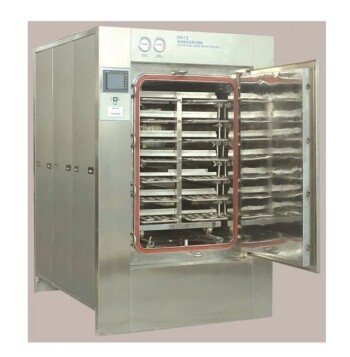
The primary function of an autoclave in the pretreatment of mixed waste office paper is to act as a specialized reaction vessel that generates and maintains a critical thermochemical environment. By sustaining temperatures between 121°C and 135°C under high pressure, the autoclave enables dilute sulfuric acid to penetrate the recalcitrant structure of the paper. This intense environment is the catalyst required to physically and chemically alter the waste material for downstream processing.
The autoclave utilizes high heat and pressure to break down lignocellulose barriers and degrade hemicellulose within the paper. This process significantly increases the porosity of the cellulose, ensuring that enzymes can access and convert the material efficiently during subsequent saccharification stages.
Mechanisms of Structural Alteration
The autoclave is not merely a heating device; it is a tool for structural engineering at the microscopic level. Its operation results in three specific changes to the waste paper.
Breaking Physical Barriers
Mixed waste office paper is composed of lignocellulose, a tough, complex structure that naturally resists breakdown.
The autoclave provides the necessary energy for the dilute sulfuric acid to dismantle these physical barriers. Without this pressurized thermal treatment, the acid would be far less effective at penetrating the paper's defenses.
Degrading Hemicellulose
Within the lignocellulose matrix, hemicellulose acts as a binding agent.
The thermochemical process inside the autoclave specifically targets and degrades hemicellulose. Removing or breaking down this component loosens the overall structural integrity of the paper fibers.
Increasing Cellulose Porosity
The ultimate goal of breaking barriers and degrading hemicellulose is to alter the surface area of the cellulose.
Treatment in the autoclave significantly increases the porosity of the cellulose. This transforms the material from a dense, impenetrable solid into a more open, sponge-like structure.
Impact on Process Efficiency
The changes induced by the autoclave are directly responsible for the success of the stages that follow, specifically enzymatic hydrolysis.
Enhancing Cellulase Accessibility
For waste paper to be useful, enzymes (cellulase) must be able to physically contact the cellulose fibers.
By increasing porosity, the autoclave ensures cellulase accessibility. The enzymes can penetrate the fiber structure rather than just sitting on the surface, allowing for a much more complete reaction.
Boosting Saccharification Efficiency
The breakdown of cellulose into simple sugars is known as saccharification.
Because the autoclave prepares the substrate so effectively, the saccharification efficiency is significantly enhanced. This results in a higher yield of sugars from the same amount of starting waste paper.
Understanding the Critical Parameters
To achieve the desired breakdown, strict adherence to the operational window is required.
Temperature Sensitivity
The process relies on a specific temperature range of 121°C to 135°C.
Operating below this range may fail to provide enough energy to break the lignocellulose barriers. Conversely, significant deviations could alter the reaction kinetics unpredictably, emphasizing the need for precise autoclave control.
The Necessity of Pressure
High pressure is essential to maintain the dilute sulfuric acid solution in a liquid state at these elevated temperatures.
This allows the chemical reaction to occur uniformly throughout the paper mass, rather than losing the liquid to evaporation.
Making the Right Choice for Your Goal
When designing or evaluating a pretreatment process for mixed waste office paper, the autoclave serves as the foundational step for yield optimization.
- If your primary focus is Structural Breakdown: Ensure the autoclave maintains a minimum of 121°C to effectively dismantle lignocellulose barriers and degrade hemicellulose.
- If your primary focus is Maximum Yield: Prioritize the autoclave's ability to increase porosity, as this is the direct driver of high saccharification efficiency in the next stage.
The autoclave effectively transforms waste paper from a resistant material into a receptive feedstock ready for biochemical conversion.
Summary Table:
| Feature | Autoclave Process Detail | Impact on Waste Office Paper |
|---|---|---|
| Temperature Range | 121°C to 135°C | Enables dilute acid to penetrate lignocellulose |
| Pressure Level | High Pressure Environment | Maintains acid in liquid state for uniform reaction |
| Structural Change | Hemicellulose Degradation | Loosens structural integrity of paper fibers |
| Surface Outcome | Increased Porosity | Maximizes cellulase accessibility for hydrolysis |
| Final Goal | Enhanced Saccharification | Increases sugar yield for biochemical conversion |
Optimize Your Waste-to-Energy Research with KINTEK
Precision is the cornerstone of effective lignocellulose pretreatment. KINTEK specializes in high-performance laboratory equipment, including high-temperature high-pressure reactors and autoclaves engineered to maintain the rigorous 121°C–135°C window required for your research.
Whether you are refining saccharification efficiency or developing sustainable biofuel feedstocks, our comprehensive range of muffle furnaces, crushing systems, and specialized consumables ensures your lab achieves repeatable, high-yield results.
Ready to upgrade your pretreatment workflow? Contact our technical experts today to find the perfect solution for your specific laboratory needs.
References
- Walainud Congthai, Kaemwich Jantama. Exploiting Mixed Waste Office Paper Containing Lignocellulosic Fibers for Alternatively Producing High-Value Succinic Acid by Metabolically Engineered Escherichia coli KJ122. DOI: 10.3390/ijms26030982
This article is also based on technical information from Kintek Solution Knowledge Base .
Related Products
- Portable High Pressure Laboratory Autoclave Steam Sterilizer for Lab Use
- Laboratory Horizontal Autoclave Steam Sterilizer Lab Microcomputer Sterilizer
- Desktop Fast High Pressure Laboratory Autoclave Sterilizer 16L 24L for Lab Use
- Portable Digital Display Automatic Laboratory Sterilizer Lab Autoclave for Sterilization Pressure
- Desktop Fast Laboratory Autoclave Sterilizer 35L 50L 90L for Lab Use
People Also Ask
- Why is a laboratory high-pressure autoclave sterilizer necessary? Ensure Accuracy in Antibacterial Research
- What is the role of a laboratory high-pressure autoclave in the conversion of furfural to piperidine? Optimize Yields
- What are the two types of autoclave used in the laboratory? Gravity vs. Pre-Vacuum Explained
- What precautions should be taken during autoclave in laboratory? A Complete Safety Guide to Prevent Burns and Explosions
- What extreme conditions does a laboratory autoclave simulate? Testing Wear Resistance of Nuclear Fuel Cladding