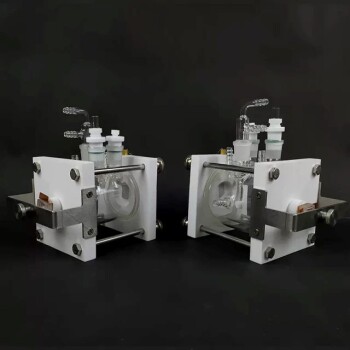
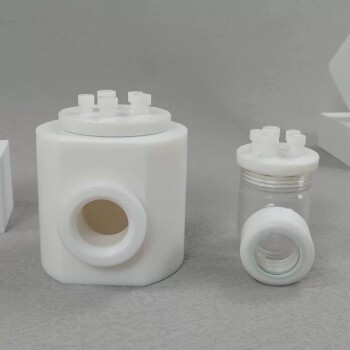
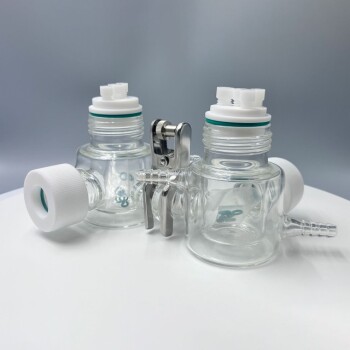
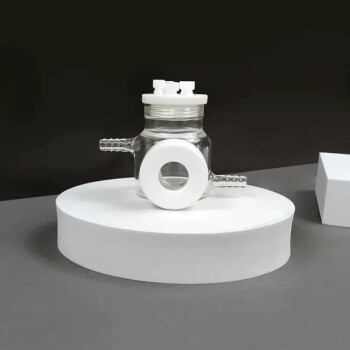
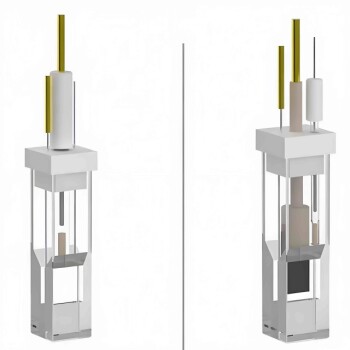
The primary function of the electrolytic cell in Boric-Sulfuric Acid Anodizing (BSAA) is to provide a controlled electrochemical environment for growing a protective oxide layer on aluminum alloys. It houses the acidic electrolyte and maintains a precise geometric arrangement between the components to drive the oxidation process.
By strictly controlling electrode spacing and current distribution, the electrolytic cell transforms raw electrical energy into a dense, uniform, and protective oxide film on alloys such as AA2024.
The Mechanics of the Cell Setup
Establishing the Circuit
The electrolytic cell creates a complete circuit to facilitate anodizing. The aluminum specimen to be treated acts as the anode (positive electrode).
Typically, a separate aluminum plate serves as the cathode (negative electrode). This specific arrangement forces oxidation to occur on the surface of the specimen, converting the metal into aluminum oxide.
The Role of the Electrolyte
The cell contains the boric-sulfuric acid solution. This fluid acts as the conductive medium necessary for ion transfer between the anode and cathode.
Without this specific acidic environment, the electrochemical reaction required to grow the oxide layer would not occur.
Ensuring Current Uniformity
One of the cell's most critical functions is managing current density. The design ensures the current flows evenly across the entire surface of the aluminum part.
This prevents surges in specific areas, which is vital for creating a consistent coating rather than a patchy or burned surface.
Critical Variables and Potential Pitfalls
The Impact of Electrode Spacing
The physical distance between the anode and cathode is a key variable. The reference highlights a specific spacing of 5 cm as a standard for maintaining control.
If this spacing varies or is too close, the current distribution becomes erratic. This leads to uneven film growth and compromised protection.
Quality consistency
The cell is designed to remove variables that lead to defects. By fixing the positions of the anode and cathode, the process minimizes human error.
A lack of precise positioning results in a protective film that may not be dense enough to prevent corrosion in harsh environments.
Making the Right Choice for Your Goal
To maximize the effectiveness of the BSAA process, consider these operational priorities:
- If your primary focus is maximum corrosion protection: rigorous adherence to the 5 cm spacing rule is required to ensure the oxide film is dense and uniform across the entire part.
- If your primary focus is process repeatability: standardize the material of the cathode (using an aluminum plate) to ensure the electrical properties of the cell remain constant between batches.
The electrolytic cell is the foundational tool that dictates the quality, density, and uniformity of the final anodized surface.
Summary Table:
| Feature | Function in BSAA Process |
|---|---|
| Anode | Aluminum specimen where the protective oxide layer grows |
| Cathode | Aluminum plate completing the circuit for oxidation |
| Electrolyte | Boric-Sulfuric Acid solution enabling ion transfer |
| Electrode Spacing | Standardized 5 cm distance ensures uniform current density |
| Resulting Film | Dense, uniform, and corrosion-resistant aluminum oxide |
Elevate Your Material Research with KINTEK Precision
Precision in electrochemical processes requires high-performance equipment. KINTEK specializes in advanced laboratory solutions, offering premium electrolytic cells and electrodes, high-temperature furnaces, and specialized battery research tools designed for the most demanding applications.
Whether you are refining the BSAA process for aluminum alloys or developing next-generation energy storage, our comprehensive portfolio of crushing systems, hydraulic presses, and ceramic consumables ensures your results are repeatable and accurate.
Maximize your lab's efficiency and achieve superior material protection—contact KINTEK today for expert guidance and custom solutions!
References
- Muhammad Zuchry, Lukmanul Hakim Arma. Effect of anodizing on aluminum alloy 2024 with boric sulfate acid in medium 3.5 % NaCl. DOI: 10.15587/1729-4061.2023.286351
This article is also based on technical information from Kintek Solution Knowledge Base .
Related Products
- PTFE Electrolytic Cell Electrochemical Cell Corrosion-Resistant Sealed and Non-Sealed
- Super Sealed Electrolytic Electrochemical Cell
- Electrolytic Electrochemical Cell with Five-Port
- H Type Electrolytic Cell Triple Electrochemical Cell
- Electrolytic Electrochemical Cell Gas Diffusion Liquid Flow Reaction Cell
People Also Ask
- What is the necessity of selecting a PTFE electrolytic cell? Ensure Precise Graphene Corrosion Testing Accuracy
- What is the proper method for cleaning the surface of an all-PTFE electrolytic cell? Ensure Accurate Results with a Pristine Surface
- How should an all-PTFE electrolytic cell be stored after use? Expert Maintenance Tips for Long-Lasting Performance
- What is the proper cleaning method for an all-PTFE electrolytic cell? Essential Tips for Surface Integrity
- What are the standard opening specifications for all-PTFE electrolytic cells? A Guide to Sealed vs. Non-Sealed Ports