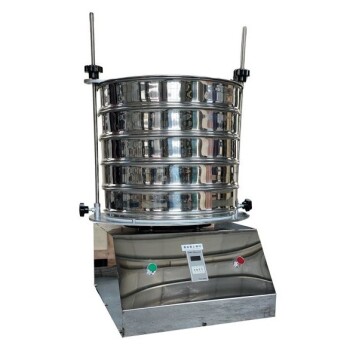
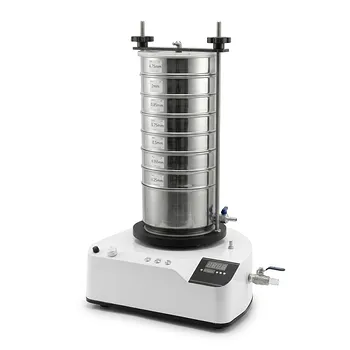
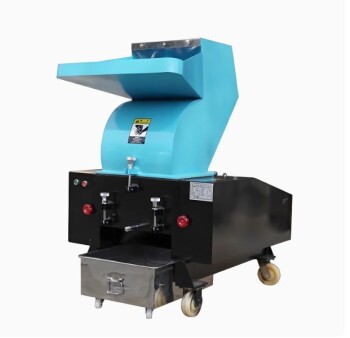
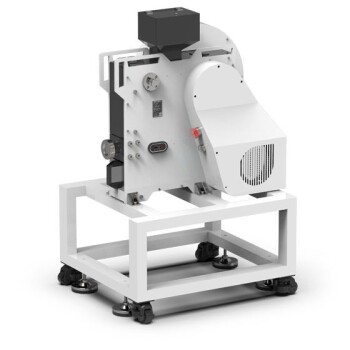
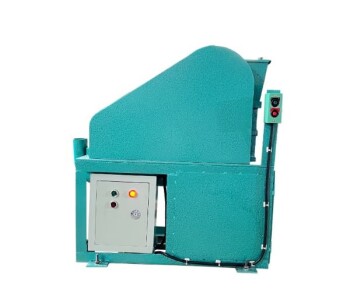
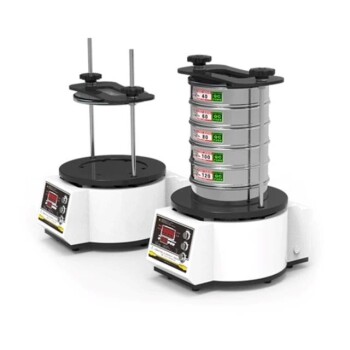
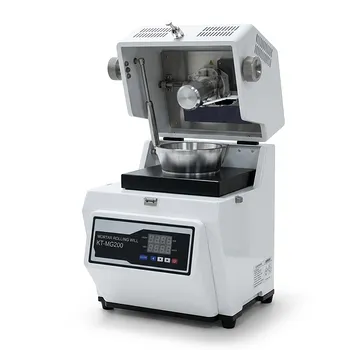
Crushing and sieving systems function as the fundamental pre-processing stage in the fabrication of low-cost ceramic membranes, specifically tasked with reducing industrial or agricultural waste materials into precise, micron-level particle size distributions. This mechanical reduction is not merely about size; it is the critical enabler for thorough component mixing and enhanced sintering activity, which directly dictates the uniformity of the membrane’s pore structure and its ultimate filtration efficiency.
Core Takeaway The quality of a ceramic membrane is determined before the sintering process begins; it relies on the mechanical uniformity of the raw materials. By controlling particle size distribution through crushing and sieving, manufacturers ensure the material has the necessary surface area for reactivity and the geometric uniformity required for stable, consistent filtration.
The Mechanics of Material Preparation
Reduction to Micron-Level Distributions
The primary role of these systems is to transform bulk waste—such as fly ash, rice husk ash, or sawdust—into usable raw materials.
Through mechanical breaking and multi-stage sorting, the systems isolate particles within specific micron-level ranges.
This creates a consistent feedstock, replacing the erratic nature of raw industrial waste with a standardized engineering material.
Ensuring Homogeneity
Raw waste materials are often chemically and physically heterogeneous.
Crushing and sieving allow these diverse components to be thoroughly mixed into a uniform blend.
Without this step, inconsistencies in the raw mix would lead to weak points or irregular filtration zones in the final product.
Critical Impacts on Membrane Performance
Enhancing Sintering Activity
The reduction of particle size has a direct chemical benefit during the firing phase.
Smaller, sieved particles possess a higher specific surface area, which significantly enhances sintering activity.
This increased reactivity ensures that the particles bond together more effectively at high temperatures, leading to a physically stable and durable membrane.
Controlling Pore Structure
The geometry of the raw particles dictates the geometry of the gaps between them.
By enforcing a specific particle size distribution, manufacturers can achieve a uniform pore structure in the finished ceramic.
This uniformity is vital for filtration efficiency, as it ensures that the membrane blocks contaminants consistently across its entire surface area.
Understanding the Trade-offs
Impact on Packing Density
While finer particles often lead to better sintering, the distribution of sizes (gradation) must be carefully managed.
Just as in concrete aggregates, the specific gradation impacts the packing density of the material.
If the particles pack too tightly due to an improper mix of sizes, the membrane may have high mechanical strength but insufficient fluidity or permeability for filtration.
The Balance of Permeability vs. Strength
A distribution that is too uniform might create excellent pores but lack structural integrity.
Conversely, a distribution designed solely for density might close off the pores required for filtration.
The sieving process must strike a precise balance to optimize both the physical stability (strength) and the flow rates required for the membrane's application.
Making the Right Choice for Your Goal
To optimize the preparation of low-cost ceramic membranes, tailor your crushing and sieving parameters to your specific performance requirements:
- If your primary focus is Filtration Selectivity: Prioritize narrow sieving ranges to ensure a highly uniform pore structure, minimizing the risk of oversized pores letting contaminants through.
- If your primary focus is Mechanical Durability: Focus on a particle gradation that optimizes sintering activity and packing density to create a robust, fracture-resistant membrane.
Precision in the crushing and sieving phase is the single most effective way to convert variable waste products into high-performance engineering materials.
Summary Table:
| Process Step | Primary Function | Impact on Final Membrane |
|---|---|---|
| Mechanical Crushing | Reduces bulk waste to micron-level particles | Increases surface area for enhanced sintering activity |
| Precision Sieving | Ensures specific particle size distribution | Determines pore structure uniformity and filtration efficiency |
| Homogenization | Blends diverse waste components | Eliminates weak points and ensures consistent filtration performance |
| Gradation Control | Optimizes packing density | Balances mechanical strength with fluid permeability |
Elevate Your Material Preparation with KINTEK
Transform variable industrial waste into high-precision engineering materials with KINTEK’s advanced laboratory solutions. Whether you are developing low-cost ceramic membranes or researching sustainable material science, our comprehensive range of crushing and milling systems, sieving equipment, and hydraulic presses provides the precision you need to control particle distribution and sintering activity.
From high-temperature furnaces for sintering to pellet presses for membrane formation, KINTEK specializes in the tools that drive innovation in laboratory research and industrial waste recycling. Contact us today to find the perfect equipment for your lab's specific needs!
References
- Gülzade Artun, Ayşegül Aşkın. Studies on Production of Low-Cost Ceramic Membranes and Their Uses in Wastewater Treatment Processes. DOI: 10.56038/ejrnd.v2i2.39
This article is also based on technical information from Kintek Solution Knowledge Base .
Related Products
- Laboratory Test Sieves and Sieving Machines
- Three-dimensional electromagnetic sieving instrument
- Laboratory Vibratory Sieve Shaker Machine for Dry and Wet Three-Dimensional Sieving
- Powerful Plastic Crusher Machine
- Laboratory Jaw Crusher
People Also Ask
- What are laboratory test sieves used for? A Guide to Particle Size Analysis
- How do you calculate the sieve test? Master Particle Size Distribution for Quality Control
- How does a lab test sieve contribute to biomass charcoal powder preparation? Achieve Uniform Particle Size
- What are the specifications for test sieves? A Guide to ASTM & ISO Standards for Accurate Particle Analysis
- What materials are required for sieving? Achieve Accurate Particle Size Analysis